Undertone vs. Skin Tone: A Crucial Distinction
Many shoppers conflate skin tone with skin undertone, and that single mix-up is responsible for countless disappointing foundation purchases. Skin tone — sometimes called surface tone or complexion — describes how light or dark your skin appears. It's what you'd describe as fair, light, medium, tan, or deep. Undertone, by contrast, is the secondary hue glowing beneath that surface. It doesn't change when you get a summer tan or experience a winter pallor.
Think of it like a painted wall: the paint color is your skin tone, but the primer coat underneath influences the final result. When your makeup's undertone doesn't match yours, even a perfectly depth-matched product can look sallow, ruddy, or flat. Understanding this distinction is foundational to choosing makeup that actually flatters — and it's just as relevant to skincare product decisions, which you can explore further in our guide to skin type vs. skin condition.
The Three Undertone Families Explained
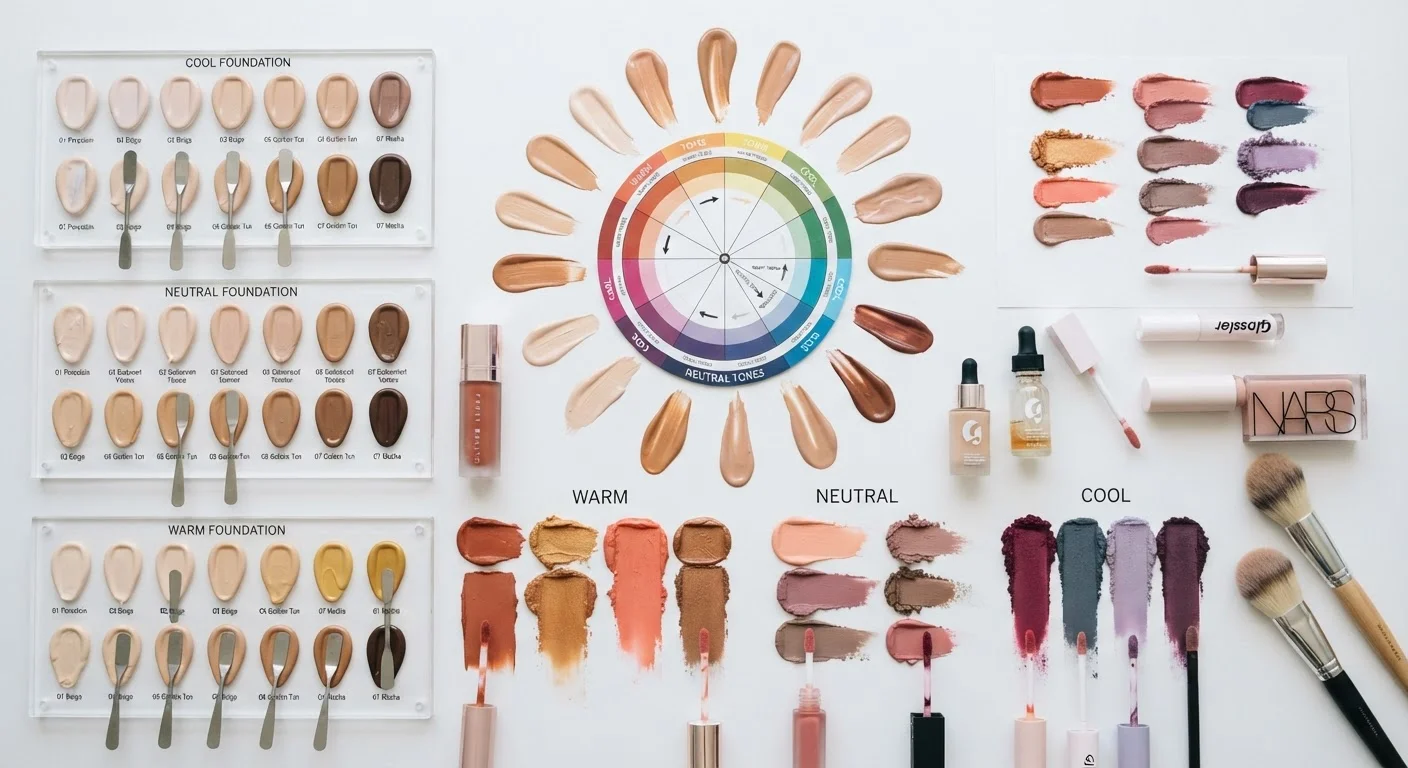
Undertones are generally grouped into three categories:
- Warm: Yellow, golden, or peachy hues beneath the skin. People with warm undertones often find that earthy, golden, or bronzed makeup shades complement them naturally.
- Cool: Pink, red, or bluish undertones. Cool-undertoned individuals tend to look striking in jewel-toned, rosy, or silver-accented makeup.
- Neutral: A balanced blend of warm and cool. Neutral undertones are the most flexible — most color families work reasonably well, though very saturated warm or cool shades may still feel "off."
It's worth noting that olive skin — common across Mediterranean, Latin American, and South Asian complexions — often sits in its own category. It typically carries a neutral-to-warm base with a subtle greenish undertone that neither pure warm nor pure cool products always address cleanly. If you identify as olive-toned, swatching in natural light before committing to a shade is especially important.
3
Core undertone families recognized in cosmetic science
Warm, cool, and neutral are the standard categories used by makeup formulators to classify foundation and complexion product undertones.
~40%
Foundation purchases returned due to shade mismatch
Industry surveys have consistently found shade mismatch — often an undertone error rather than a depth error — among the leading reasons for foundation returns.
How to Identify Your Undertone
You don't need a professional colorist to find your undertone. Several reliable at-home methods exist:
- Vein test: Hold your inner wrist under natural daylight. Veins that appear greenish point to a warm undertone; bluish or purple-toned veins indicate cool; a mix of both suggests neutral.
- Jewelry test: Consider which metal tends to look most flattering against your skin — gold often suits warm undertones, silver suits cool, and both look fine on neutral.
- Sun reaction: People with warm undertones tend to tan easily and rarely burn. Cool undertones are more likely to burn before tanning. This isn't foolproof, but it adds useful data.
- White fabric test: Hold a pure white cloth next to your bare face. If your skin looks yellowish or golden beside it, you lean warm. If it looks pinkish or rosy, you lean cool. Minimal contrast suggests neutral.
No single test is definitive — use two or three and look for a consistent pattern.
Swatch in Natural Light Whenever Possible
Store lighting — especially fluorescent overhead lights common in beauty retailers — distorts how makeup undertones appear on skin. If you can, step near a window or outside before making a final judgment on a swatch. Even a 30-second check in daylight can save you from an undertone mismatch you won't notice until you're back home.
Undertone in Practice: Foundation, Blush, and Lip Color
Once you know your undertone, applying that knowledge across your makeup bag becomes straightforward.
Foundation
Most foundations include an undertone code: N for neutral, W or Y for warm (yellow-based), and C or P for cool (pink-based). Match both the depth number and the undertone letter. A shade that's correct in depth but wrong in undertone will look like a mask — too orange, too pink, or too ashy. For more on how finish factors into this equation, see our breakdown of foundation finish types.
Blush
Warm undertones typically harmonize with peach, coral, and warm pink blushes. Cool undertones look polished with rosy, berry, and mauve tones. Neutral undertones can generally move between both families depending on the look.
Lip Color
The same logic applies. Warm undertones are often flattered by brick reds, terracotta, and nude-peach shades. Cool undertones lean into true reds, raspberries, and blue-based pinks. Neutral undertones have wide latitude and can experiment freely.
If you're still building out your core makeup collection, our starter kit guide walks through which products earn their place in an everyday setup — keeping undertone compatibility in mind throughout.
Putting It All Together
Undertone knowledge doesn't lock you into rigid rules — it gives you a starting point that removes guesswork. Once you understand your undertone, you'll spend less time returning foundations, fewer afternoons wondering why a lipstick that looked stunning on someone else looks flat on you, and more time actually enjoying your makeup. Think of it as calibration, not restriction.
When you're ready to put these insights into a full routine, our step-by-step everyday makeup routine shows how undertone-aware product choices slot into a logical, buildable sequence. And if you're curious about targeted coverage beyond foundation, our guide on concealers vs. color correctors explains how undertone plays into those choices too.
“The most common makeup mistake isn't choosing the wrong finish or formula — it's ignoring undertone entirely. Two people can wear the same shade number and look completely different because the undertone wasn't considered.”
— Professional Makeup Artist Educator, Industry trainer specializing in complexion and color theory