Why Less Is More When Starting Out
Walking into a beauty aisle with no roadmap is genuinely overwhelming. Hundreds of products compete for attention, each promising a different kind of transformation. For anyone building their first kit, the sheer volume of choice is one of the biggest barriers — not the skill level required to apply the products.
The most effective approach is deliberate restraint. A starter kit with five to seven purposeful items will serve you far better than a drawer crammed with products you don't know how to use. Each new product you add is also a new variable: if your skin reacts or a look doesn't come together, a smaller kit makes it much easier to figure out why.
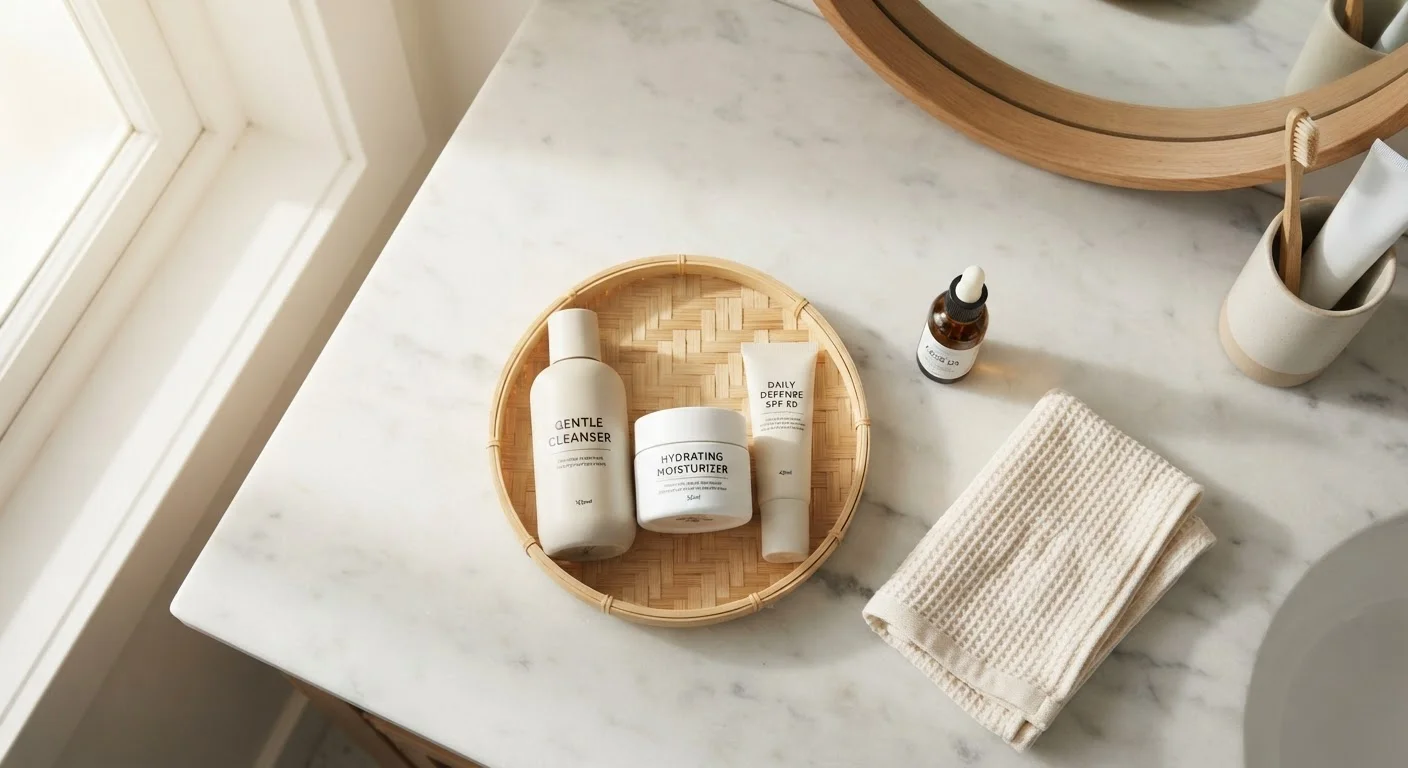
It's also worth separating skincare from makeup before you begin. Moisturizer and SPF aren't makeup, but they are the foundation everything else sits on. A hydrated, prepped base dramatically improves how makeup applies and how long it stays in place. If you're still establishing a morning skincare routine, our guide to building a morning skincare routine is a useful starting point.
Start With What You'll Actually Use
Before buying anything, consider your daily schedule and how much time you realistically want to spend on makeup in the morning. A five-minute kit you use every day delivers more value than a full-face routine you abandon after a week. Match your kit size to your actual lifestyle, not an aspirational one.
The Core Products Worth Your Money
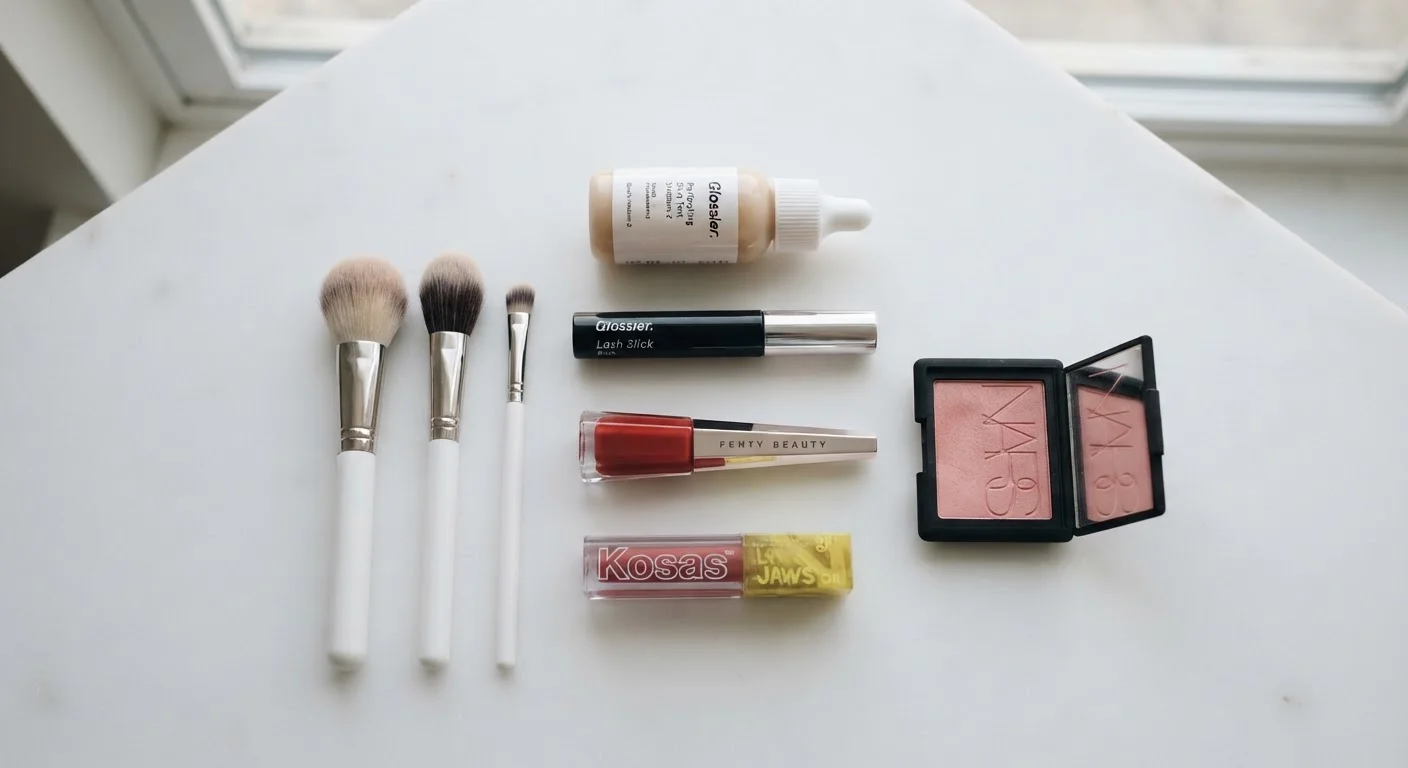
Once your skin is prepped, these are the product categories that earn their place in a real-life, everyday kit:
- Tinted moisturizer or light-coverage foundation: This evens your skin tone without masking it. Light coverage is more forgiving to apply and looks more natural while you're learning. For a deeper understanding of finish types, see our breakdown of foundation finish types.
- Concealer: A small amount under the eyes or over blemishes goes a long way. Choose a shade that matches your foundation rather than going lighter — lighter concealer can highlight rather than conceal in daytime light.
- Cream or powder blush: Blush restores the warmth that foundation can neutralize. Cream formulas blend easily with fingers, making them beginner-friendly.
- Mascara: A single coat of mascara is one of the highest-impact steps in any routine. It opens the eyes and adds definition without requiring any technique beyond steady hands.
- Lip color: Start with a shade close to your natural lip tone — a sheer balm, tinted lip oil, or neutral lipstick. These shades are the most wearable and least noticeable if the application isn't perfect.
Setting powder is worth adding once you're comfortable with the above — it reduces shine and helps products last — but it's optional in a true starter kit.
Undertone
The subtle hue beneath your skin's surface — typically cool (pink or blue), warm (yellow or golden), or neutral (a mix of both). Matching your undertone is key to finding foundation and blush that look natural on your skin.
Coverage
How much a foundation or concealer masks the skin beneath it. Light coverage lets skin texture show through; full coverage creates a more uniform, opaque appearance.
Setting powder
A translucent or lightly tinted powder applied over liquid or cream products to reduce shine and help makeup last longer throughout the day.
Tinted moisturizer
A lightweight product that combines the hydration of a moisturizer with a small amount of pigment to even out skin tone. It provides less coverage than foundation and is often easier for beginners to apply.
Blending
The technique of working a product into the skin until there are no harsh edges or visible lines, producing a smooth and natural-looking result.
Tools That Make Application Easier
No matter how good a formula is, the tool used to apply it shapes the result. Beginners often underestimate this, spending heavily on products while using inadequate tools.
For a starter kit, two tools handle most tasks:
- A damp makeup sponge — ideal for blending liquid or cream foundation and concealer. The damp technique (ringing out a soaked sponge before use) prevents the sponge from absorbing too much product and produces a more natural finish than dry application.
- A fluffy powder brush — used to apply and blend powder blush and setting powder. A large, dome-shaped brush diffuses product evenly and avoids streaks.
Clean your tools regularly. Sponges and brushes accumulate product, oil, and bacteria over time, which can affect both application quality and skin health. A gentle shampoo or dedicated brush cleanser works well for most tools.
Don't Share Makeup Tools With Others
Sharing sponges, brushes, or direct-application lip and eye products can transfer bacteria and increase the risk of eye and skin infections. Keep your tools personal, and replace sponges every one to three months depending on use frequency. If a product has an unusual smell or texture, discard it — cosmetics do expire.
How to Choose Shades That Actually Match
Shade selection is where many beginners feel most uncertain — and where a small amount of knowledge makes a disproportionately large difference. The concept of undertone is the most important thing to understand here.
Your skin has a surface tone (light, medium, dark) and an undertone (cool, warm, or neutral). Foundation, blush, and lip colors all interact with your undertone, not just your surface tone. A formula that looks right in artificial store lighting can read orange, pink, or ashy in natural daylight if the undertone is off.
To identify your undertone, look at the veins on the inside of your wrist in natural light. Blue or purple veins typically indicate a cool undertone; green veins suggest warm; a mix of both points to neutral. Our article on skin undertones and why they matter walks through this in more detail.
When testing foundation in-store, apply a small stripe along your jawline and step outside or near a window. The right shade disappears into your skin rather than sitting on top of it.
Building From Here
Once the core kit feels comfortable — meaning you can apply each product consistently without stressing about it — expanding becomes much easier and more intentional. You'll have enough experience to know whether you actually want more coverage, different eye definition, or a longer-lasting formula, rather than buying speculatively.
Natural next steps include adding eyeliner or eyebrow products for more definition, experimenting with eyeshadow, or exploring setting sprays for longevity. Product application order matters more than most people expect at this stage; our step-by-step everyday makeup routine lays out a logical sequence that keeps each product performing at its best.
It's also worth stress-testing any assumptions you bring to makeup. Many widely held beliefs — about what's necessary, what's worth the price, and what the rules actually are — don't hold up on closer inspection. Our piece on makeup myths that are still surprisingly widespread separates evidence from habit. And if eye definition is a priority, everyday eye makeup techniques for different eye shapes offers practical, shape-specific guidance.
Skin Undertones Explained
A plain-language breakdown of cool, warm, and neutral undertones and how they affect foundation, blush, and lip color selection — the single most useful skill for beginners shopping for makeup.
Everyday Makeup Routine Step-by-Step
A logical, buildable application sequence that shows which products to apply in which order, and why the order matters for a polished everyday look.
Morning Skincare Routine Builder
A straightforward introduction to AM skincare that establishes the healthy base makeup needs to perform well — covering what to include, what to skip, and why.