Why a Morning Routine Is Different from a Nighttime One
Skincare is not one-size-fits-all when it comes to timing. Your skin's needs shift meaningfully between morning and evening — and understanding that distinction is what separates a thoughtful routine from a random stack of products.
In the morning, your skin's primary job is defense. You're preparing it to face UV radiation, environmental pollutants, and oxidative stress over the hours ahead. That means the products you reach for should be oriented toward protection and preservation rather than correction.
At night, the focus flips: skin enters a repair and renewal phase. That's why active ingredients like retinoids and stronger exfoliants are better suited to the evening. For a deeper look at how those principles work after dark, see Nighttime Skincare: What Changes After Dark and Why It Matters.
Morning routines also need to play well with makeup, if you wear it. A routine that leaves skin balanced — neither too oily nor too tight — creates a better canvas. For guidance on what comes next, The Everyday Makeup Routine: A Step-by-Step Order That Makes Sense picks up where skincare leaves off.
The Core Four: Steps That Earn Their Place Every Day
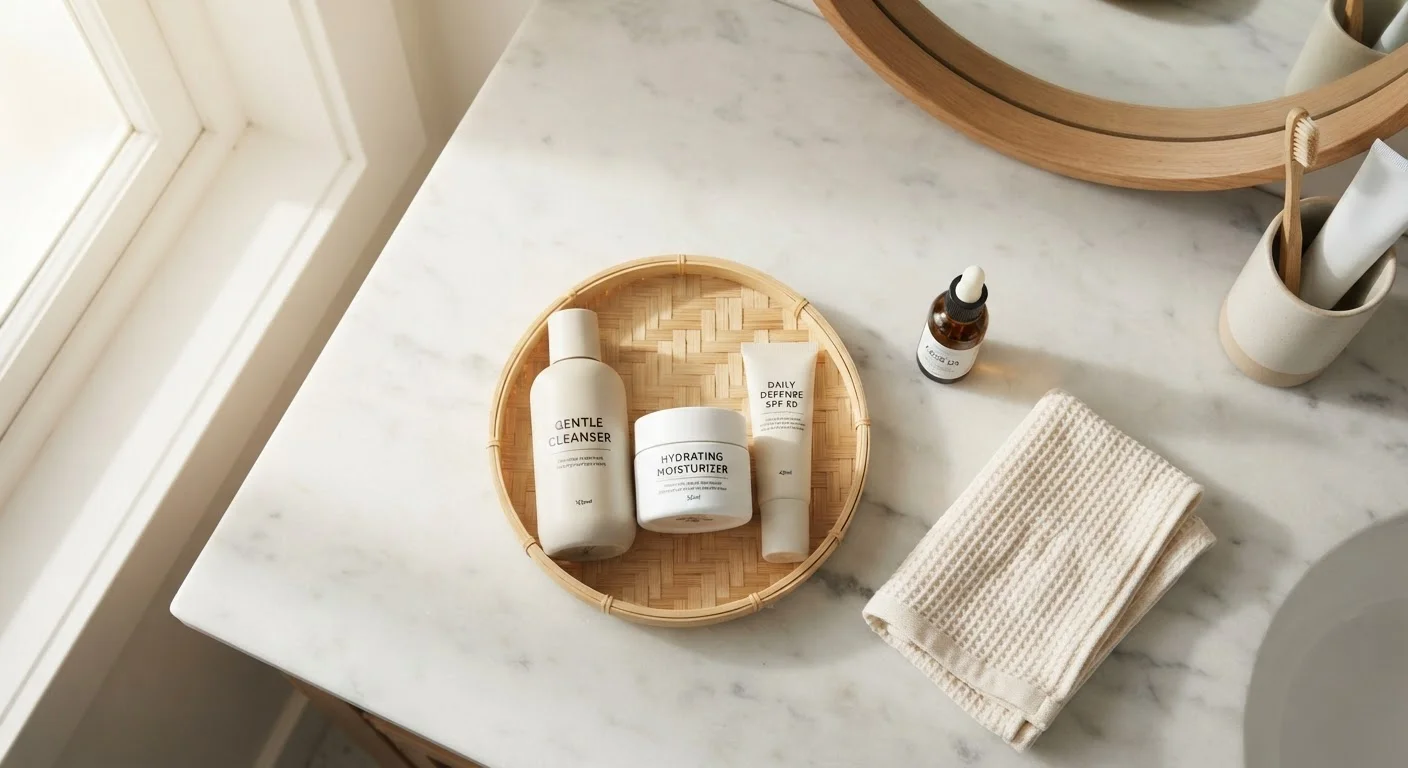
A functional morning routine doesn't require a ten-step shelf. For most people, four well-chosen steps cover the essentials.
Skin barrier
The outermost layer of skin that locks in moisture and keeps irritants out. Keeping it intact is the foundation of healthy-looking skin.
Antioxidant
A substance that neutralizes free radicals — unstable molecules generated by UV exposure and pollution that can damage skin cells over time.
SPF (Sun Protection Factor)
A measure of how well a sunscreen protects against UVB rays, which are the primary cause of sunburn and contribute to long-term skin damage.
L-ascorbic acid
The most researched form of vitamin C used in skincare. It functions as an antioxidant and is commonly found in morning serums.
Free radicals
Unstable molecules produced by environmental stressors like UV light and air pollution. They can damage skin cells if left unchecked by antioxidants.
Photosensitivity
Increased sensitivity of the skin to sunlight, sometimes caused by certain skincare ingredients, making sun protection even more critical.
- Cleanser — Removes overnight oil, sweat, and any residual product. Choose a gentle, non-stripping formula. Oily skin types tend to do well with a foaming cleanser; dry or sensitive skin types often prefer a cream or micellar option.
- Antioxidant serum — Typically vitamin C (L-ascorbic acid), this step helps neutralize free radicals before they accumulate during the day. Apply after cleansing on dry skin for best absorption.
- Moisturizer — Supports the skin barrier and maintains hydration throughout the day. Lightweight gel-cream formulas suit oilier skin; richer creams work better for drier types.
- Sunscreen (SPF 30 or higher) — The single most evidence-supported step in any AM routine. UV exposure is a primary driver of skin aging and damage, and SPF is the most reliable daily defense against it. Apply as the final step, every morning — including cloudy days and time spent indoors near windows.
This four-step structure is a sound foundation. You can refine it over time as you learn what your skin responds to, but these basics serve most people well from day one.
What to Skip in the Morning (and Why)
Knowing what not to use in the morning is just as useful as knowing what to include. Several popular ingredients are better reserved for your evening routine.
When in Doubt, Keep It Simple
If you're unsure whether an ingredient is safe to use in the morning, a useful default is to reserve any active treatment ingredient for your evening routine. Your morning lineup should feel gentle and protective — not like a treatment session. Simplicity is a feature, not a limitation.
- Retinoids — These vitamin A derivatives accelerate cell turnover and are sensitive to UV degradation. Applying them in the morning can both reduce their effectiveness and increase skin sensitivity to sun exposure.
- Strong exfoliants (AHAs and BHAs) — Acids like glycolic or salicylic acid increase photosensitivity. They're valuable tools, but they belong in your PM lineup. If you want to understand how these work, Chemical Exfoliants vs. Physical Scrubs explains the difference in plain terms.
- Heavy oils applied before SPF — Layering a dense oil before sunscreen can dilute the SPF film and reduce its protective efficacy. If you enjoy facial oils, work them into your evening routine instead.
- Overly complex layering — More steps do not automatically mean better results. An overloaded routine can cause pilling, irritation, or conflicting ingredient interactions.
How to Layer Products Without Overthinking It
Product order matters more than most people realize. The general principle is straightforward: apply products from thinnest to thickest consistency. This allows lighter, water-based formulas to contact the skin directly and absorb efficiently before richer products seal in moisture.
A reliable sequence looks like this:
- Cleanser (rinse off)
- Antioxidant serum (thinnest, water-based)
- Moisturizer (medium weight)
- Sunscreen (applied last, over everything)
For a more detailed breakdown of the science behind sequencing, The Logic Behind Layering Skincare Products provides a practical, step-by-step rationale.
A brief pause — around 30 to 60 seconds — between each step allows each product to settle before the next is applied. You don't need a timer; just apply the next product while the previous one no longer feels wet on the skin.
This article is for general informational purposes only and does not constitute medical or dermatological advice. Consult a qualified healthcare professional for concerns specific to your skin.
Common Beginner Mistakes and How to Avoid Them
Starting a new routine tends to surface a predictable set of missteps. Being aware of them early can save you frustration — and your skin barrier — down the line.
Patch Testing Saves Skin Barrier Stress
Before applying any new product to your full face, test it on a small area — such as the inner forearm or jaw — for a few days. This is especially important for products with active ingredients like vitamin C or niacinamide. It's a low-effort habit that can prevent a high-effort recovery.
- Introducing too many products at once — When you add several new products simultaneously, it's nearly impossible to identify what's causing a reaction if one occurs. Introduce one product at a time, spaced about a week apart.
- Skipping SPF on overcast or indoor days — UV radiation penetrates cloud cover and glass. SPF is a daily non-negotiable regardless of weather or whether you're primarily indoors.
- Over-cleansing — Washing your face too frequently or with too harsh a product strips the skin's natural lipid barrier, which can trigger compensatory oil production or dryness. Twice daily is typically the upper limit for most skin types.
- Expecting instant results — Skin cell renewal cycles take weeks. Give any new routine at least four to six weeks before evaluating whether it's working.
If you do experience unexpected reactions — breakouts, persistent dryness, or irritation — Your Skin Is Reacting — Here's What's Likely Going Wrong walks through the most common causes and how to address them.