What Each Category Actually Means
The terms new, certified pre-owned (CPO), and used describe legally and contractually different products — and confusing them can cost you in unexpected ways.
A new vehicle has never been titled to a private owner. It carries the manufacturer's full warranty, reflects current safety standards, and comes with no prior use history. What you pay is largely the manufacturer's suggested retail price (MSRP), though negotiation is common.
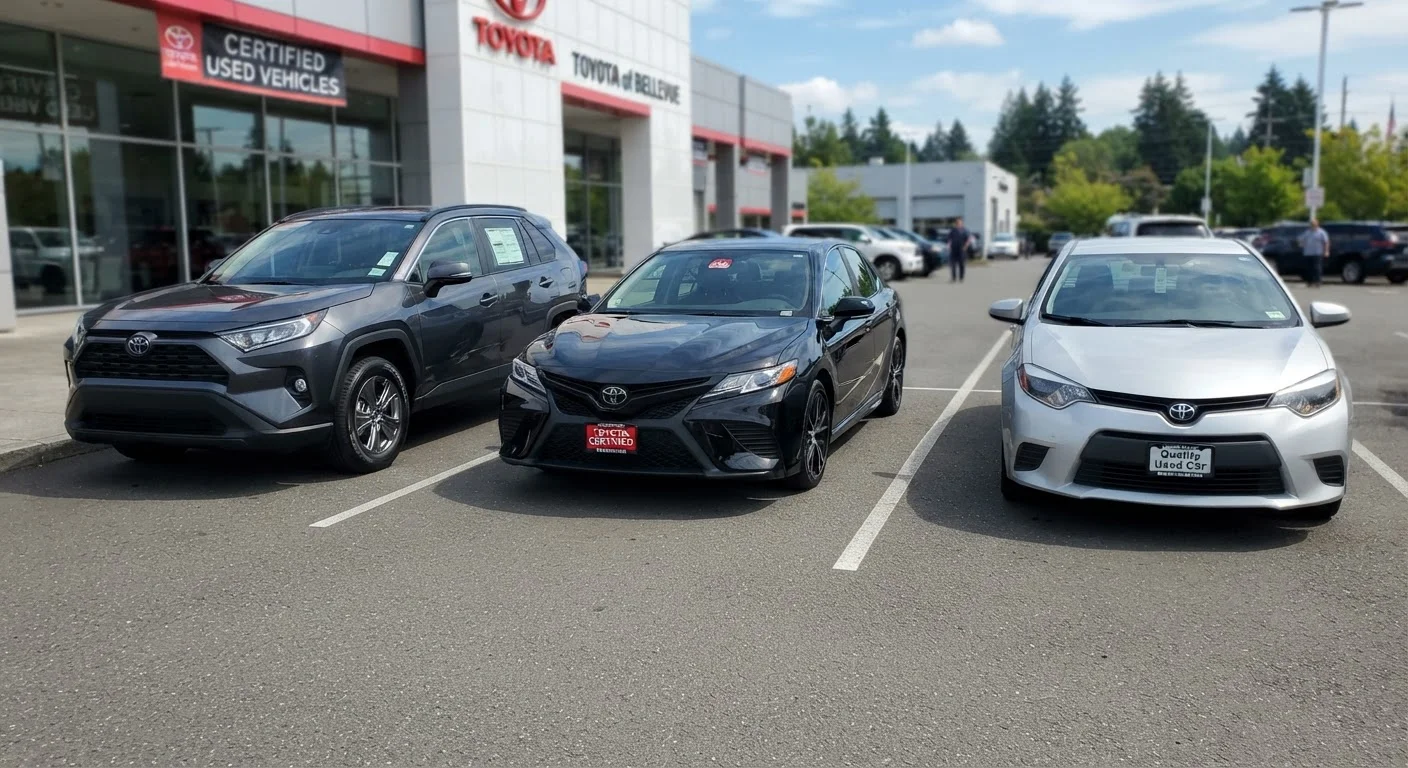
A certified pre-owned vehicle is a used car that has been inspected and reconditioned to meet a manufacturer's or dealer's published standards, then backed by a limited warranty. These programs are typically run by the original manufacturer and restricted to relatively recent, lower-mileage vehicles. The warranty terms — what's covered, for how long, and with what deductible — vary significantly by automaker.
A standard used vehicle is any previously owned car sold without a manufacturer-backed certification. It may come with a dealer's limited warranty, a third-party extended warranty offer, or no warranty at all (sold "as-is"). The seller, vehicle history, and mechanical condition all introduce variability that the buyer must assess independently.
Understanding how depreciation works across each category is fundamental to evaluating which path makes financial sense for your situation.
Price, Depreciation, and the True Cost of Each Path
Purchase price is only the opening number. The more revealing figure is total cost of ownership — what you pay to buy, insure, fuel, maintain, and eventually sell or trade the vehicle.
~20%
New car value lost in year one
Industry data consistently shows new vehicles can lose roughly 15–20% of their value within the first year of ownership, with continued depreciation through year five.
2–6 years
Typical CPO vehicle age range
Most manufacturer CPO programs restrict eligibility to vehicles within a set age and mileage window, commonly under 80,000 miles and six model years old.
New cars carry the steepest depreciation curve. That loss affects you most if you sell or trade within the first few years. However, new vehicles typically qualify for the manufacturer's lowest promotional financing rates, which can partially offset the higher sticker price depending on loan terms.
CPO vehicles sit in a middle band. The first owner absorbed the sharpest depreciation drop, so you're buying in at a lower point on that curve. Some manufacturer CPO programs also offer special financing rates, though these are generally not as low as new-car incentives. The warranty coverage limits some of the repair risk that makes used cars financially unpredictable.
Standard used cars are where the lowest purchase prices live. But lower price doesn't equal lower total cost if the vehicle has underlying mechanical issues. Repair costs, higher insurance write-off risk on older vehicles, and potentially higher loan interest rates can erode the upfront savings. Review what ownership actually costs beyond the sticker price before setting your budget.
| New | Certified Pre-Owned (CPO) | Standard Used | |
|---|---|---|---|
| Purchase Price | Highest | Moderate | Lowest |
| Warranty Coverage | Full factory warranty | Limited manufacturer-backed warranty | None or limited as-is |
| Depreciation Risk | Highest — immediate drop off lot | Moderate — prior owner absorbed early loss | Lower — prior owners absorbed most loss |
| Vehicle History | No prior owners | Inspected; history reviewed by manufacturer | Variable; verify independently |
| Financing Rates | Often lowest APR offers available | Moderate; sometimes manufacturer incentives | Typically higher APR |
| Technology & Safety Features | Latest available | Recent but not newest | Varies widely by model year |
| Buyer Risk Level | Low | Low to moderate | Moderate to high |
Warranty Coverage and Risk Allocation
Warranty is fundamentally about who bears the financial risk of mechanical failure — you or the manufacturer.
CPO Is Not the Same Across All Brands
CPO programs vary considerably by manufacturer — inspection checklists, warranty length, deductibles, and what's actually covered differ from brand to brand. Never assume a CPO label means identical protection across different automakers. Read the specific program terms carefully before treating it as equivalent to a new-car warranty.
New vehicles are covered by a bumper-to-bumper warranty (typically three years or 36,000 miles) and a separate powertrain warranty (often five years or 60,000 miles), though these figures vary by manufacturer. During the warranty window, covered repairs cost you nothing beyond your time.
CPO warranties extend some coverage past the original warranty expiration, but the scope narrows considerably. Most CPO warranties focus on powertrain components rather than offering comprehensive coverage. Understand exactly what is and isn't covered — ask for the warranty document, not just a salesperson's summary.
Standard used vehicles sold as-is shift all mechanical risk to the buyer from the moment of purchase. If something fails the day after you drive off the lot, the cost is yours. This is why pre-purchase diligence matters so much. See our pre-purchase inspection checklist for a practical walkthrough of what to evaluate before committing.
Always Pull a Vehicle History Report
For any used or CPO vehicle, request a vehicle history report using the VIN before committing. These reports can flag prior accidents, title issues, odometer discrepancies, and flood damage. A clean report doesn't guarantee a problem-free car, but a troubled report is a clear signal to walk away. Pair it with an independent pre-purchase inspection from a qualified mechanic.
Financing Differences Worth Knowing
How you finance the purchase is a separate decision from which category you choose — but the two interact. The choice between dealer financing and an outside auto loan applies across all three vehicle categories, but the rates available to you will differ.
New vehicles often qualify for manufacturer-subsidized interest rates — sometimes as low as 0% APR for qualified buyers during promotional periods. These incentives don't exist for most used or CPO vehicles outside of specific manufacturer programs.
Used car loans, particularly for older vehicles or buyers with less-than-ideal credit, typically carry higher interest rates than new car loans. That rate difference, compounded over a 48- or 60-month loan, can substantially reduce the price advantage of buying used. Your credit score shapes every loan offer you receive, making it worth reviewing before you shop. Separately, common financing misconceptions lead many buyers to focus on monthly payments rather than total interest paid — a framing that can make any vehicle seem more affordable than it actually is.
Before signing at the finance desk, review the questions informed buyers ask before finalizing a deal. Understanding out-the-door pricing, warranty details, and loan terms in full gives you a clearer picture of what you're actually committing to.