Why Car Maintenance Myths Are So Hard to Shake
Many car care habits passed down through generations were once grounded in real mechanical reality. Older engines, conventional motor oils, and carbureted fuel systems genuinely did demand more frequent attention. The problem is that vehicle technology has advanced dramatically while the folk wisdom surrounding it has not kept pace.
Acting on outdated advice doesn't just waste money — it can lead drivers to skip services that actually matter or perform unnecessary ones that don't. The myths below are among the most persistent, and understanding why they're wrong is the first step toward smarter, more cost-effective ownership. For a broader look at managing what you spend on a vehicle over time, see keeping ownership costs in check.
Myth
You need to change your oil every 3,000 miles, no exceptions.
Fact
Most modern vehicles with conventional oil can go 5,000 to 7,500 miles between changes; those using full synthetic oil may safely go 10,000 miles or more.
The 3,000-mile rule was a reasonable guideline for older engines running conventional motor oil under less precise manufacturing tolerances. Today's engines are built to tighter specifications, and lubricant chemistry has improved substantially. Full synthetic oils, in particular, maintain their protective properties over considerably longer intervals.
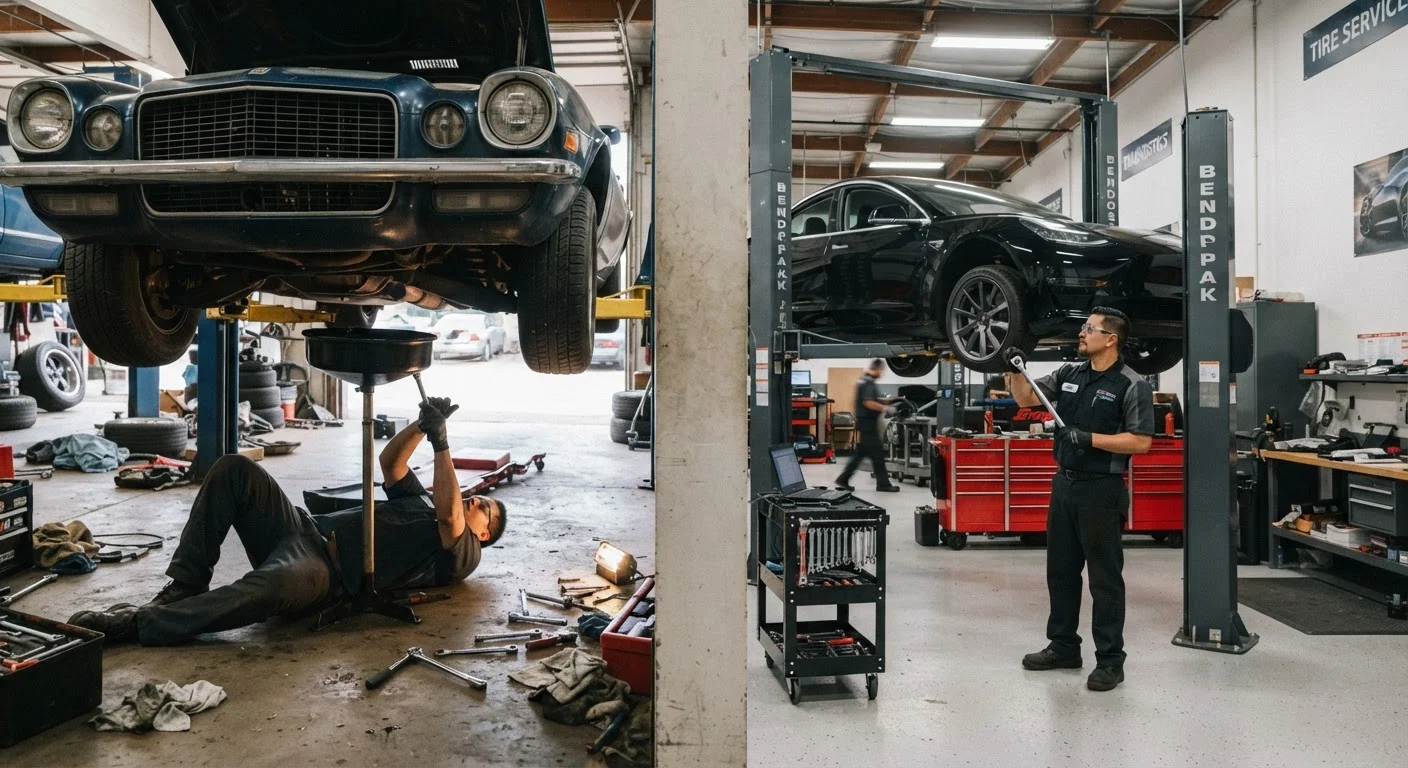
The authoritative source for your interval is your vehicle's owner's manual or its oil life monitoring system — not a generic sticker. Following an unnecessarily short interval wastes money without adding meaningful protection. For a clear-eyed look at the DIY versus shop trade-off, see DIY oil change vs. taking it to a shop.
Myth
You should let your car idle for several minutes in winter before driving.
Fact
Fuel-injected engines — standard since the mid-1980s — warm up faster and more efficiently under gentle load than at idle.
Extended idling made sense for carbureted engines that needed time to reach an optimal fuel-air mixture. Modern fuel-injection systems adjust automatically and reach operating temperature more quickly when the car is driven gently. Prolonged idling in cold weather wastes fuel, increases emissions, and can wash cylinder walls with unburned fuel, potentially accelerating wear over time.
A 30-second idle to allow oil to circulate before moving is reasonable; anything beyond that provides little mechanical benefit under normal winter conditions.
Myth
Using premium fuel in a car that calls for regular will make it run better.
Fact
Engines calibrated for regular unleaded gain no performance or efficiency benefit from premium fuel.
Premium fuel's higher octane rating is designed to resist 'knock' (pre-ignition) in high-compression or turbocharged engines that specifically require it. If your engine's computer is not programmed to take advantage of higher octane, the extra cost produces no measurable gain in power, fuel economy, or engine longevity.
Conversely, if your vehicle's manual states that premium fuel is required — not merely recommended — using regular consistently can lead to knock, reduced performance, and potential long-term damage. The key word to look for in your manual is 'required' versus 'recommended.'
Myth
Inflate your tires to the pressure printed on the sidewall of the tire.
Fact
The correct inflation pressure is listed on a sticker inside the driver's door jamb (or in the owner's manual) — not on the tire itself.
The number molded into a tire's sidewall is the maximum pressure the tire can safely hold — it is not a target. Inflating to that figure typically over-inflates the tire for most passenger vehicles, reducing the contact patch with the road, degrading ride quality, and increasing vulnerability to impact damage.
Your vehicle manufacturer specifies the correct cold inflation pressure for optimal handling, load capacity, and fuel efficiency. Check tire pressure when tires are cold (driven fewer than one mile) for an accurate reading, and recheck monthly since tires naturally lose pressure over time — especially as ambient temperatures drop. Consistent pressure checks also extend tread life; skipping tire rotations compounds uneven wear further.
Myth
As long as your car seems to be running fine, you can skip scheduled maintenance.
Fact
Many critical maintenance items — coolant condition, brake fluid moisture absorption, transmission fluid degradation — show no obvious symptoms until serious damage has already occurred.
Modern vehicles are engineered to keep running smoothly even as fluids degrade or components approach the end of their service life. That reliability is an asset, but it can mask developing problems. Brake fluid, for example, absorbs moisture over time, lowering its boiling point and potentially compromising braking performance — with no warning light or obvious symptom in the early stages.
Scheduled maintenance is designed around predictable degradation curves, not around whether a problem has become noticeable yet. Treating your owner's manual intervals as a floor, not a ceiling, is the most reliable way to avoid costly repairs down the road. New drivers especially benefit from understanding the basics early — a first-time driver's guide to routine car care is a practical starting point.
What the Evidence Actually Supports
The clearest guide to your car's real maintenance needs is the owner's manual — not the sticker in your windshield corner or advice repeated at the quick-lube counter. Automakers invest significant engineering resources into determining service intervals for their specific engines, oils, and operating conditions. Those intervals are the authoritative starting point.
Driving habits do matter. Short trips, stop-and-go traffic, towing, and extreme temperatures are typically classified as 'severe' driving conditions in most owner's manuals, and they may warrant more frequent service for certain items. But even then, the manual — not a generic rule of thumb — defines what 'more frequent' means for your vehicle.
5,000–10,000 mi
Typical modern oil change interval
Most automaker owner's manuals now specify intervals well beyond the traditional 3,000-mile guideline, particularly for vehicles using full synthetic oil.
~30 sec
Recommended cold-weather idle time
Automotive engineers generally suggest no more than 30 seconds of idling in winter before gentle driving, which warms modern fuel-injected engines more effectively.
For a full breakdown of what each service interval covers and why timing matters, your car's maintenance schedule, decoded is a useful companion resource. Drivers who want to go deeper on fluids specifically can also consult a guide to car fluids every driver should know.
Don't Rely Solely on Warning Lights
Dashboard warning lights are a last line of defense, not a maintenance reminder system. Many fluids and components degrade gradually without triggering any alert. Waiting for a light to appear before checking oil level, tire pressure, or brake fluid means the problem may already be serious. Build a habit of periodic visual checks between scheduled service visits.
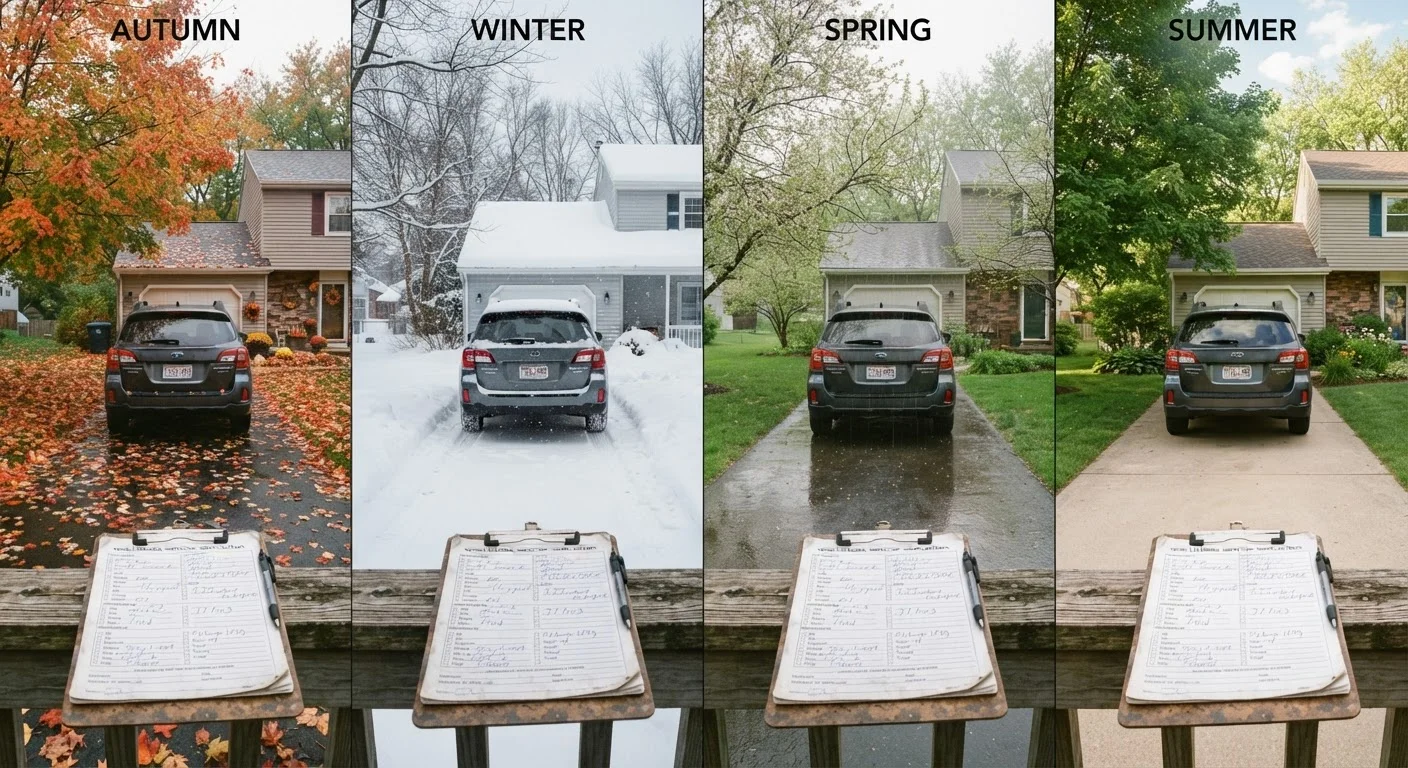
Staying ahead of seasonal needs is equally important. A seasonal car maintenance checklist can help you catch what's easy to overlook between visits to a shop.