Why Seasonal Maintenance Pays Off
American drivers face a wider range of conditions than almost any other motorists in the world — from sub-zero Minnesota winters to scorching Arizona summers, Gulf Coast humidity to Pacific Northwest rain. Every seasonal shift puts different stresses on your vehicle, and the components that breeze through summer can quietly fail once temperatures drop.
The good news: most seasonal checks are quick, low-cost, and straightforward enough to do yourself or confirm with a trusted mechanic. Done consistently, they reduce the chance of unexpected breakdowns and help keep long-term costs predictable. For a fuller picture of how maintenance timing affects your wallet, see our guide to controlling ownership costs over a vehicle's life.
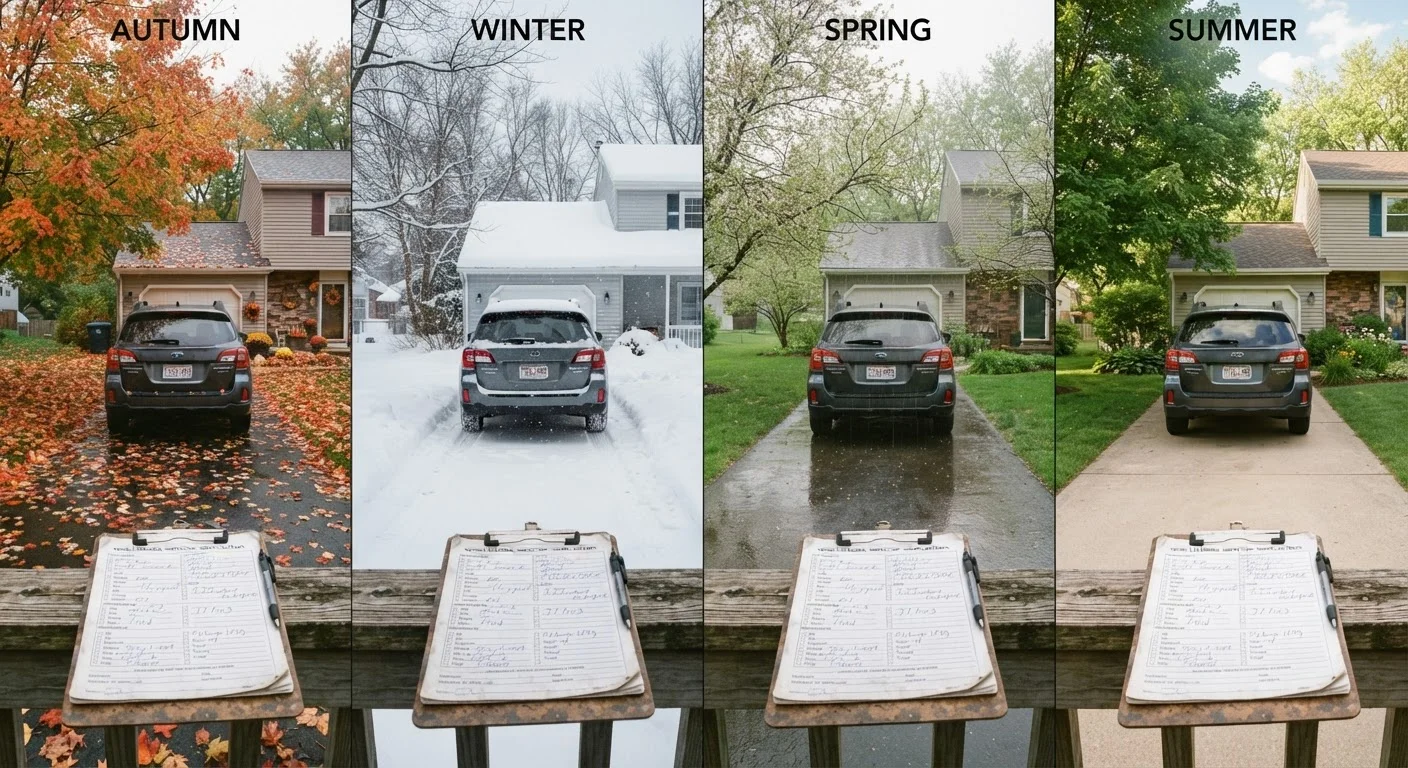
Use the checklist below as a repeatable audit — run it four times a year, roughly aligned with the seasons, and nothing critical should slip through.
Tire Pressure Gauge
Accurately measure PSI in all four tires and the spare each season.
Battery Tester or Multimeter
Check battery voltage and identify weak cells before cold or heat causes a failure.
Coolant Hydrometer or Test Strips
Verify antifreeze concentration is appropriate for your region's temperature range.
Tread Depth Gauge
Measure remaining tire tread to determine if replacement is needed before winter.
Flashlight or Inspection Light
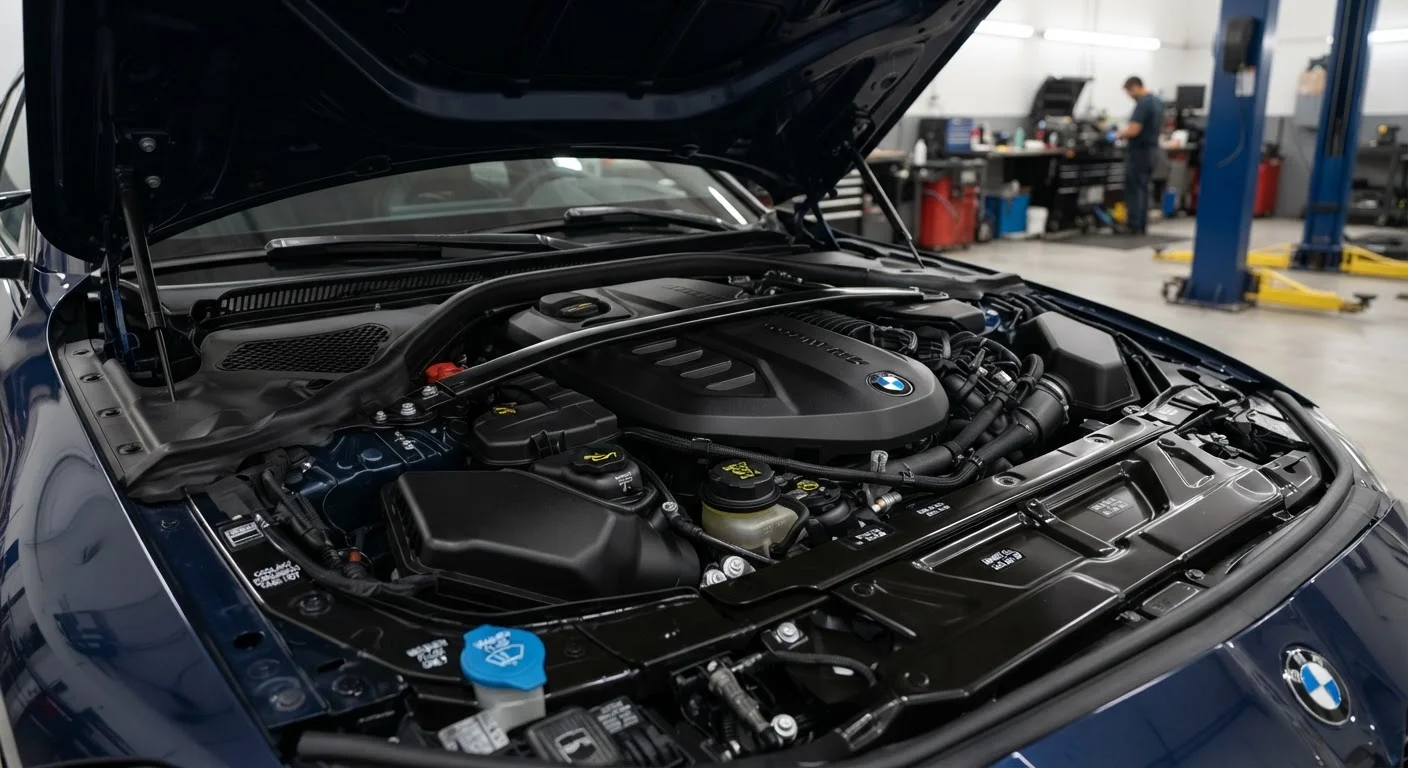
Illuminate the undercarriage and engine bay for visual checks in low-light conditions.
The Seasonal Checklist
Items are grouped by season. Many overlap, so treat any repeated task as reinforcement rather than duplication. For a deeper explanation of what each service interval actually involves, our maintenance schedule decoder is a useful companion.
Spring (Post-Winter Recovery)
Summer (Heat & High-Mileage Prep)
Fall (Pre-Winter Preparation)
Winter (Cold-Weather Monitoring)
Don't Skip the Tire Pressure Check
Tire pressure changes with temperature at a predictable rate — roughly 1 PSI for every 10°F shift. Underinflated tires wear unevenly, reduce fuel efficiency, and increase blowout risk. Overinflated tires in summer heat reduce traction. Always check pressure when the tires are cold (before driving more than a mile) for an accurate reading.
A Few Things Worth Knowing
Not every check on this list requires a mechanic. Inspecting wiper blades, checking tire pressure, and topping off washer fluid are tasks most drivers can handle in a parking lot. However, brake inspections, suspension checks, and anything involving the cooling or electrical system are generally better left to a qualified technician — especially if you notice symptoms like pulling, vibration, or warning lights.
If you're unsure what a fluid does or where to find it, our quick-reference guide to car fluids covers engine oil, coolant, brake fluid, and more in plain English. And if you've heard that you must change your oil every 3,000 miles or that you need to warm up your engine in winter — our car maintenance myths article separates those persistent rumors from what mechanics actually recommend.
Brake and Suspension Work: Leave It to a Pro
If you notice pulling to one side, vibration through the steering wheel, grinding noises, or a spongy brake pedal, do not delay having these symptoms evaluated by a qualified mechanic. Brake and suspension systems are safety-critical — incorrect DIY repairs can lead to loss of vehicle control. Describe symptoms precisely when you take the vehicle in, and ask the mechanic to explain any recommended repairs before authorizing work.
Before a long trip, run through our pre-trip vehicle check as a final pass — it's a structured walkthrough of tires, lights, and fluids designed to catch last-minute issues before they become roadside emergencies.