How Lenders Actually Read Your Credit Score
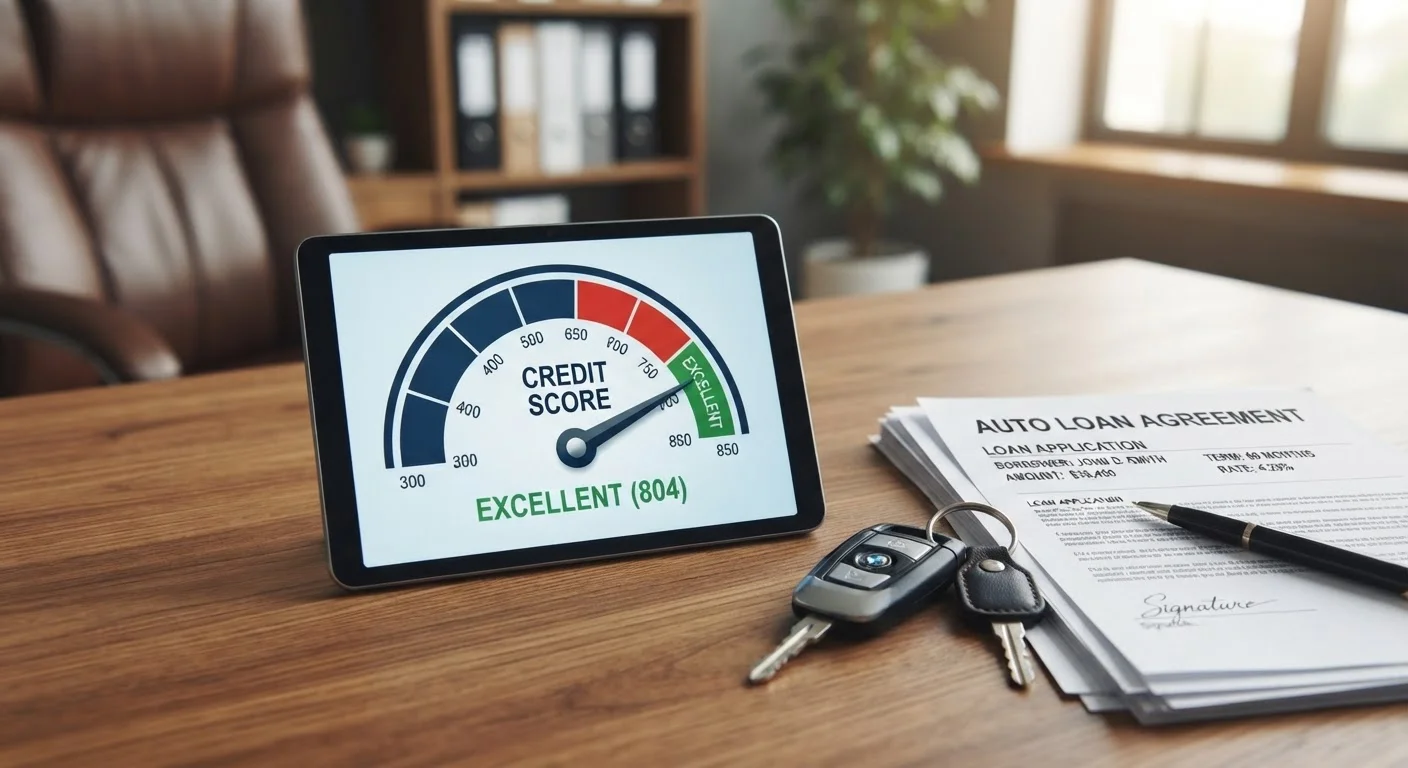
When a lender pulls your credit file, they're not just looking at a single number in isolation. They're examining the full picture that score represents: your payment history (the largest factor), how much of your available credit you're using, the length of your credit history, the mix of credit types you hold, and how recently you've applied for new credit.
Auto lenders then slot borrowers into tiers — commonly labeled super-prime, prime, near-prime, subprime, and deep subprime. Each tier carries a corresponding interest rate range. The practical consequence is that two people buying the identical car from the same dealership on the same day can walk away with dramatically different monthly payments simply because of where their score places them in that hierarchy.
~65%
Share of auto loans going to prime or better borrowers
According to Experian's State of the Automotive Finance Market reports, borrowers with prime or super-prime scores consistently represent the majority of new auto loan originations.
300–850
Standard FICO score range used in lending
The FICO scoring model, used by the majority of U.S. auto lenders, places scores on a 300-to-850 scale, with higher scores indicating lower perceived credit risk.
5%+
Typical APR gap between super-prime and subprime borrowers
Industry data from Experian and the Consumer Financial Protection Bureau consistently shows meaningful rate differences between the highest and lowest credit tiers for auto loans.
The Real Cost of a Higher Interest Rate
Interest rates are where your credit score exerts its most tangible financial force. A rate that sounds like a small percentage difference on paper compounds into a meaningful dollar figure across a 48- or 72-month loan. Consider this framing: on a loan of $28,000 over 60 months, moving from a 5% rate to a 10% rate adds roughly $3,800 in total interest paid — money that buys nothing tangible.
This is why understanding your score before stepping into any financing conversation matters. It allows you to evaluate whether the offer on the table reflects your actual creditworthiness or whether there's room to negotiate. For a deeper look at how loan terms affect true ownership cost, see our financing misconceptions guide.
Rate-Shop Within a Short Window
When comparing auto loan offers from multiple lenders, try to submit all applications within a 14-to-45-day period. Most credit scoring models — including FICO and VantageScore — treat all auto loan inquiries made within that window as a single hard inquiry, protecting your score while you shop for the best rate.
Steps You Can Take Before Financing
You don't have to accept your current credit standing as fixed. Several actions — taken weeks or months before applying — can meaningfully shift your score:
- Pay down revolving balances. Reducing your credit utilization ratio (the percentage of available credit you're using) can produce relatively quick score improvements.
- Dispute reporting errors. A Federal Trade Commission study found that a notable share of consumers have errors on their credit reports. Incorrect late payments or accounts that aren't yours can suppress your score unfairly.
- Avoid new credit applications shortly before applying. Each hard inquiry can cause a small temporary dip; clustering applications unnecessarily works against you.
- Don't close old accounts. Length of credit history is a scoring factor — keeping older accounts open (even unused) generally helps.
Once you know where your score stands, you're also better positioned to decide between financing options. Our guide to dealership vs. direct lending explains how both paths work and what your credit profile means for each.
Putting It All Together Before You Buy
Your credit score is not a judgment — it's a data point lenders use to price risk. Understanding how it works removes a significant information asymmetry from the car-buying process. Before you visit a dealership or fill out an application, know your score, know which tier it places you in, and have a realistic sense of the rate range you should expect.
Also factor financing cost into your broader ownership budget. A car that appears affordable based on sticker price may look very different once insurance, depreciation, and loan interest are included. Our article on what car ownership actually costs walks through the full picture. And when you're ready to finalize a purchase, questions worth asking before signing will help you navigate the final steps with confidence.
Credit Scores Are One Factor Among Several
While your credit score is a central input, lenders also weigh your debt-to-income ratio, employment history, the size of your down payment, and the age and mileage of the vehicle being financed. A strong score helps significantly, but the full underwriting picture is broader than one number alone.