Why Your Questions Matter More Than the Pitch
Car dealerships are well-practiced environments. Sales processes are structured to move buyers toward a decision efficiently — which means the burden of due diligence falls squarely on you. The good news: informed questions shift that dynamic. When you know what to ask and why it matters, you gather the information you actually need to evaluate whether a deal is right for you.
This list covers the questions that consistently surface gaps between what's assumed and what's true — on pricing, condition, financing, and coverage. Whether you're purchasing new, certified pre-owned, or used, these questions apply. If you're still weighing which category of vehicle suits your needs, see our breakdown of new, CPO, and used vehicles before you start shopping.
Bring Your Questions in Writing
Printing or saving your questions on your phone before visiting a dealership keeps you focused and ensures nothing gets skipped in the moment. It also signals to the seller that you've done your homework — which can shift the tone of the negotiation in your favor. Don't rely on memory when the conversation moves quickly.
The Questions Informed Buyers Always Ask
What is the full out-the-door price?
Monthly payment figures are easy to manipulate by stretching loan terms. The number that actually tells you what you're paying is the out-the-door price: the total including taxes, title, registration, dealer fees, and any add-ons. Ask for this figure in writing, line by line, before any conversation about financing. Compare it against common assumptions buyers make about pricing to know where there may be room to negotiate.
The out-the-door price — not the monthly payment — is the only figure that tells the whole story.
What does the warranty actually cover, and for how long?
Warranty terms vary widely. A new vehicle may carry a bumper-to-bumper limited warranty alongside a separate powertrain warranty with different durations. Certified pre-owned programs layer additional coverage on top of a remaining factory warranty — but the terms differ by manufacturer. Ask for the warranty documentation directly and read what is explicitly excluded. "Powertrain" coverage, for example, typically does not include wear items, electronics, or HVAC components. Understand what triggers a claim denial as clearly as what triggers coverage.
What a warranty excludes is often more important than what it covers.
Can I see the vehicle history report?
On any used or CPO vehicle, request a vehicle history report — services like Carfax and AutoCheck compile ownership history, reported accidents, title status, odometer readings, and service records. A clean report reduces risk but does not eliminate it; not every incident gets reported. Treat the report as a starting point for your inspection, not a final clearance. If a dealer is reluctant to provide one, that hesitation itself is meaningful information.
A vehicle history report reduces risk — it does not eliminate it.
Has this vehicle been inspected, and can I get an independent inspection?
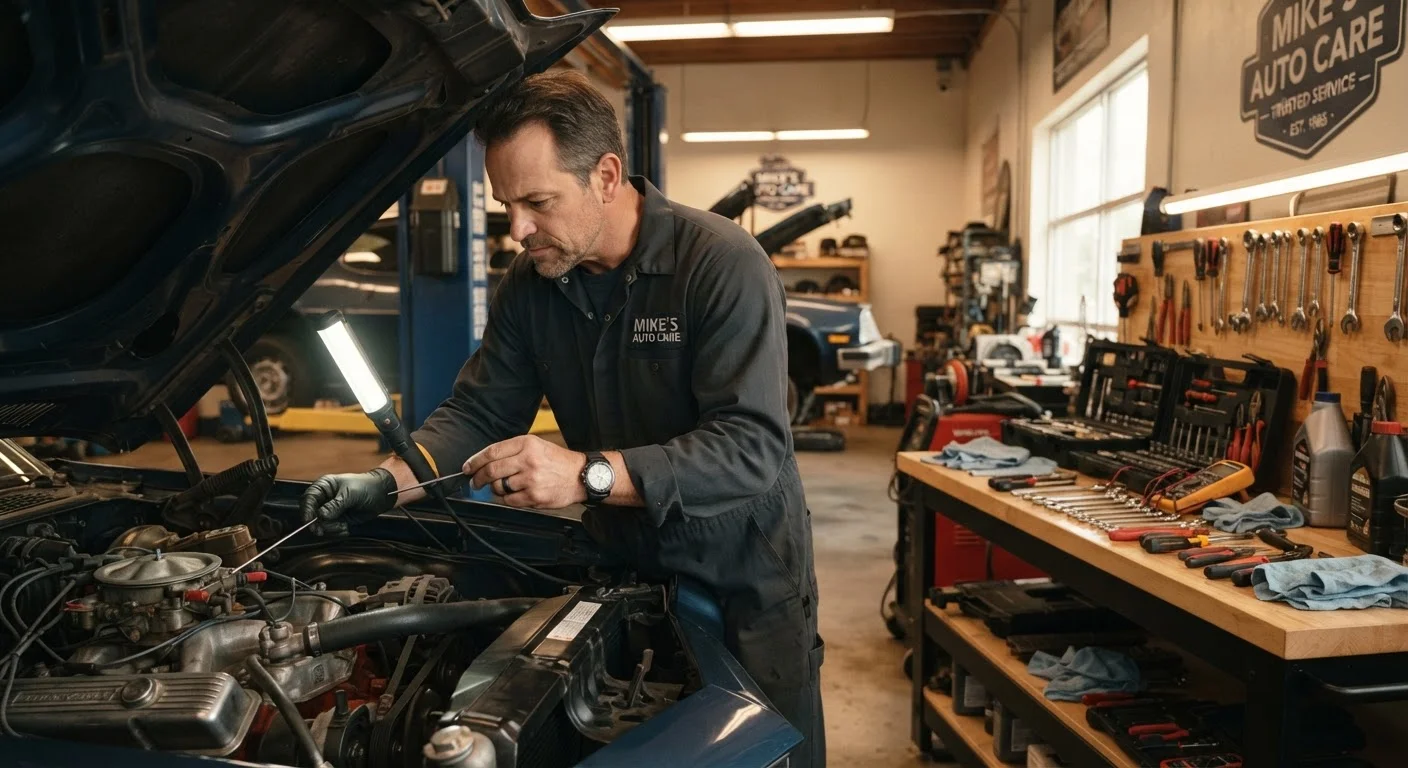
Dealer inspections serve the dealer's process, not necessarily your interest. On a used vehicle, ask whether you can take the car to an independent, ASE-certified mechanic of your choosing before finalizing the purchase. A pre-purchase inspection — typically costing between $100 and $200 — can surface issues that aren't visible on a test drive or in a vehicle history report. Most reputable sellers will accommodate this; resistance is a red flag worth noting. If you drive the car off the lot, you generally own whatever problems come with it.
An independent pre-purchase inspection is one of the most cost-effective steps in used car buying.
What are the financing terms, and what rate am I actually qualifying for?
Dealer financing can be competitive, but it can also include markup on the interest rate — a practice sometimes called dealer reserve. Before accepting in-house financing, know your credit score and get pre-approved through a bank or credit union so you have a baseline rate for comparison. Ask the dealer to show you the APR (annual percentage rate), the loan term in months, and the total interest paid over the life of the loan — not just the monthly payment. Extending a loan term to lower monthly payments significantly increases your total cost.
Know your baseline APR before accepting any dealership financing offer.
Are there any add-ons or dealer-installed accessories on the vehicle?
Dealers sometimes add accessories — paint sealants, fabric protection, window tinting, or security systems — that appear as line items on the final invoice. These are often priced at a significant markup over their actual market cost and may be presented as already installed and therefore non-removable. Ask explicitly what add-ons are on the vehicle, whether they can be removed, and what the price is with and without them. No add-on should be treated as mandatory unless it was part of an agreed-upon deal from the start.
Dealer-installed add-ons are rarely mandatory — always ask what the price looks like without them.
Am I test driving this specific vehicle?
It's common for a dealer to offer a test drive in a demo or similar-trim vehicle rather than the exact unit you'd be purchasing. Insist on driving the specific car you intend to buy. Listen for noises, pay attention to how it accelerates, brakes, and handles, and test all major systems — HVAC, infotainment, windows, and mirrors. After the drive, review the vehicle's basic systems the way you would before a long trip to catch anything that wasn't apparent in motion.
Always test drive the exact vehicle you plan to purchase, not a comparable model.
Private Sales Follow Different Rules
Buying from a private seller rather than a dealership changes the equation considerably. There is no dealer warranty, no certified inspection process, and typically no recourse after the sale is complete. If you're buying privately, an independent pre-purchase inspection becomes even more essential, and you should verify the title is clean and free of liens through your state's DMV before handing over any money.
After the Questions Come the Checks
Getting satisfactory answers is only part of the process. Before you commit — especially on a used vehicle — walk through a structured physical inspection. Our used car inspection checklist covers the exterior, interior, engine bay, and test drive in detail. And once you own the vehicle, routine upkeep is what protects your investment over time — the car maintenance hub is a useful reference for that.
The full cost of ownership also extends well beyond the purchase price. Insurance, fuel, depreciation, and maintenance all add up — understanding those costs before signing helps you judge whether a given vehicle fits your actual budget, not just your down payment.