How Each Formula Actually Works
Understanding the chemistry behind each formula helps clarify why their trade-offs exist in the first place.
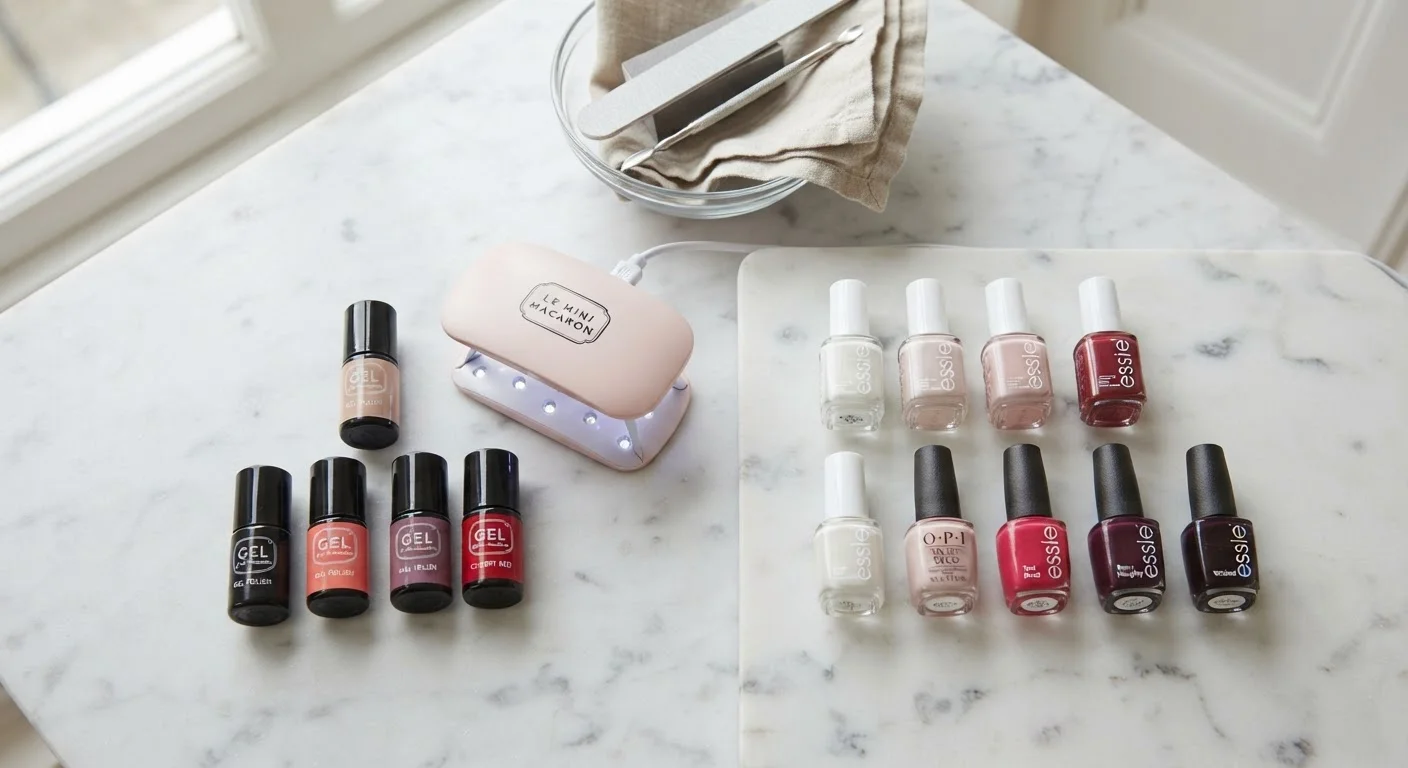
Regular nail polish is a solvent-based lacquer. When you apply it, the solvents evaporate and leave a film of pigment and resin on the nail surface. Drying happens through air exposure, and the resulting film remains flexible — which is part of why it chips under daily stress.
Gel polish contains photoinitiators — compounds that react to UV or LED light and trigger a process called polymerization. Each coat is cured (hardened) under a lamp, creating a much harder, cross-linked coating that bonds more durably to the nail plate. That structural difference is what gives gel its extended wear time.
To understand how either formula interacts with the nail itself, it helps to know what each part of the nail actually does. The nail plate's porosity and natural moisture content affect how well either formula adheres — and how it behaves during removal.
| Criterion | Gel Polish | Regular Polish |
|---|---|---|
| Typical wear time | 2–3 weeks | 3–7 days |
| Drying/curing method | UV or LED lamp required | Air dries naturally |
| Removal process | Acetone soak (10–15 min) | Standard remover, minutes |
| At-home application ease | Moderate — requires lamp | Simple — no equipment needed |
| UV exposure | Brief per session | None |
| Nail plate impact (if misused) | Thinning from improper removal | Dryness from frequent use |
| Color-change flexibility | Low — longer commitment | High — easy to change |
Durability, Removal, and Nail Health Impact
Wear time is the most visible difference: regular polish typically lasts three to seven days on most people before noticeable chipping, while gel commonly holds for two to three weeks. That gap is significant, but it comes with trade-offs on the removal side.
Regular polish removal is straightforward — a cotton pad soaked in remover and a few seconds of contact dissolves the lacquer. Acetone-free removers are gentler, though acetone-based formulas work faster. Either way, the process is brief and rarely stressful to the nail plate when used in moderation.
Gel removal is more involved. The standard method requires wrapping nails in acetone-saturated cotton for ten to fifteen minutes, then gently pushing off the softened gel. Skipping this and peeling or scraping gel off instead is where real nail damage occurs — it lifts layers of the nail plate along with the product. Repeated improper removal is a leading cause of the thinning and brittleness sometimes associated with gel use. A basic nail care routine that includes regular moisturizing can help offset some of the drying effects of acetone exposure.
2–3 weeks
Average gel polish wear time
Gel polish generally adheres for two to three weeks under normal daily conditions before lifting or fading becomes noticeable.
10–15 min
Recommended gel soak-off time
Nail care professionals typically recommend soaking gel-covered nails in acetone for ten to fifteen minutes before gentle removal to minimize nail plate disruption.
UV exposure during gel curing is a genuine consideration, though most lamps emit relatively brief, low-intensity doses per session. Using broad-spectrum sunscreen on the hands or applying nail shields before curing are common harm-reduction approaches. Consult a dermatologist if you have specific concerns about UV sensitivity or skin conditions on the hands.
Persistent nail thinning, peeling, or discoloration after either type of polish warrants attention. Some of these signs may indicate underlying nail health issues rather than product reactions — see a healthcare professional if symptoms persist. You can also review common nail care myths to separate evidence-based concerns from overcorrections.
Choosing What Works for Your Lifestyle
Neither format is universally better — the right choice depends on your schedule, nail condition, and how much upkeep you want to manage.
If your nails are already thin or prone to breakage, giving them recovery time between gel applications — or opting for regular polish in the interim — is a reasonable approach. Seasonal factors also affect nail resilience: cold, dry months can make nails more brittle, which may influence how either formula wears or how well nails tolerate removal chemicals.
For those doing their own nails at home, regular polish has a lower barrier to entry. Gel application requires a lamp and a more structured multi-step process; without proper technique, issues like lifting at the edges or uneven curing are common. The right tools matter for both formats — proper buffing, base coat application, and cuticle preparation improve adhesion and longevity regardless of which polish you choose.
Ultimately, both formats can fit into a thoughtful nail care practice. The key is matching your expectations around wear time, removal effort, and nail health maintenance to whichever formula you use — and being consistent about proper technique on both ends of the process.
A Note on 'Gel Nails' vs. Gel Polish
Gel polish (sometimes called soak-off gel) is different from hard gel nail extensions or builder gels. Hard gels are filed off rather than soaked, and are typically applied to extend nail length rather than coat the natural nail. This article focuses specifically on soak-off gel polish — the most common format used for color at home and in salons. If you're considering nail extensions, the removal and health considerations differ meaningfully and are worth discussing with a licensed nail technician.