How Seasonal Conditions Affect Nail Structure
Nails are not static — they respond to their environment much the way skin does. The nail plate is composed largely of keratin, a fibrous protein that absorbs and releases moisture. When the surrounding environment shifts dramatically, that moisture balance shifts too, and the nail plate pays the price.
In winter, cold outdoor air combined with indoor heating creates an especially dry environment. Nails lose water content faster than they can replenish it, leading to brittleness, microcracks, and splitting at the tips. In summer, the opposite problem tends to emerge: high humidity and frequent hand-washing or swimming can over-hydrate the nail plate, causing it to soften and flex in ways that invite peeling and tears. Understanding these mechanisms helps you adapt, rather than react after damage occurs.
For a closer look at how each part of the nail contributes to its overall resilience, see what each part of your nail actually does.
~10%
Rate at which nails grow per month on average
The American Academy of Dermatology notes that fingernails grow approximately 3–4 mm per month, meaning seasonal damage can take several months to fully grow out.
18%
Water content of a healthy nail plate
Research on nail biophysics indicates that the nail plate contains roughly 18% water when healthy; levels outside this range correlate with both brittleness (too low) and softness-related peeling (too high).
Best Practices for Year-Round Nail Strength
Consistent habits — not seasonal overhauls — are what protect nails over the long term. The practices below address the most common points of seasonal vulnerability.
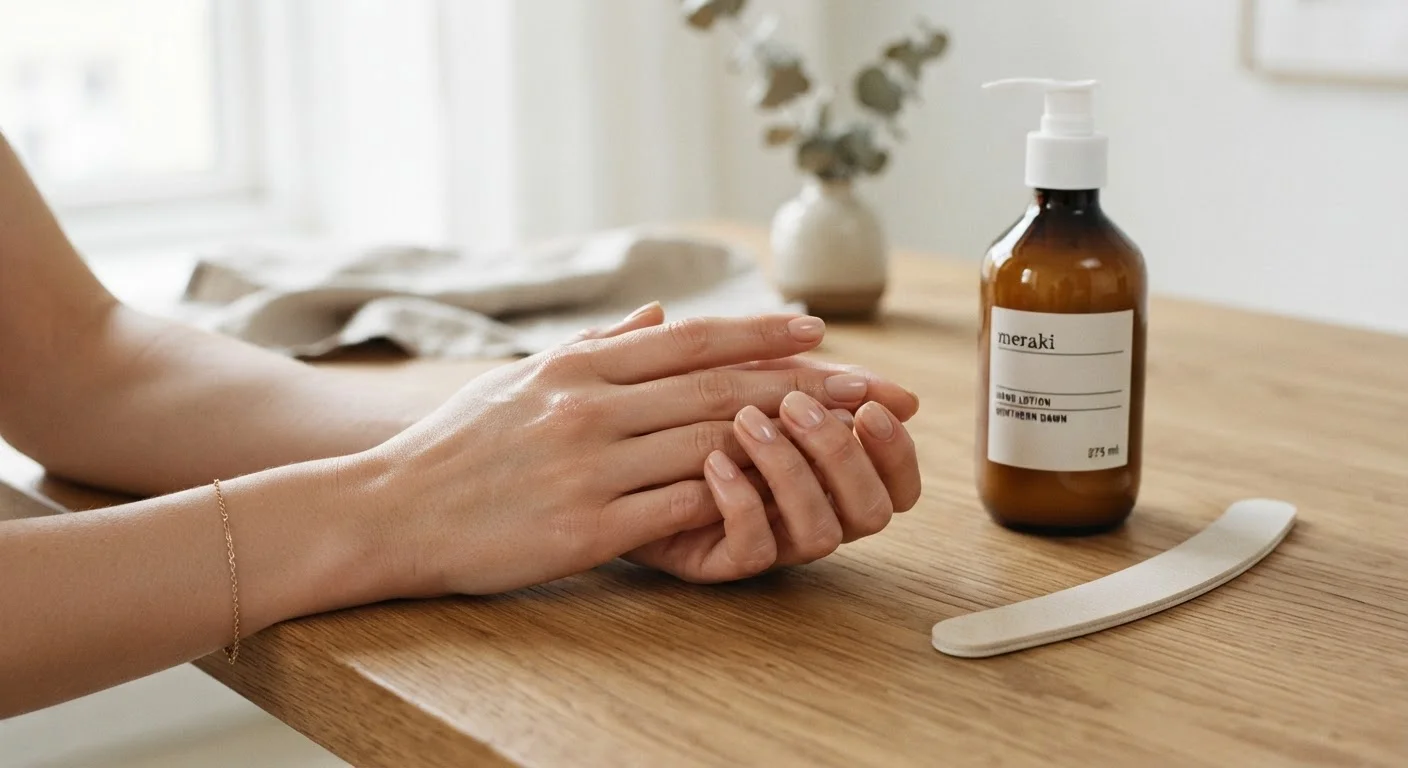
Apply a nail and cuticle oil or cream daily, especially after handwashing.
Repeated water exposure followed by evaporation is one of the leading causes of nail brittleness. Sealing in moisture with an oil or emollient cream immediately after hands are washed or dried helps maintain the nail plate's flexibility and reduces cracking. Cuticles, when properly moisturized, also form a better protective seal at the nail base.
Wear protective gloves when doing dishes, cleaning, or working with chemicals.
Detergents and prolonged water exposure are particularly damaging in winter when nails are already moisture-depleted, and in summer when water exposure compounds softening. A simple pair of rubber or nitrile gloves creates a barrier that prevents both dehydration from harsh soaps and over-hydration from extended soaking.
File nails in one direction using a fine-grit file rather than a coarse or back-and-forth motion.
Sawing back and forth with a coarse file creates micro-tears at the nail edge that expand into splits and breaks — a problem that worsens when nails are already brittle from cold or softened from humidity. A fine-grit file used in a single direction smooths the edge without fraying the layers of the nail plate.
Keep nails at a length that suits your seasonal activity level.
Longer nails are more vulnerable to leverage breaks during active summer months or when hands are frequently cold-stiffened in winter. Trimming to a manageable length reduces the mechanical stress placed on the nail plate and lowers the likelihood of traumatic breaks that can damage the nail bed.
Avoid using nails as tools for prying, scraping, or opening packages.
This kind of mechanical stress puts concentrated pressure at the weakest point of the nail — the free edge — and is especially damaging when nails are already compromised by seasonal dryness or softness. The habit is easy to overlook but accounts for many preventable breaks.
Stay consistent with polish routines and choose removal methods that minimise dehydration.
Acetone-based removers, used frequently, strip moisture from both the nail and the surrounding skin — a compounding problem in dry winter conditions. Spacing out removal and using acetone-free removers for regular polish can reduce this drying effect. Understanding the trade-offs of different polish types can also help. Gel vs. regular polish each carry different implications for nail health worth knowing.
Quick Wins You Can Start Today
Even small adjustments to your daily routine can reduce seasonal nail damage noticeably. These actions require minimal time or investment and deliver reliable results.
If you're building your routine from the ground up, this plain-language guide to nail care basics walks through all the fundamentals without the overwhelm. And if peeling is already a problem, the reasons your nails keep peeling may be worth reviewing before assuming it's purely a seasonal issue.
Watch for Peeling That Doesn't Resolve Seasonally
Persistent peeling or brittleness that doesn't improve with better moisturizing and protective habits may signal something beyond environmental exposure — nutritional gaps or underlying health factors can play a role. Explore the broader causes of nail peeling before assuming it's purely a seasonal issue, and speak with a healthcare provider if symptoms are significant or persistent.
This article is for general informational purposes only and is not a substitute for professional medical or dermatological advice. If you notice significant nail changes — such as discoloration, thickening, or unusual brittleness — consult a qualified healthcare provider.