Why Knowing Your Tools Matters
Walk into any beauty aisle and you'll find a wall of nail tools with similar shapes and vague packaging. Using the wrong tool — or using the right one incorrectly — can weaken nail structure, irritate the surrounding skin, or lead to uneven results that take weeks to grow out. This glossary is designed as a straightforward reference: what each tool is, what it's actually for, and what to watch out for.
If you're building a routine from the ground up, see our beginner nail care guide for a step-by-step walkthrough. And if you've absorbed common advice about cuticles or nail health, our nail care myths article separates evidence-based practice from folklore.
| Recommended file grit for natural nails | 180–240 grit |
| How often to replace emery boards | When surface is worn, frayed, or after heavy use |
| Sanitizing agent for metal tools | 70% or higher isopropyl alcohol |
| Buffing frequency guideline | No more than once every few weeks |
| Cuticle nipper intended use | Dead hangnail skin only — not living cuticle tissue |
| Glass files: washable and reusable | Yes — rinse under water, air dry |
Core Tool Definitions
Below is a plain-language breakdown of the tools you're most likely to encounter.
Nail File (Emery Board)
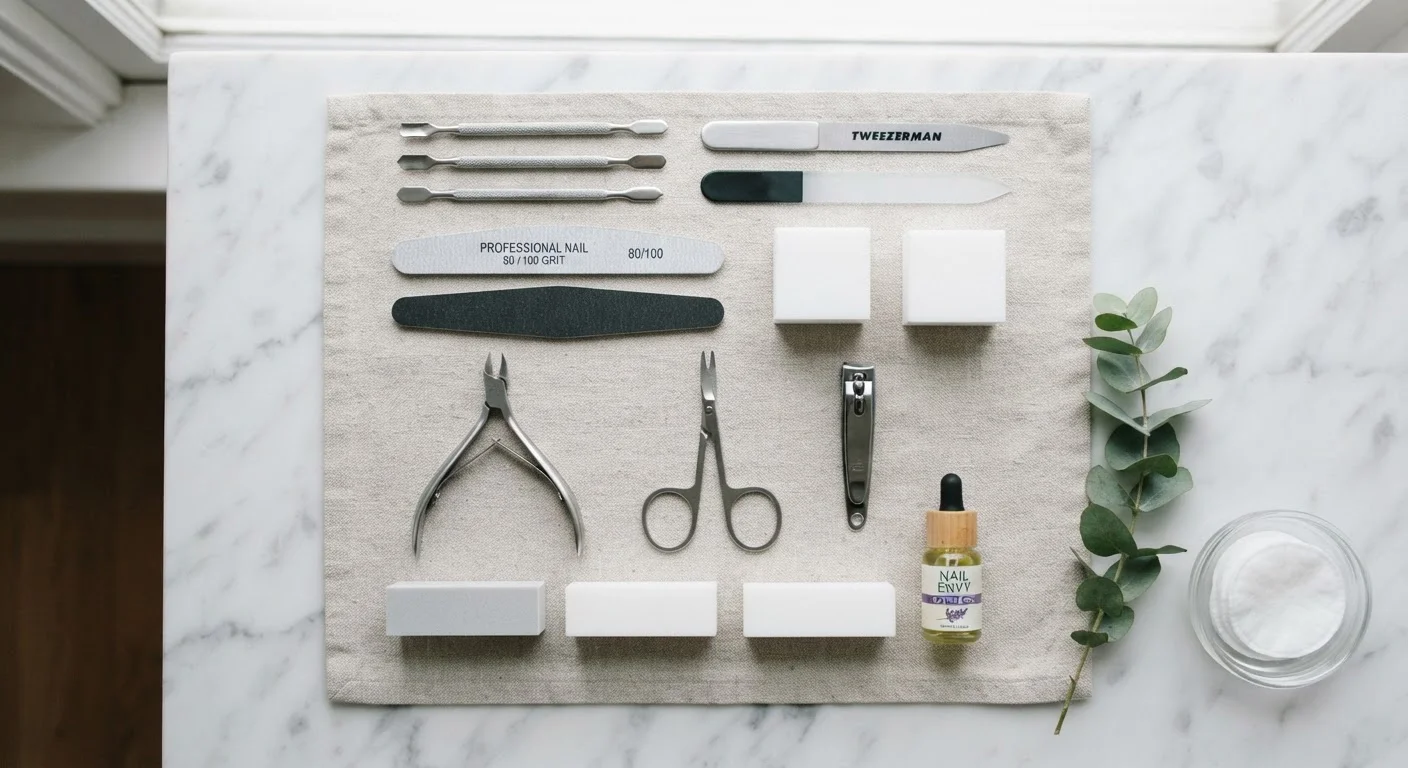
A flat, abrasive tool used to shape the free edge of the nail. Grit is measured numerically — lower numbers (80–100) are coarser and suited to acrylic or thick nails, while higher numbers (180–240) are finer and gentler on natural nails. Always file in one direction to reduce splitting.
Glass (Crystal) File
A nail file made from tempered glass with a micro-etched surface. It produces a very fine, sealed edge on the nail tip and can be washed and reused indefinitely. Generally considered gentler on natural nails than coarser emery boards.
Buffer Block
A multi-sided block with graduated surfaces used to smooth ridges on the nail plate and create a light shine without polish. Overuse can thin the nail plate over time, so buffing is typically recommended no more than once every few weeks.
Cuticle Pusher
A tool — usually metal with a flat, angled end — used to gently push back the cuticle from the nail plate after softening with warm water or cuticle remover. It should never be used with force; aggressive pushing can damage the nail matrix.
Cuticle Nipper
A small scissor-like tool with a rounded jaw used to trim only dead, hanging skin (hangnails) at the cuticle edge. It is not meant to cut the living cuticle tissue itself, which acts as a protective seal against bacteria and fungi.
Cuticle Remover
A gel or liquid product containing alkaline ingredients (commonly potassium hydroxide) that chemically soften dead skin around the cuticle for easier removal. It should be applied only to the surrounding skin, not the nail plate, and rinsed off within the time noted on the product.
Nail Scissors
Small, curved-blade scissors used to trim the free edge of the nail. More precise than clippers for thin or curved nails. The curve of the blade is designed to follow the natural arc of the fingernail.
Nail Clippers
A spring-loaded cutting tool for trimming nail length quickly. Best used on dry nails; cutting wet nails can cause tearing. Standard clippers suit fingernails; larger, straight-edged clippers are made specifically for toenails.
Toe Separator
A foam or silicone form that spreads the toes apart during pedicure work or nail polish application. It prevents smudging and allows better access to each nail surface.
Orange Stick (Cuticle Stick)
A thin wooden or plastic stick with a pointed end and a flat, angled end. Used to push back cuticles, clean under nail edges, or remove excess polish from the skin around nails. Wooden versions are typically single-use.
Choosing the right tool also depends on your nail goals. For example, if you use gel products regularly, the removal and filing process differs from traditional polish. Our gel vs. regular polish comparison explains how those differences affect nail health over time.
Cleaning, Sanitizing, and Replacing Your Tools
Nail tools accumulate dead skin cells, keratin debris, and bacteria with every use. Reusing unclean tools can transfer microorganisms to small cuts or torn cuticles, where they have easy entry to deeper tissue. General best practices include:
- Metal tools (nippers, pushers, scissors): Wash with soap and water, then wipe with isopropyl alcohol (70% or higher) after each use. Dry completely before storing to prevent rust.
- Emery boards and disposable files: These are porous and cannot be fully sanitized. Replace them regularly — a rough or frayed surface also performs poorly and can catch on nail edges.
- Washable files and buffers: Scrub with a nail brush under running water, allow to air-dry fully, and inspect for embedded debris before reuse.
- Toe separators and rubber items: Wash with mild soap and water; replace when they show signs of breakdown or discoloration.
Seasonal changes can affect how nails respond to tools — dry winter conditions make nails more brittle and prone to tearing, for instance. Adapting your approach throughout the year is worth considering; our seasonal nail strength guide covers practical adjustments.
When to See a Professional
Nail tools are designed for routine maintenance on healthy nails and skin. If you notice signs of nail infection — persistent discoloration, thickening, pain, or inflammation around the nail — consult a dermatologist or licensed healthcare provider before attempting home treatment. This article is for general informational purposes only and is not a substitute for professional medical advice.