Why Hard Floor Type Changes Everything
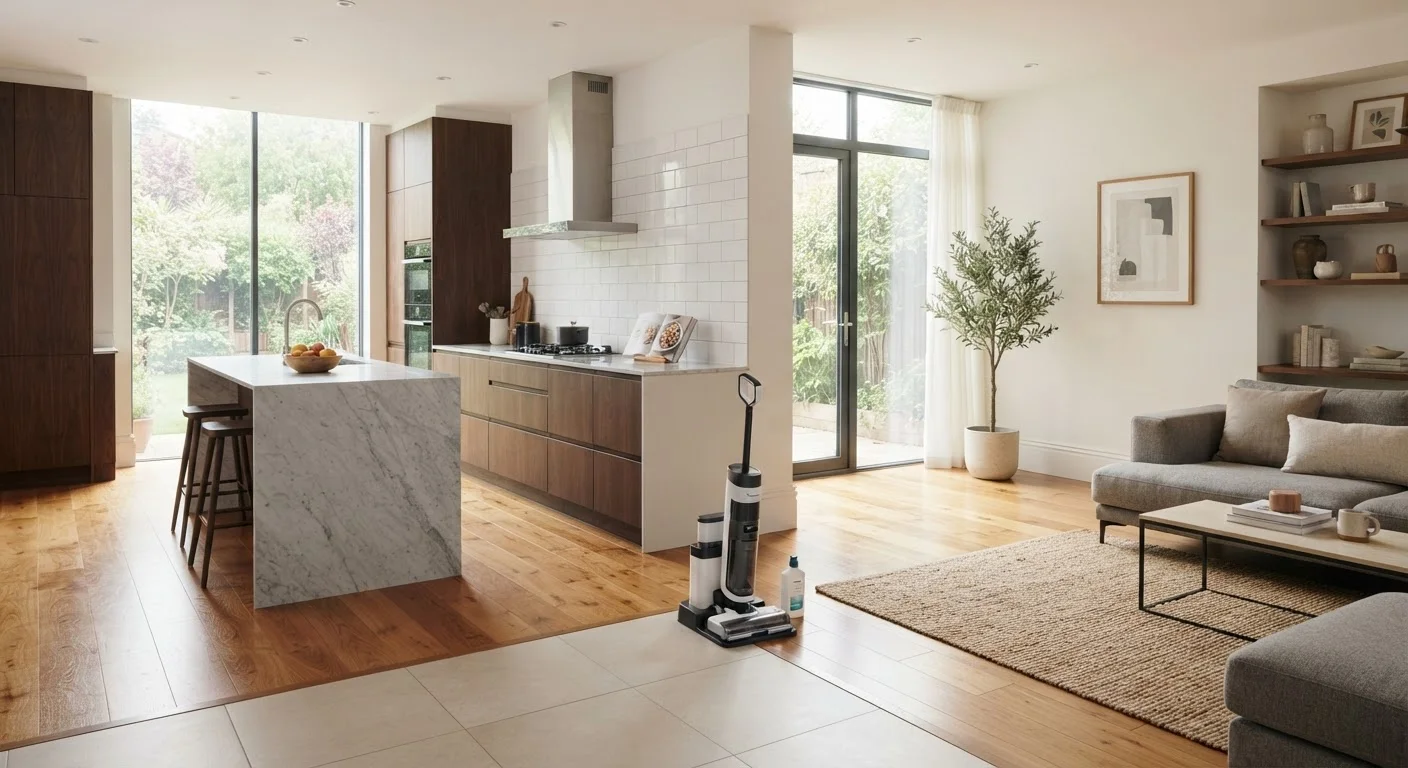
Not all hard floors are created equal, and a cleaning appliance optimized for one surface can actively damage another. Hardwood is porous and moisture-sensitive; excessive water or harsh scrubbing can warp planks or dull finishes over time. Tile and grout, by contrast, tolerate more aggressive cleaning but trap debris in recessed joints. Laminate sits in between — it mimics hardwood visually but reacts badly to standing water due to its composite core.
Before evaluating any cleaning appliance, identifying your primary floor type — and whether you have multiple — determines which features are non-negotiable versus merely convenient. For households with mixed flooring, look for appliances with adjustable settings rather than single-mode operation.
| Suitable floor types | Hardwood, tile, laminate, vinyl, stone |
| Appliance categories | Stick vacuums, robot vacuums, steam mops, spray mops, vacuum-mop combos |
| Recommended brush roll for hardwood | Soft roller (felt or foam-wrapped) |
| Water sensitivity ranking | Hardwood (high) > Laminate (medium-high) > Tile (low) |
| HEPA filtration standard | 99.97% capture of particles ≥ 0.3 microns (U.S. Department of Energy filtration standard) |
| Cordless runtime (typical range) | 20–60 minutes depending on power mode (General industry range; varies by model) |
For a deeper look at how steam, spin, and spray mop designs differ across these surfaces, see Steam Mops, Spin Mops, and Spray Mops: Understanding the Key Differences.
Feature-by-Feature Breakdown
Evaluating a cleaning appliance on its headline specs alone often leads to mismatched purchases. Here are the features that genuinely matter for hard floor performance:
Suction Power and Motor Type
For vacuums and vacuum-mop combos, suction strength (measured in air watts or Pa for robot vacuums) determines how effectively the machine lifts fine particles from grout lines and surface texture. Brushless motors tend to be more efficient and longer-lasting than brushed alternatives, though they typically add cost. On sealed hard floors, excessive suction paired with a stiff brush roll can scatter lightweight debris rather than contain it — a soft roller attachment is generally preferable.
Brush Roll Design
Hard floors require softer, flatter brush rolls — often called soft rollers or felt rollers — rather than the bristle-heavy rolls designed for carpet agitation. Bristle rolls can scratch hardwood finishes and produce an audible scraping sound on tile. Some appliances include a hard-floor mode that disengages or slows the brush roll rotation while maintaining suction.
Water Delivery and Moisture Control
For mopping functions, how an appliance distributes water matters considerably. Spray-and-wipe mechanisms allow the user to control moisture output per pass, which is critical on hardwood and laminate. Steam mops deliver high-temperature vapor that sanitizes without pooling — useful on tile, but potentially risky on unsealed hardwood. Fixed-flow wet systems that release a continuous stream are generally less suitable for moisture-sensitive floors.
Air Watts
A measure of a vacuum's actual cleaning power, calculated by combining airflow and suction. It provides a more meaningful performance comparison than motor wattage alone.
HEPA Filtration
High-Efficiency Particulate Air filtration captures at least 99.97% of airborne particles 0.3 microns or larger. In vacuum design, a sealed HEPA system prevents filtered particles from re-entering room air.
Soft Roller
A brush roll variant with a felt or foam-wrapped surface designed for hard floors. It picks up fine debris and larger particles without scratching delicate surfaces like hardwood or laminate.
Steam Mop
An electric mopping appliance that heats water into steam, delivering it through a pad to sanitize hard floors. Steam cleaning uses minimal liquid, reducing moisture exposure compared to traditional wet mopping.
Sealed Filtration
A vacuum design in which all exhausted air passes through the filter before exiting the machine. This prevents dirty air from bypassing the filter through gaps in the housing.
Pascal (Pa)
A unit of pressure used primarily to rate suction power in robot vacuums. Higher Pa values indicate stronger suction force at the cleaning head.
Filtration
HEPA filtration (capturing particles down to 0.3 microns at 99.97% efficiency) is relevant when air quality is a concern, particularly in homes with allergy sufferers. On hard floors, which don't trap particles the way carpet does, filtration becomes more important because debris is recirculated into the air more easily during vacuuming. Sealed filtration systems prevent exhausted air from bypassing the filter.
Maneuverability and Reach
Slim profiles and low-profile cleaning heads allow appliances to slide under furniture without furniture needing to be moved. Swivel steering improves navigation around chair legs and island bases. Cordless models offer freedom of movement but are constrained by battery runtime — a consideration for larger open-plan spaces. For households where robot vacuums handle daily maintenance, Robot Vacuums vs. Upright Vacuums explores how autonomy trade-offs affect real-world coverage.
Long-Term Performance Considerations
Features evaluated at the point of purchase don't always predict how an appliance performs six months into regular use. Brush rolls collect hair and debris that gradually impairs rotation. Filters clog and reduce suction if not cleaned or replaced on schedule. Water tanks and nozzles on wet appliances can develop mineral buildup — particularly in areas with hard tap water — affecting spray consistency.
When comparing appliances, check how accessible the serviceable components are. Brush rolls that require a coin or tool to remove will be cleaned less often. Filters that are washable extend the ownership lifecycle but require drying time before reinstallation. Keeping Cleaning Appliances in Working Order covers which upkeep tasks have the greatest impact on sustained performance.
~90%
of U.S. homes have at least one hard floor surface
According to the National Wood Flooring Association and flooring industry surveys, hard flooring is now the dominant surface type in American homes.
0.3 µm
Smallest particle size captured by HEPA filters
The U.S. Department of Energy defines HEPA filtration as capturing at least 99.97% of particles at this size, the most penetrating particle size for air filters.
Understanding what a cleaning appliance needs from the user — not just what it does on its own — is as important as any specification on the box.