Why Layout Is the First Decision to Make
Before comparing energy ratings or ice maker features, refrigerator layout determines how your kitchen functions every single day. Layout governs where you bend, reach, and look for food — it shapes whether your kitchen workflow feels intuitive or frustrating. If you're new to outfitting a kitchen, our introduction for first-time buyers covers the broader context of prioritizing appliance choices.
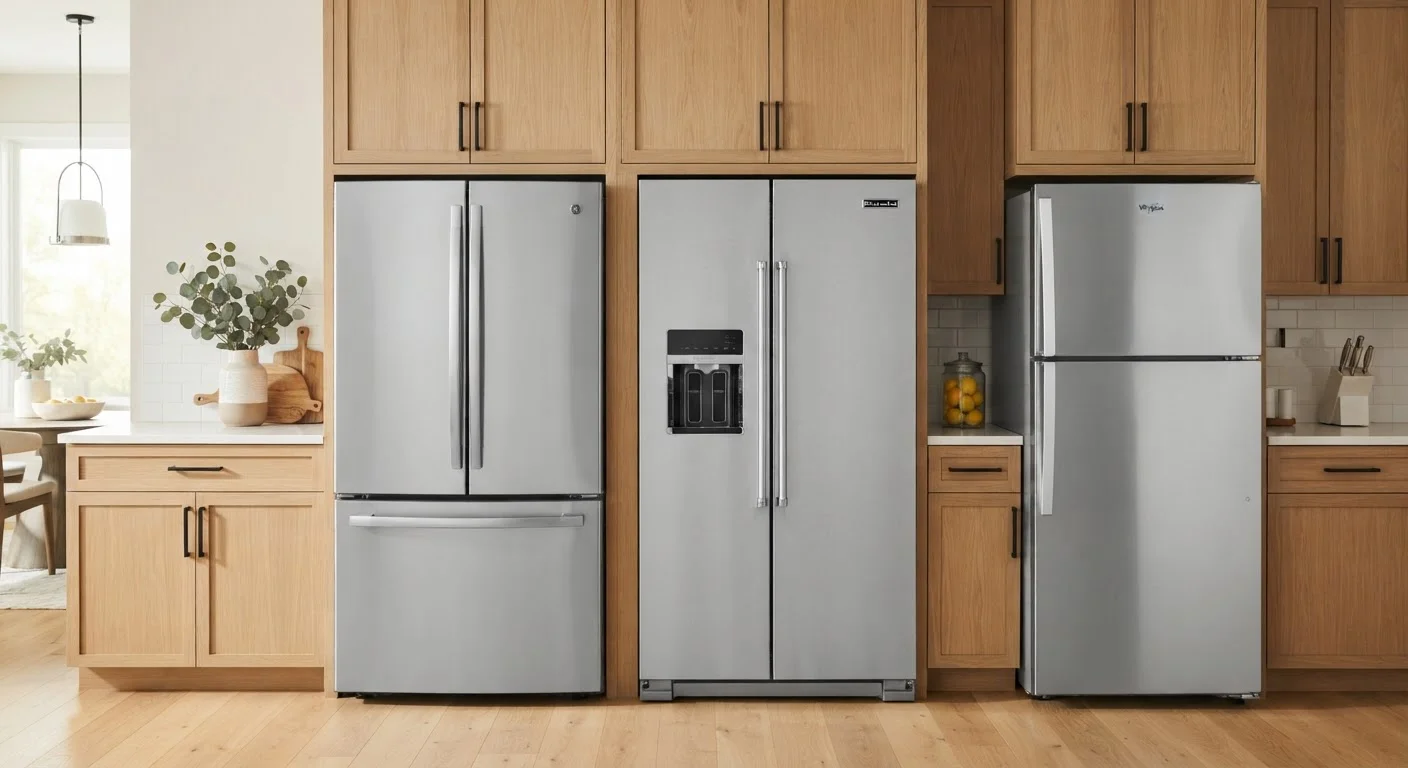
The three dominant configurations in the U.S. market — french door, side-by-side, and top-freezer — each reflect a different set of trade-offs around space, access, and cost. Understanding how each organizes its interior is more useful than any spec sheet comparison alone.
Measure Before You Commit
Before settling on any layout, measure your kitchen's available width, depth, and ceiling height — then add door swing clearance to the depth measurement. French door models often require 2–3 feet of clearance in front to open both doors fully. Confirm the delivery path through hallways and doorways as well; refrigerators are frequently wider than interior door frames expect.
French Door Refrigerators: Fresh Food Front and Center
French door units combine a wide, two-door fresh-food section on top with a pull-out freezer drawer at the bottom. The format's primary advantage is shelf width: without a center divider at eye level, these models can accommodate wide platters, sheet pans, and large containers that would be awkward to fit elsewhere.
The bottom freezer drawer, however, requires bending to access everyday frozen items. For households that reach into the freezer multiple times daily, this becomes a genuine ergonomic consideration — particularly for those with back or knee concerns.
French door models tend to occupy more floor depth than side-by-side units, and each door requires its own swing clearance to open fully. Measure your kitchen's available aisle width before assuming a french door unit will work in a given space. For a deeper look at what keeps all that fresh food cold, see our companion piece on how refrigerator cooling systems work.
| French Door | Side-by-Side | Top-Freezer | |
|---|---|---|---|
| Freezer location | Bottom drawer | Left column (full height) | Top compartment |
| Fresh-food shelf width | Widest — no center divider | Narrower due to vertical split | Moderate, standard shelving |
| Freezer accessibility | Requires bending | Eye-level to floor | Requires reaching up |
| Door swing clearance needed | Two doors, moderate each | Two narrower doors | One or two doors, smaller swing |
| Typical overall footprint | Wider and deeper | Narrower width, deeper | Smallest overall |
| Mechanical complexity | Often higher (drawer, ice) | Moderate | Generally lowest |
Side-by-Side Refrigerators: Parallel Access, Narrower Compartments
Side-by-side models split the cabinet vertically, placing the refrigerator on the right and the freezer on the left. Both compartments run the full height of the unit, so frozen and fresh items are accessible at eye, chest, and knee level without bending. This makes the layout particularly practical for households where freezer access is frequent and equal to refrigerator use.
The trade-off is compartment width. Because both sections share horizontal space, neither is especially wide. Large items — a full-size pizza box, a wide casserole dish, or a turkey — often don't fit on standard side-by-side shelves. Crisper drawers are also narrower than those found in french door units.
Side-by-side refrigerators typically have shallower door swing requirements than french door models, which can be an advantage in galley-style kitchens or where a kitchen island limits available clearance.
Wide Items Often Won't Fit Side-by-Side
If you regularly store wide items like full sheet pans, large pizza boxes, or oversized platters, test the interior dimensions of any side-by-side model carefully before purchasing. Each compartment in a side-by-side unit is narrower than it appears on the outside, and many buyers discover this limitation only after delivery.
Top-Freezer Refrigerators: Straightforward and Efficient
The top-freezer layout is the most traditional configuration and remains widely used. The freezer sits above the fresh-food section, requiring users to reach up for frozen items and look slightly downward for refrigerator contents at the lower shelves. For many households, this is an entirely unremarkable trade-off — especially when the freezer is accessed only occasionally.
Top-freezer models tend to be physically smaller in overall footprint, making them a practical fit for apartments, smaller kitchens, or secondary spaces like garages and basements. Because they involve fewer mechanical components — no ice-in-door systems, no complex drawer mechanisms — they are often simpler to maintain and repair over time.
Energy consumption patterns also favor this layout in many configurations. Less door-opening surface area and simpler internal air circulation can contribute to lower operating costs over the appliance's lifespan, though actual performance will vary by unit and usage habits.
Comparing the Three Layouts: What Actually Matters at Home
Beyond the basic structural differences, a few practical dimensions consistently shape which layout works best for a given household.
- How often you access the freezer: Daily frozen-food users may find a bottom freezer drawer less convenient than a side-by-side or top-freezer configuration.
- Width of items you store regularly: Wide platters, sheet pans, or large beverage containers favor the french door format.
- Available kitchen depth and aisle width: French door and side-by-side models vary significantly in how much floor space and door clearance they require.
- Household size and food volume: Larger families may benefit from the total capacity typically found in french door or larger side-by-side units.
When evaluating how any of these configurations fit into a broader kitchen setup, many of the same practical principles apply that we cover in our guide on evaluating appliances before bringing them home.
~36%
U.S. refrigerator sales attributed to French door style
Industry estimates suggest french door configurations have become the most common format sold in the U.S. market, surpassing top-freezer in units shipped.
20–22 cu ft
Typical capacity range for side-by-side models
Most side-by-side refrigerators on the U.S. market fall between 20 and 26 cubic feet of total storage, split between fresh and frozen compartments.