The Core Principle: Moving Heat, Not Making Cold
It's a common misconception that a refrigerator produces cold air. In reality, it operates as a heat pump — continuously moving thermal energy from inside the cabinet to the environment outside it. The colder interior you rely on to keep food fresh is simply what remains when heat has been extracted.
This process depends on a substance called a refrigerant — a fluid engineered to change between liquid and gas states at useful temperature and pressure levels. As it evaporates inside the refrigerator, it absorbs heat. When it's compressed and condensed outside, it releases that heat. This cycle repeats as long as the refrigerator is running.
Understanding this principle also applies when comparing other appliances that manage temperature. See our guide to dryer drying technologies for a parallel look at how heat-pump logic works in laundry appliances.
~15%
Share of home energy used by refrigerators
The U.S. Department of Energy has noted that refrigerators are among the largest continuous electricity consumers in a typical household.
4°F
Recommended refrigerator compartment temperature
The FDA recommends keeping refrigerator compartments at or below 40°F (4°C) to inhibit bacterial growth in stored food.
Compressor Cooling: The Standard for Home Refrigerators
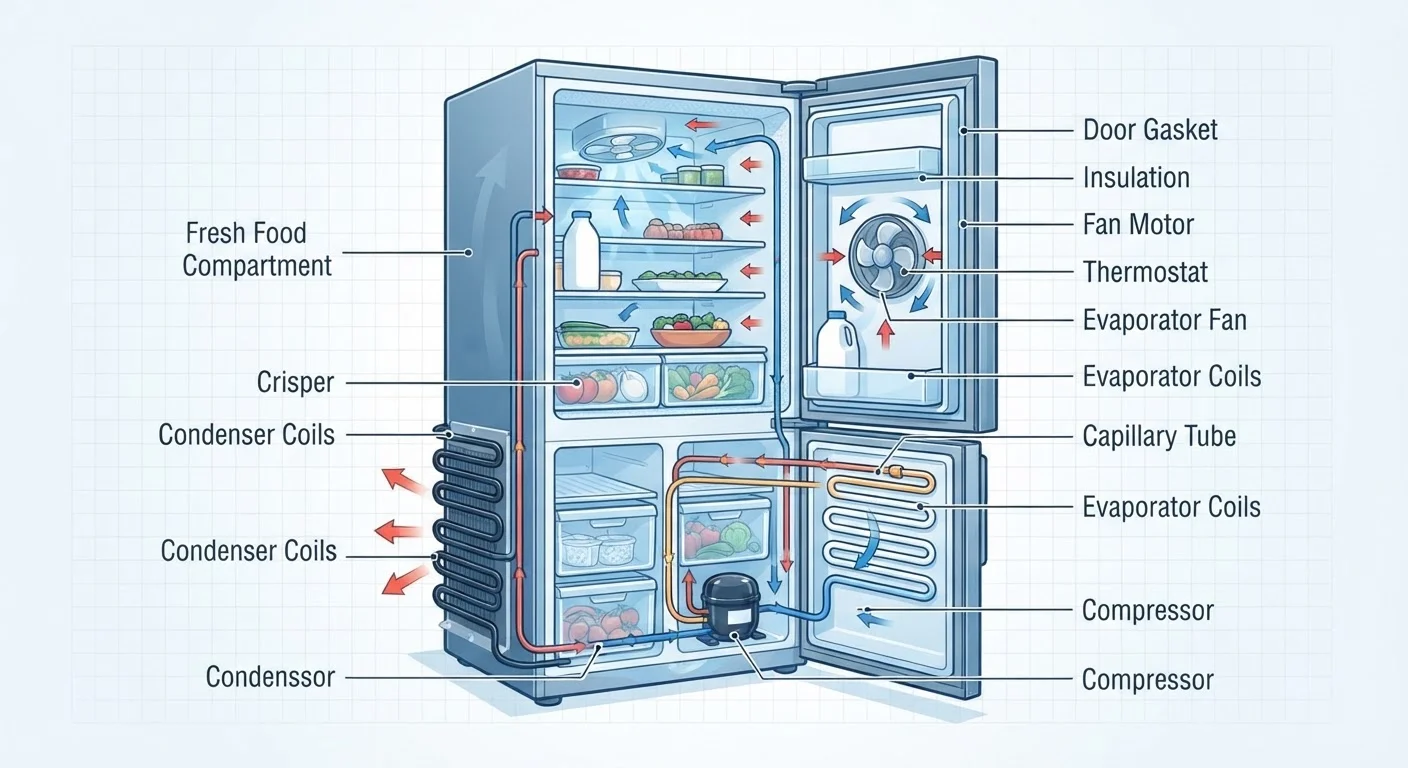
The vast majority of household refrigerators use a vapor-compression cycle, driven by a compressor motor. Here's how the four main stages work:
- Compression: The compressor pressurizes low-temperature refrigerant gas, raising its temperature significantly.
- Condensation: The hot, high-pressure gas flows through condenser coils — usually on the back or underside of the unit — where it releases heat into the room and condenses into a liquid.
- Expansion: The liquid refrigerant passes through an expansion valve, rapidly dropping in pressure and temperature.
- Evaporation: The cold refrigerant flows through evaporator coils inside the cabinet, absorbing heat from the interior air before returning to the compressor to repeat the cycle.
Most modern compressors are hermetically sealed, meaning the motor and refrigerant circuit are contained in a single welded unit with no serviceable parts. This design improves reliability and reduces leak risk.
Keep Condenser Coils Clean for Efficiency
Dust accumulation on condenser coils forces the compressor to work harder to expel heat, increasing energy use and wear. Vacuuming or brushing coils — typically located on the back or underside of the unit — once or twice a year is one of the most impactful maintenance tasks you can do. Always unplug the refrigerator before cleaning coils.
Absorption Cooling: A Different Approach
Absorption refrigerators achieve the same heat-transfer goal without a mechanical compressor. Instead of a motor, they use a heat source — typically electrical heating elements or a propane flame — to drive refrigerant movement through a chemical absorption process, often using ammonia and water or lithium bromide solutions.
Because there are no moving parts in the cooling circuit, absorption units operate nearly silently and can function without grid electricity. These characteristics make them well-suited to specific contexts:
- RV and camper refrigerators, where propane availability and vibration tolerance matter
- Hotel mini-fridges, where near-silent operation is a priority
- Off-grid installations where compressor noise or electrical load is a concern
The trade-off is efficiency: absorption cooling typically uses more energy per cubic foot of cooled space than a comparable compressor unit, and cooling performance can degrade in very hot ambient environments.
Refrigerant Type Has Changed Over Time
Older refrigerators used refrigerants such as CFCs and HCFCs, which were phased out due to their impact on the ozone layer. Modern units typically use HFCs or newer HFO-based refrigerants with lower environmental impact. If you're disposing of an older refrigerator, certified appliance recyclers are required to handle refrigerant recovery — it should not be vented into the atmosphere.
What This Means When Evaluating a Refrigerator
For most households buying a standard kitchen refrigerator, the compressor system is the relevant technology — and the distinctions worth examining are the design variations within it. A few worth knowing:
- Variable-speed (inverter) compressors adjust their output to match cooling demand rather than cycling fully on and off. This generally reduces energy consumption and can lower operational noise.
- Dual-evaporator systems maintain separate coils for the refrigerator and freezer compartments, allowing independent humidity and temperature management. This can reduce odor transfer and improve preservation of fresh produce.
- Linear compressors use a back-and-forth piston motion instead of a rotary mechanism, which some manufacturers claim improves energy efficiency and reduces friction-related wear over time.
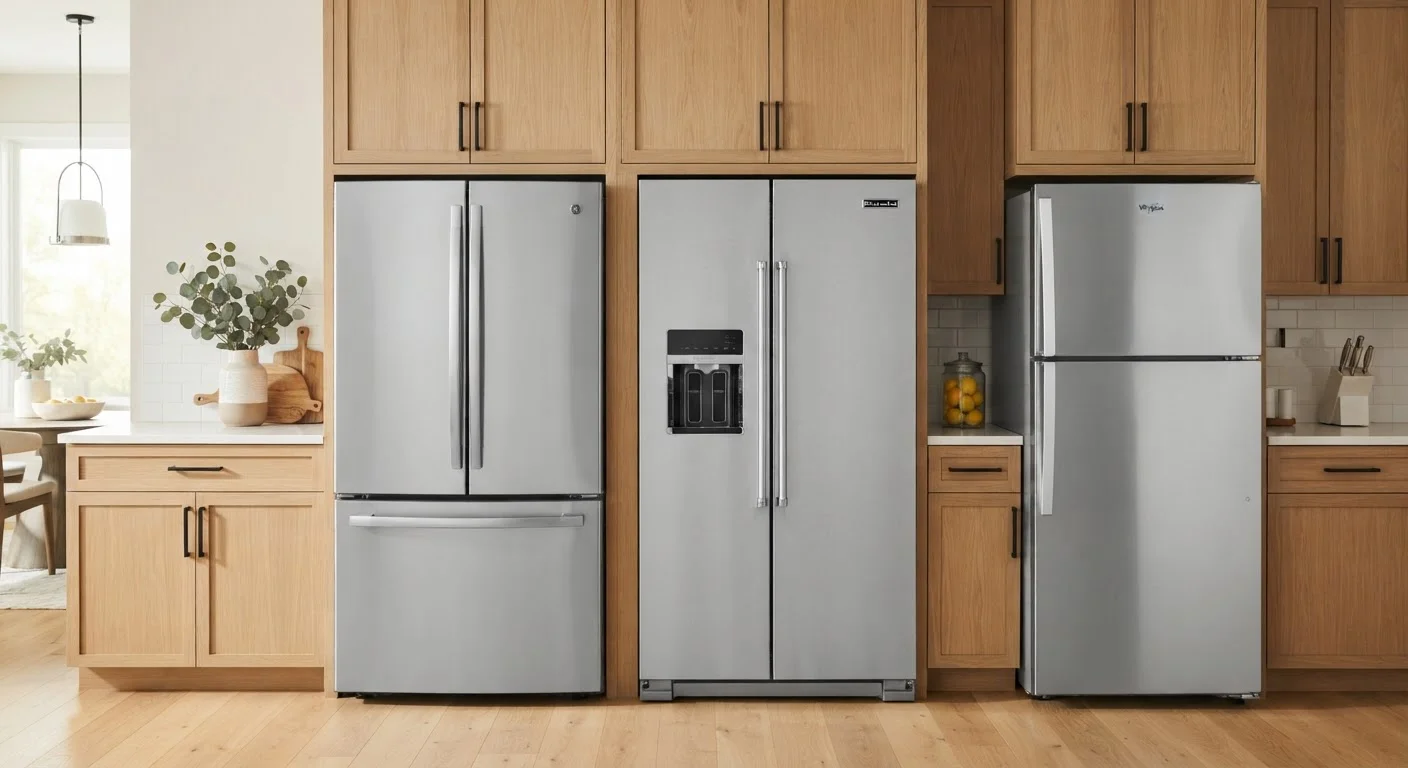
These differences don't always appear prominently in product listings, so it's worth checking technical specification sheets. For a broader view of how refrigerator configurations affect storage and daily usability, see our breakdown of refrigerator layout options.
If you're equipping a kitchen from the ground up, our introduction for first-time appliance buyers provides helpful context for prioritizing your choices across all major appliances.