Why Appliance Choices Feel Overwhelming
Walking into a kitchen appliance section — or scrolling through retail listings — exposes you to an enormous number of models, specs, and feature names that rarely come with explanation. Wattage, cubic footage, inverter technology, convection modes: each term sounds significant, but it's hard to know what actually changes your day-to-day experience.
The good news is that kitchen appliances, at their core, serve a small number of clear functions. Once you understand what each category is designed to do and which specifications directly affect performance, the rest of the feature list becomes much easier to weigh. This guide focuses on three foundational categories: refrigerators, microwaves, and countertop appliances.
Cubic footage
A measure of total interior storage volume in a refrigerator. It does not account for shelf layout or usability — two refrigerators with identical cubic footage can feel very different inside.
Wattage
In microwaves, wattage indicates the power output available for cooking. Higher wattage generally means faster, more even heating.
Energy Star
A U.S. Environmental Protection Agency certification program that identifies appliances meeting verified energy efficiency standards, helping consumers compare long-term operating costs.
Sensor cooking
A microwave feature that uses internal humidity sensors to detect when food is sufficiently heated, automatically stopping the cycle to prevent overcooking.
Counter-depth
A refrigerator design built to sit flush with standard kitchen cabinetry rather than protruding into the room. Offers a cleaner look but typically less interior capacity than standard-depth models.
Inverter technology
In microwaves and some refrigerators, inverter technology delivers variable power levels rather than cycling full power on and off, resulting in more consistent performance.
Major Appliances: Refrigerators Explained
The refrigerator is the one appliance virtually every household needs, making it the logical starting point. Before looking at specific features, understand that configuration determines how you actually live with the appliance — and that raw cubic footage numbers tell only part of the story.
Common Configuration Types
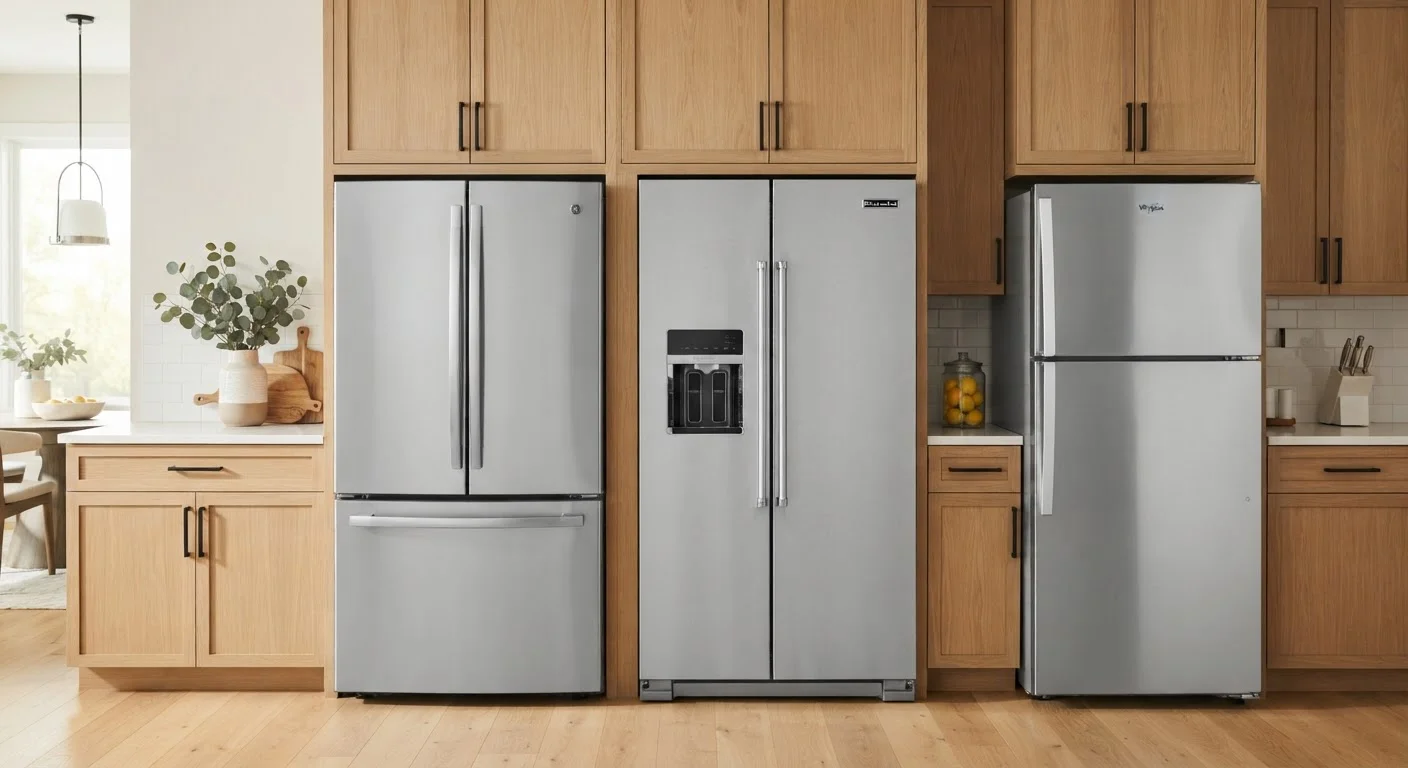
- Top-freezer: The most space-efficient and cost-effective layout. Freezer access requires bending less than a bottom-freezer, but refrigerator shelves sit lower.
- Bottom-freezer: Places fresh food at eye level, which many people find more ergonomic. Typically costs more than top-freezer models of similar capacity.
- Side-by-side: Offers narrow but tall compartments on each side. Convenient for wide items like pizza boxes in the freezer, but each side is narrower than most alternatives.
- French door: Wide refrigerator section with a bottom freezer drawer. Provides excellent refrigerator organization but requires clearance for dual-door swing.
Features Worth Evaluating
Counter-depth models sit flush with cabinetry, improving kitchen flow at the cost of some interior capacity. Energy Star certification from the U.S. EPA is a reliable efficiency signal — certified refrigerators consume measurably less electricity over time than non-certified equivalents of similar size. Humidity-controlled crisper drawers extend produce life by maintaining separate moisture environments for fruits and vegetables.
Measure Before You Commit
Before selecting any refrigerator, measure the designated space including height, width, and depth — and account for door swing clearance. Also confirm the appliance will fit through doorways on the delivery path. Returning a large appliance is significantly more complicated than returning a small one.
Microwaves: What the Specs Actually Mean
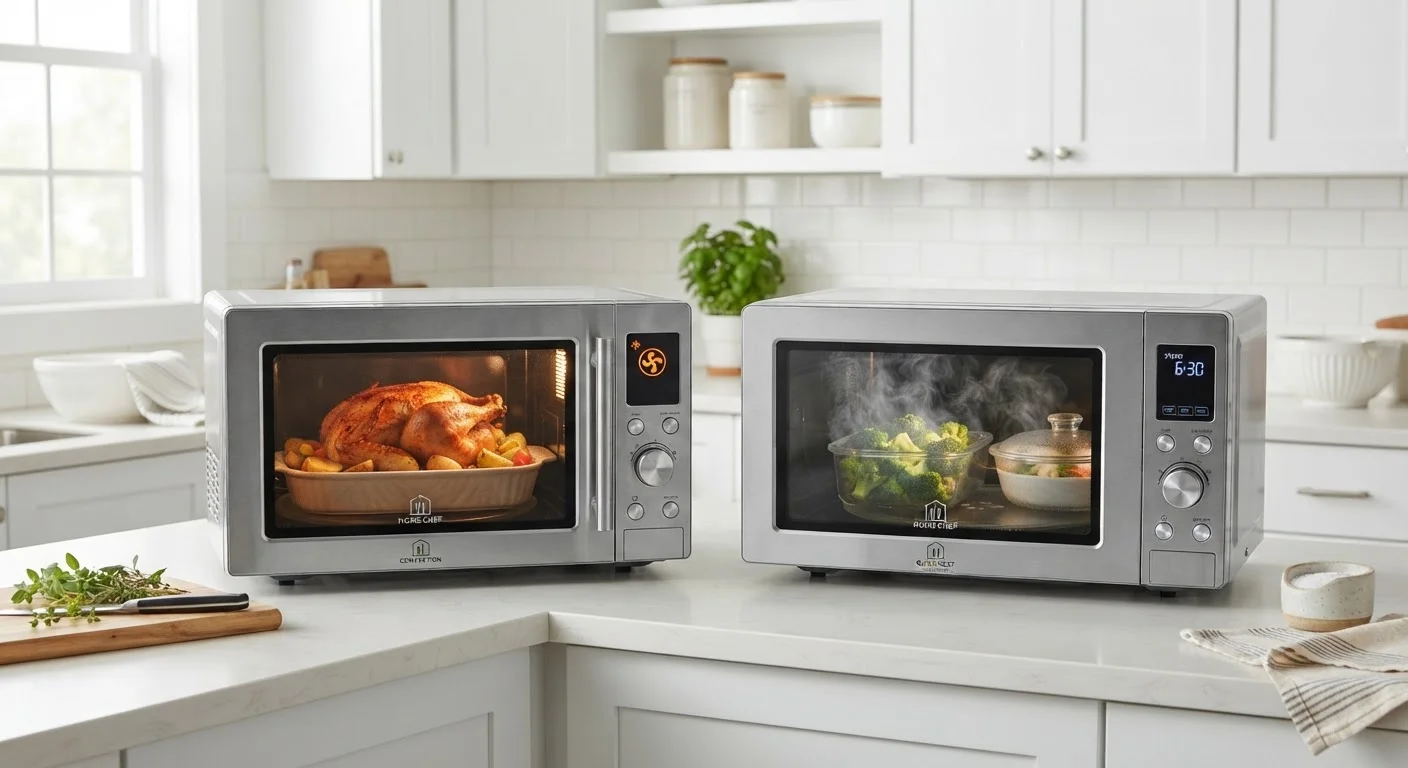
Microwaves are the most purchased countertop appliance in American homes, yet their spec sheets generate consistent confusion. Three specifications deserve your attention above all others.
Wattage
Wattage is the most consequential number on a microwave spec sheet. It determines cooking speed and, critically, evenness. Models rated below 700 watts struggle with consistent heating. The 900–1,200 watt range handles everyday reheating, defrosting, and cooking reliably. Above 1,200 watts, gains are marginal for most household use cases.
Turntable vs. Flatbed
Traditional microwaves use a rotating glass turntable to expose food to microwave energy from multiple angles. Flatbed models (no turntable) use a different antenna design to distribute energy without rotation, making them easier to clean and better for large or irregularly shaped containers. Neither design is universally superior — flatbed models tend to cost more.
Sensor Cooking
Sensor cooking uses internal humidity sensors to detect when food is done rather than relying on a preset timer. This reduces overcooking and guesswork, especially for reheating. It's a genuinely useful feature rather than marketing language. For a plain-English breakdown of every microwave term you'll encounter, see our microwave feature glossary.
Countertop Appliances: Choosing With Purpose
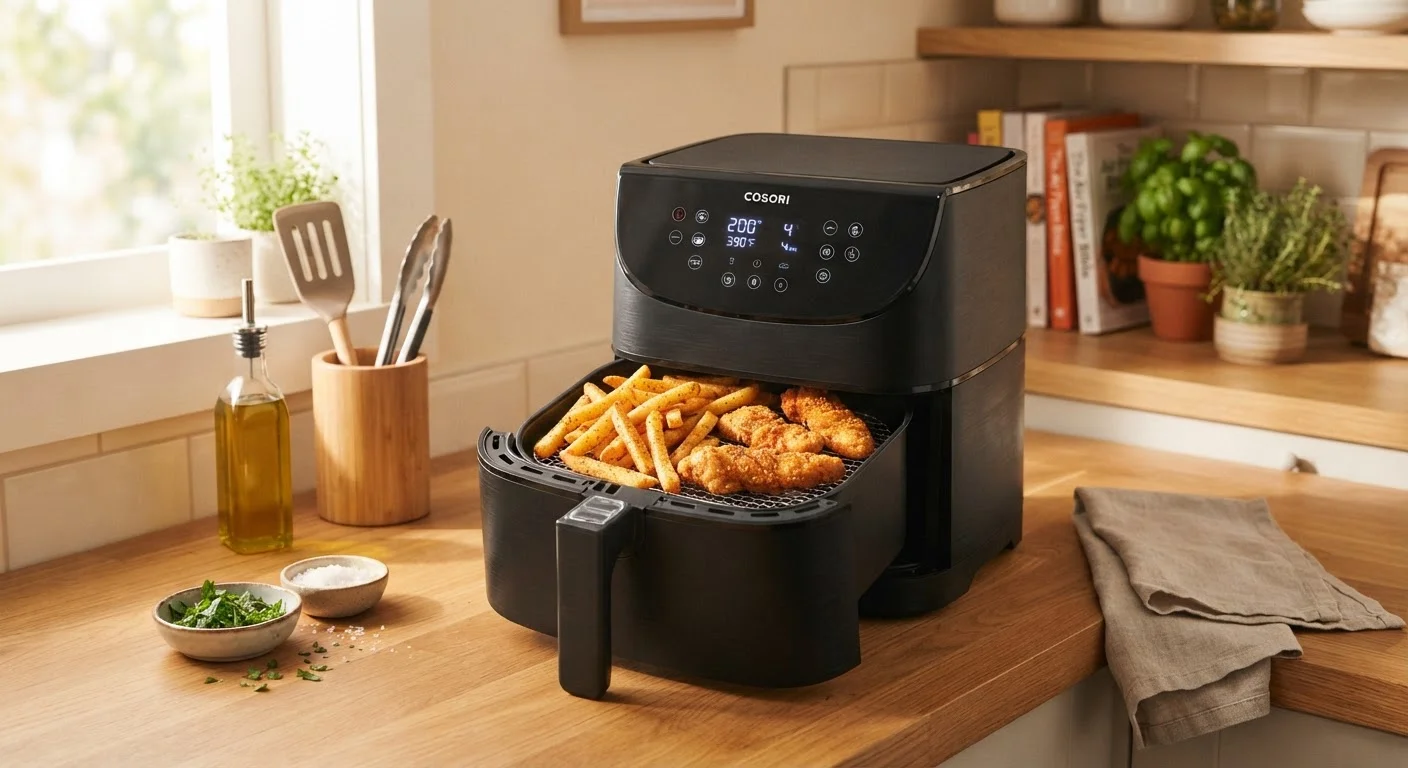
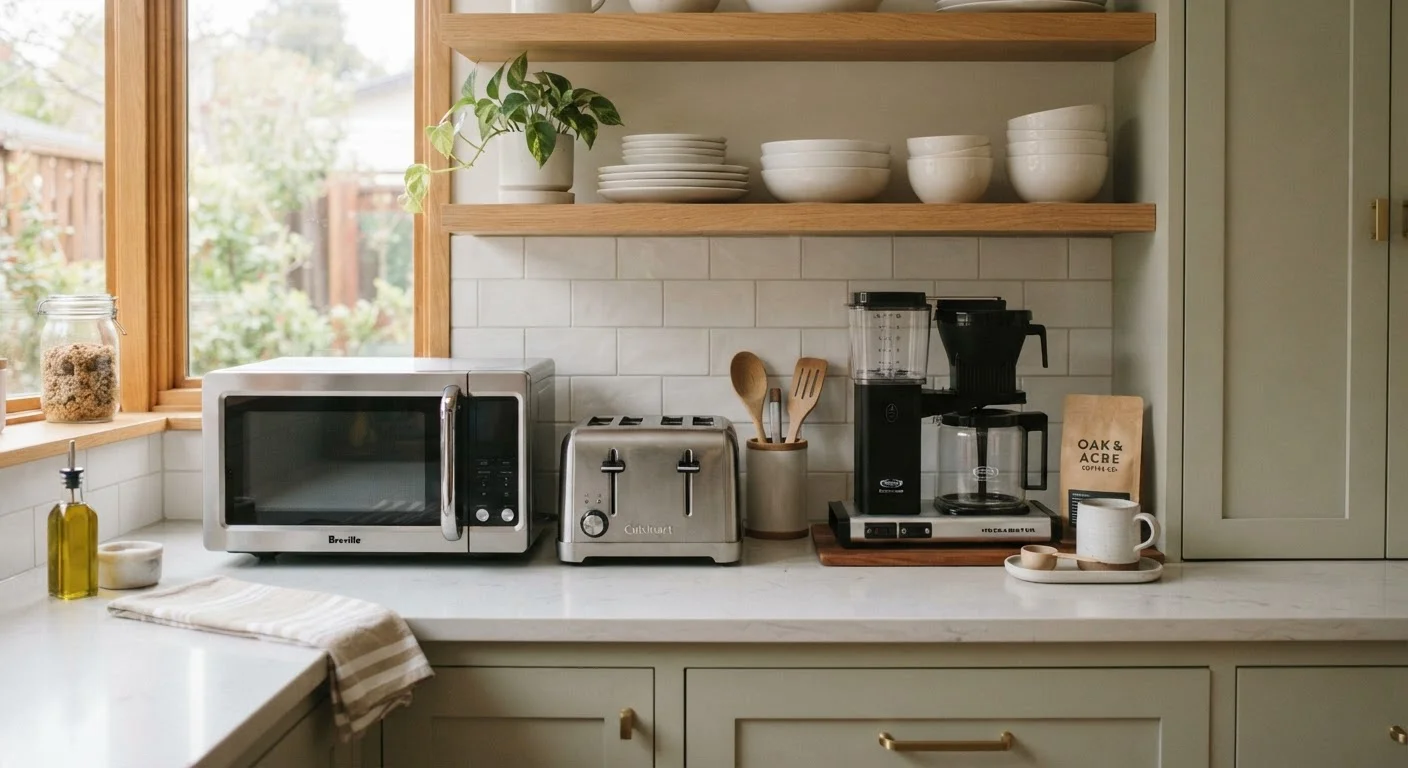
Countertop appliances — toasters, air fryers, coffee makers, blenders, stand mixers — vary enormously in how much value they deliver depending on your cooking habits. The common mistake first-time buyers make is purchasing based on novelty or broad versatility claims rather than actual use frequency.
A Simple Framework for Deciding
Ask yourself: How many times per week would I realistically use this? An appliance used fewer than two or three times per week in most households is unlikely to justify countertop real estate, the cognitive overhead of owning it, or the maintenance involved. Appliances used daily — a drip coffee maker, a toaster — almost always earn their place.
Durability and Maintenance
Countertop appliances have shorter expected lifespans than major appliances, and how they're maintained significantly affects longevity. Overloading motors, blocking ventilation, and skipping manufacturer-specified cleaning intervals are the most common causes of premature failure. Our companion article on why countertop appliances fail early provides specific prevention habits worth reviewing before any purchase.
Avoid Buying the Full Set at Once
It's tempting to purchase a complete set of countertop appliances when outfitting a new kitchen. In practice, many appliances end up rarely used and eventually discarded. Living in your kitchen for a few weeks before buying non-essential items gives you accurate data on what you actually need.
How to Prioritize When You're Starting From Zero
The most practical approach to equipping a kitchen from scratch is sequential rather than simultaneous. Start with what is non-negotiable (refrigerator), add what you'll use daily (microwave, coffee maker if applicable), and defer everything else until you've lived in the space long enough to understand your actual patterns.
If smart appliances interest you, approach them with the same critical eye. Smart refrigerators, for instance, offer features like internal cameras and inventory tracking — genuinely useful for some households, entirely unnecessary for others. Before investing, it's worth understanding what catches first-time smart home buyers off guard, including compatibility constraints and ongoing software dependencies.
Once your kitchen is running, you may find that other home systems — laundry, cleaning — benefit from the same structured thinking. The Laundry Appliances hub applies a similar feature-focused lens to washers and dryers. And if you're curious how the same principles apply to floor care, the Cleaning Appliances hub covers vacuums and robotic cleaners with the same grounded approach.
Microwave Feature Glossary
A plain-English reference for every technical term on microwave spec sheets — wattage, turntables, sensor cooking, and more — so you know exactly what each feature does before it matters.
Countertop Appliance Longevity Guide
Covers the most common reasons small kitchen appliances fail before their time and the simple maintenance habits that extend their useful life.
Smart Home Setup Guide
A practical, room-by-room approach to building a smart home gradually — useful if you're considering smart kitchen appliances but aren't sure where to start.