How Each Mop Type Actually Works
Understanding the mechanics behind each mop design helps clarify which cleaning tasks they handle well — and where they fall short.
Steam Mops
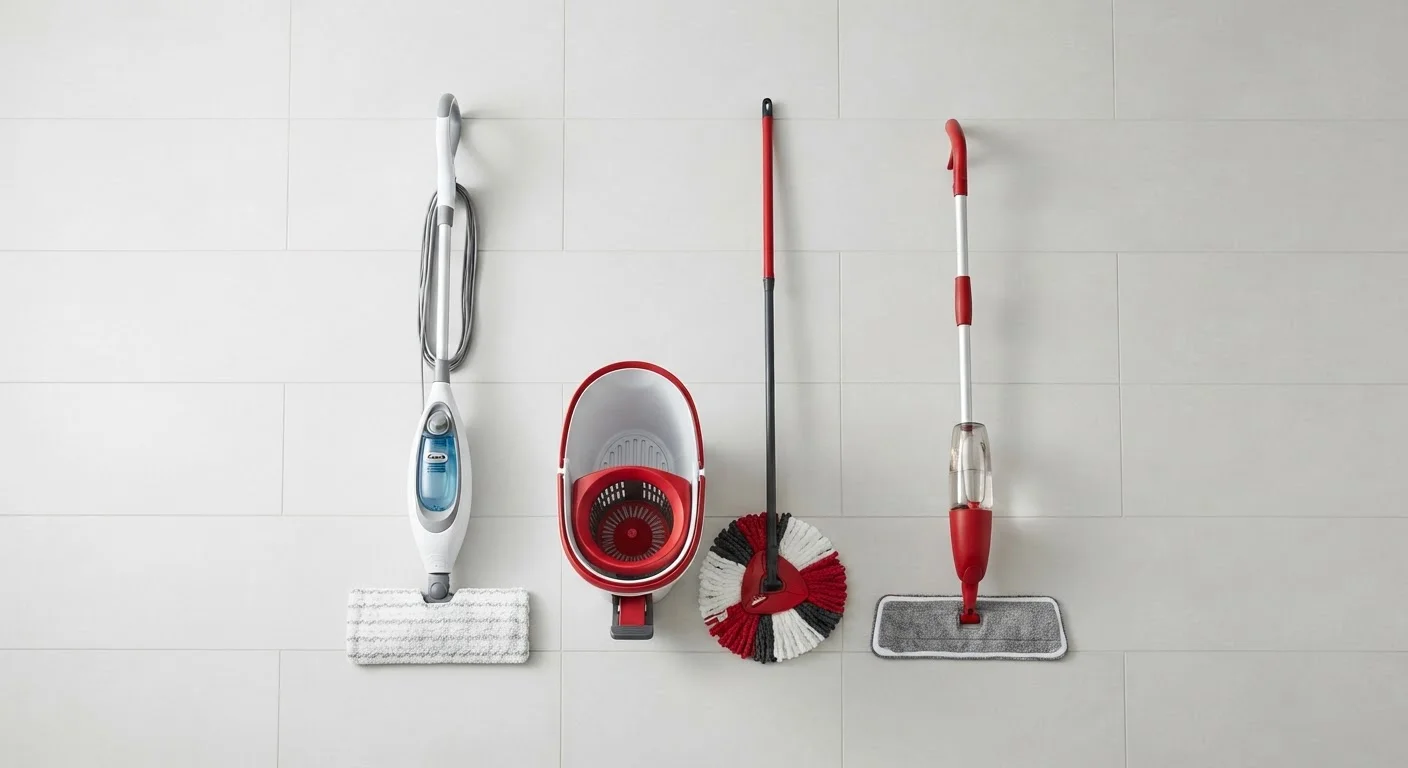
Steam mops heat water in an internal reservoir to produce pressurized steam, typically between 200°F and 250°F. That steam is pushed through a microfiber pad attached to the mop head, loosening grime and killing many common household bacteria and dust mites on contact. Crucially, the cleaning action is heat-based — no detergents are required. Heat-up times generally range from 20 to 45 seconds depending on the unit.
Spin Mops
Spin mops pair a microfiber or cotton mop head with a foot-pedal or hand-crank wringer bucket. The user dips the mop head into a cleaning solution, then spins it to remove excess moisture before mopping. The degree of wringing is fully adjustable, which gives you direct control over how wet the floor gets — a meaningful advantage when moisture sensitivity matters.
Spray Mops
Spray mops combine a flat microfiber pad with an integrated refillable reservoir. Pressing a trigger on the handle releases a fine mist of water or diluted cleaning solution directly onto the floor ahead of the pad. They require no bucket and are typically the lightest of the three designs, making them easy to maneuver and store. For deeper context on how cleaning appliances handle hard floors differently, see our feature-by-feature hard floor guide.
Floor Compatibility and Moisture Risk
Not all floors respond equally to each mop type, and choosing the wrong one can cause lasting damage.
| Steam Mop | Spin Mop | Spray Mop | |
|---|---|---|---|
| Cleaning mechanism | Pressurized steam heat | Wet mop with wringer bucket | Trigger-spray mist + flat pad |
| Chemical-free cleaning | Yes — water only | No — solution required | Optional — water or solution |
| Hardwood floor safe | Generally not recommended | Yes, if well wrung | Yes, best suited |
| Tile and LVP performance | Excellent, including grout | Good | Good for surface dirt |
| Physical effort required | Moderate | Higher | Low |
| Ongoing supply cost | None (water only) | Cleaning solution needed | Cleaning solution optional |
| Best use case | Deep sanitization sessions | Thorough regular cleaning | Quick daily maintenance |
Hardwood floors are the most moisture-sensitive surface in most homes. Excessive water can warp planks, dull finishes, or penetrate unsealed seams. Spray mops — used with a lightly dampened pad — are generally considered the safest option for hardwood. Spin mops can work if wrung very thoroughly, but require attentive technique. Steam mops present the highest risk: manufacturers of many engineered and solid hardwood products explicitly advise against steam cleaning, as the high-temperature moisture can degrade adhesives and finishes over time.
Sealed tile and LVP (luxury vinyl plank) are the most forgiving floor types. All three mop designs can be used effectively. Steam mops perform particularly well on tile grout, where the pressurized heat dislodges embedded grime that flat pads struggle to reach.
Laminate shares many of hardwood's moisture sensitivities. A spray mop or a well-wrung spin mop is preferable; prolonged steam exposure is generally discouraged by laminate flooring manufacturers.
Hygiene, Effort, and Ongoing Costs
Replace or Launder Mop Pads Regularly
All three mop types use reusable pads that accumulate bacteria and residue over time. Microfiber pads should be laundered after each use or every few sessions, depending on soil level. A worn or dirty pad can reduce cleaning effectiveness and potentially spread contaminants rather than remove them. Check the manufacturer's guidance on pad replacement frequency, as performance typically degrades after repeated washings.
Hygiene performance differs in ways that aren't always visible in product listings. Steam mops offer a measurable advantage for households concerned about allergens or pathogens — the high heat kills many bacteria and dust mite populations without requiring chemical disinfectants. This makes them worth considering in homes with allergy sufferers or young children.
Spin mops can achieve comparable cleanliness when used with an appropriate cleaning solution, but the effectiveness depends on the solution chosen and how frequently the mop head is replaced or laundered. Mop heads that aren't cleaned regularly can redistribute bacteria rather than remove it.
Spray mops are designed for speed rather than deep sanitation. Their thin pads clean surface-level dirt effectively but are less suited to tackling dried-on grime or high-traffic areas without multiple passes.
Physical Effort
Spin mops involve the most physical effort — filling a bucket, wringing, and pushing a heavier wet head across the floor. Steam mops are moderately easy to use once heated but are corded and tethered to an outlet. Spray mops demand the least effort overall and are often preferred by users who want a quick post-sweep clean rather than a dedicated mopping session.
Running Costs
Steam mops use only tap water, so their ongoing cost is essentially zero. Spray and spin mops require cleaning solution, which adds recurring expense. Some spray mop reservoirs only accept plain water or specific solution types — check compatibility before buying a cleaning concentrate.
Which Situations Suit Each Design
Each mop type maps to a set of household circumstances where it consistently performs well.
- Steam mop: Homes with sealed tile, stone, or LVP throughout; households prioritizing chemical-free sanitization; pet owners managing tracked-in dirt and dander.
- Spin mop: Mixed-floor homes that need occasional deep cleaning; users who prefer the control of adjusting solution strength and moisture level; larger floor areas where a reservoir-fed design runs dry too quickly.
- Spray mop: Small apartments or homes with mostly hardwood or laminate; daily or every-other-day light cleaning after sweeping or vacuuming; users with limited storage or mobility constraints.
It's also worth noting that mop design doesn't replace vacuuming or sweeping — debris should be cleared before any wet mopping begins to avoid spreading grit across the floor. For a broader look at how different cleaning appliances handle floor maintenance, the robot vs. upright vacuum comparison covers how pre-cleaning tools complement mopping routines.
212°F+
Minimum temperature to kill many common bacteria
Steam mops typically operate above this threshold, which is the basis for their chemical-free sanitization claims.
~30 sec
Typical steam mop heat-up time
Most consumer steam mops reach operating temperature within 20–45 seconds, depending on reservoir size and wattage.