What Sulfates Actually Do in a Shampoo
Sulfates — most commonly sodium lauryl sulfate (SLS) and sodium laureth sulfate (SLES) — are a category of surfactant, meaning they're cleansing agents that attract both water and oil simultaneously. This dual action is what creates the foamy lather most people associate with a thorough wash. When you massage a sulfate-based shampoo into your scalp, the surfactant molecules bind to oil, dirt, and product residue, allowing water to rinse everything away.
The trade-off is intensity. Because sulfates are highly effective at dissolving oils, they don't distinguish between unwanted buildup and the natural sebum your scalp produces to protect the hair shaft and maintain moisture. For some hair types, that thoroughness is a feature. For others, it creates problems — dryness, increased frizz, and accelerated color fade.
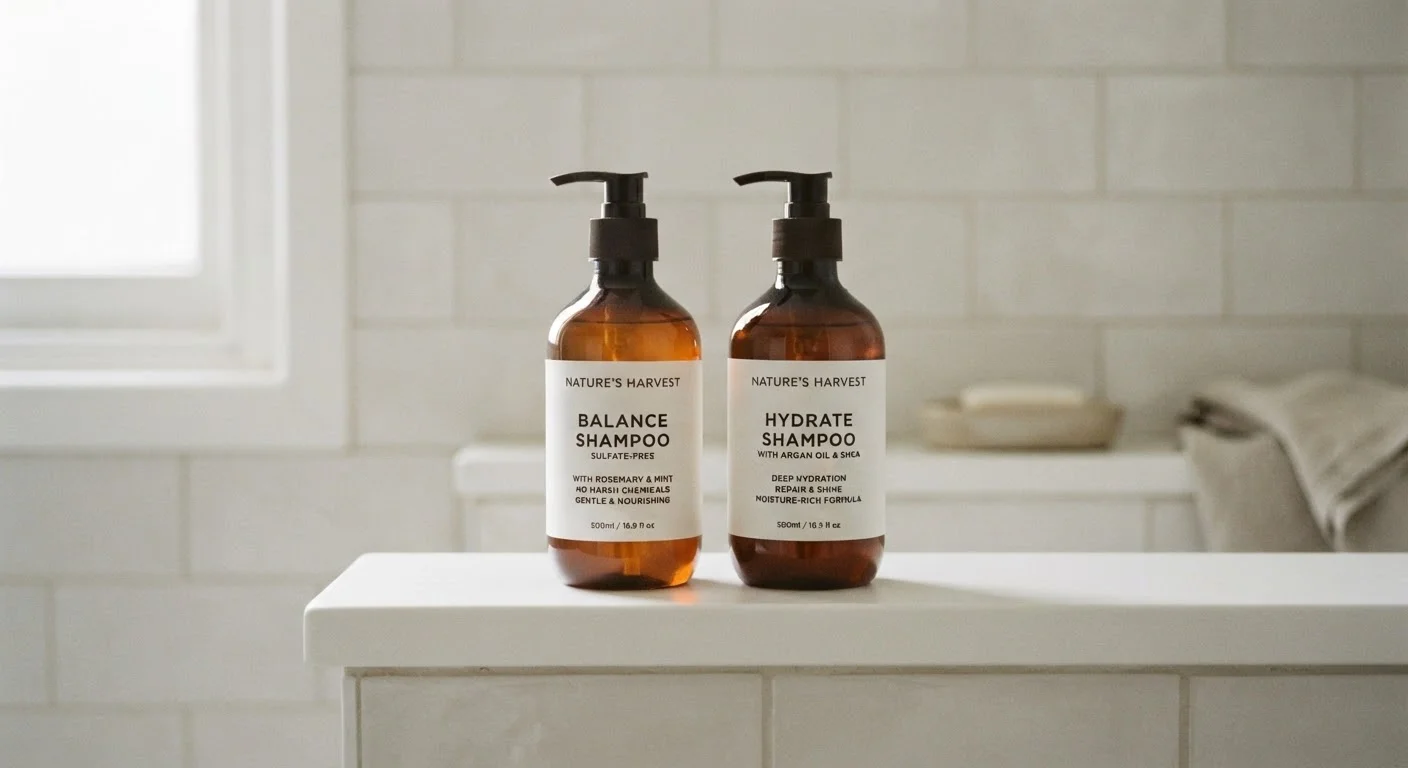
Sulfate-free shampoos replace these harsh detergents with milder surfactant alternatives such as cocamidopropyl betaine or sodium cocoyl isethionate. These still clean, but they're less aggressive in stripping oils from the hair and scalp. They also tend to produce less lather — something many shoppers initially misread as the product not working, when in fact it's simply behaving differently. To better understand how ingredient categories affect your haircare choices, see The Ingredient Label Terms Every Haircare Shopper Should Recognize.
How Each Formula Affects Different Hair Types
The clearest way to decide between these two shampoo types is to start with your hair's characteristics — not trends or marketing claims. Three properties in particular matter most: porosity, density, and texture. As explained in our guide on porosity, density, and texture, these factors determine how your hair absorbs, retains, and responds to different products.
| Criterion | Sulfate-Free Shampoo | Regular (Sulfate-Based) Shampoo |
|---|---|---|
| Cleansing strength | Gentle; preserves natural oils | Strong; removes oils thoroughly |
| Lather | Low to moderate | Rich, foamy lather |
| Color-treated hair | Helps preserve color longer | Can accelerate color fade |
| Oily scalp suitability | May leave residue on oily scalps | Well-suited; cuts through sebum |
| Curly and coily textures | Generally preferred | Can cause dryness and frizz |
| Product buildup removal | Less effective on heavy buildup | Effective against most buildup |
| Scalp sensitivity | Lower irritation potential | Higher irritation potential for some |
Curly and coily textures tend to have naturally lower moisture retention because the spiral shape makes it harder for scalp oils to travel down the hair shaft. Sulfate-based shampoos can exacerbate this dryness. Sulfate-free formulas are generally better suited to these textures.
Fine and straight hair, on the other hand, often becomes limp when residue or natural oil accumulates — especially with frequent use of dry shampoo or volumizing sprays. Here, the stronger cleansing action of sulfate-based shampoos often yields better day-to-day results.
Color-treated hair is a category where the evidence is fairly clear: sulfates accelerate color fading by disrupting the cuticle layer that locks dye molecules in place. Sulfate-free options help extend the life of a dye job without sacrificing cleanliness.
~65%
Color-treated hair in the US
Industry estimates suggest roughly 65% of American women color their hair, making color-safe cleansing a widely relevant concern.
3–6 weeks
Scalp adjustment period
Haircare professionals commonly note a transition window of several weeks when switching shampoo types as the scalp recalibrates oil production.
Making the Switch: What to Expect
If you're transitioning from a sulfate-based to a sulfate-free shampoo, an adjustment period is normal. Your scalp may initially produce more oil as it recalibrates — this usually settles within a few weeks. You'll also notice less lather, which is not an indicator of poor performance.
Conversely, if you've been using a sulfate-free shampoo and switching to a regular one for a deep cleanse, your hair may initially feel squeaky-clean in a way that seems dry. This is the natural oils being removed more thoroughly; it's not necessarily damage, but it is a signal to follow with a nourishing conditioner.
Scalp health plays a significant role in this equation. An overly stripped scalp can become dry and flaky; an inadequately cleaned scalp can develop product buildup, odor, or irritation. For a thorough look at what scalp care actually involves, Scalp Health from the Ground Up is a useful starting point.
Some people also use both: a sulfate-free shampoo for regular washes and a clarifying (sulfate-based) formula once or twice a month to remove stubborn buildup. This approach can work well for medium-density or mixed-texture hair that needs periodic deep cleansing without daily stripping.
A Note on 'Natural' and 'Clean' Marketing
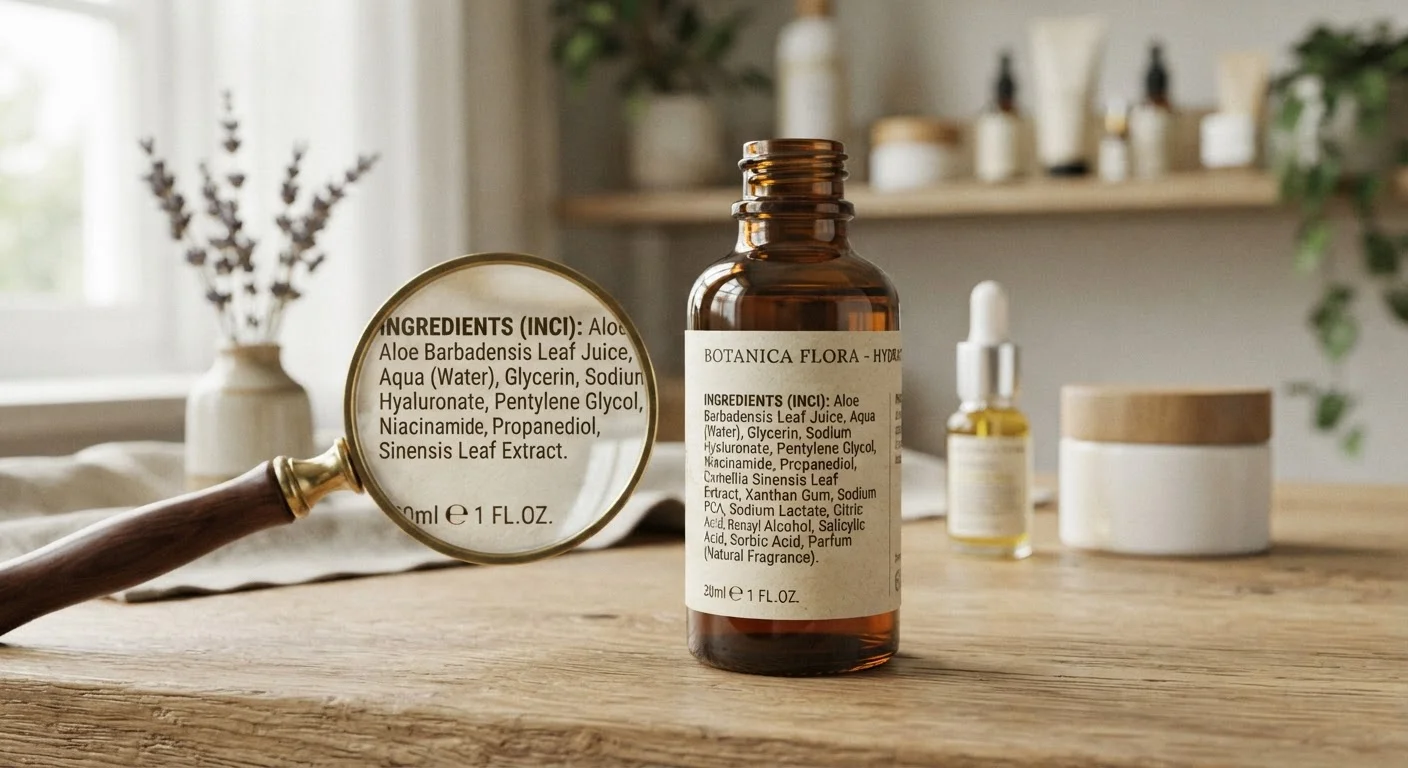
Sulfate-free labeling is sometimes bundled with broader 'clean beauty' or 'natural' claims that can be misleading. A shampoo being sulfate-free does not automatically make it gentler, safer, or more effective — it simply means it uses different surfactant chemistry. Always read the full ingredient list rather than relying on front-of-label claims alone. If you want to understand what specific ingredient categories mean on a label, it helps to learn the terminology before shopping.