Why the Scalp Comes First
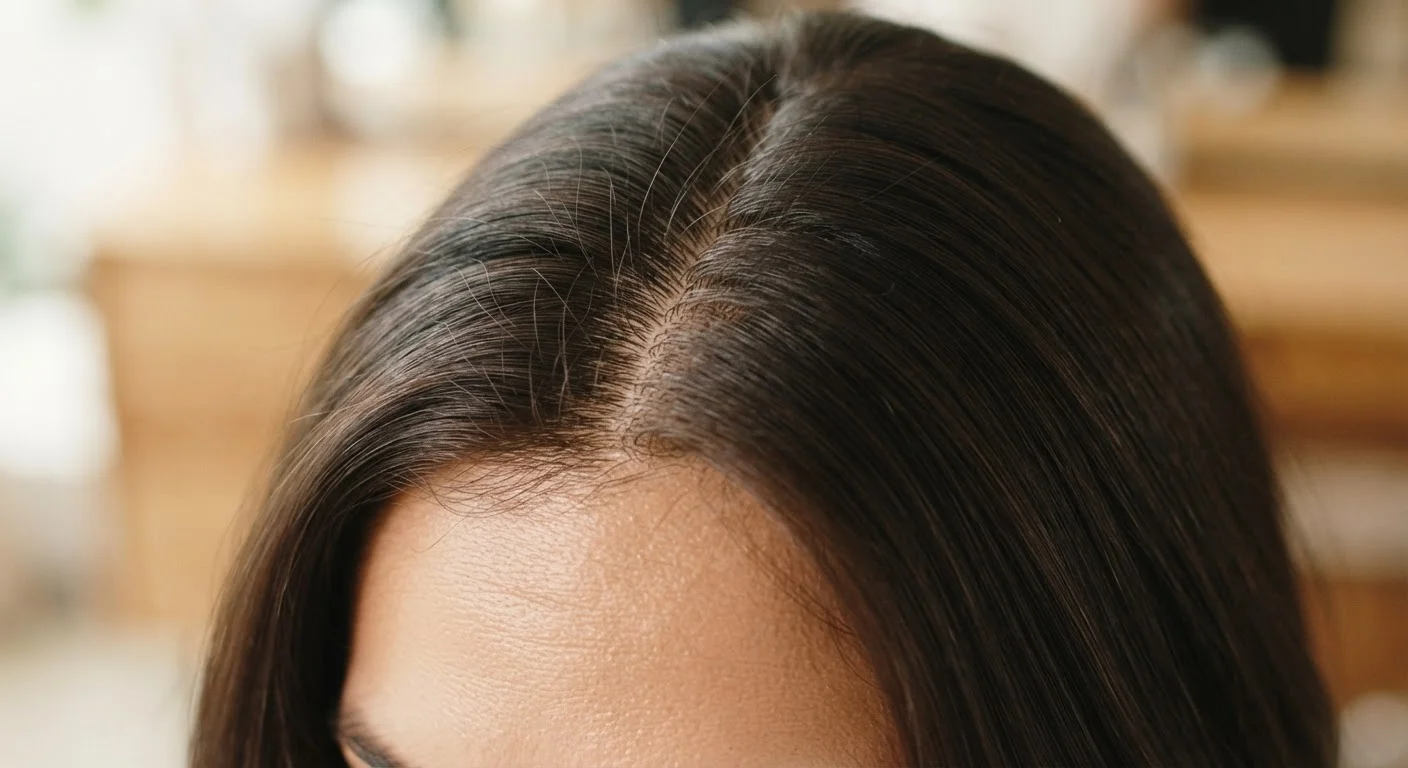
Most haircare conversations start at the strand — frizz, shine, softness — but the condition of your hair is largely determined before a strand ever emerges. The scalp is living skin, complete with sebaceous glands, hair follicles, and a microbiome that influences everything from growth cycles to strand strength. Neglecting it while focusing exclusively on the lengths and ends is a bit like watering a plant's leaves but ignoring its roots.
Each hair follicle is anchored in the scalp and fed by blood vessels. The follicle's health directly shapes the diameter, texture, and growth rate of the hair it produces. When the scalp environment is disrupted — by excess oil, dryness, inflammation, or product residue — the signals to those follicles can be compromised. Think of a scalp-first approach the same way you might approach a foundational skincare routine. Our morning skincare guide explores a similar philosophy for facial skin: foundations matter more than finishes.
How Scalp Type Differs from Hair Type
Here is a distinction that trips up even seasoned haircare enthusiasts: your scalp type and your hair type are not the same thing, and they don't always match. You can have a dry scalp with oily hair, or a balanced scalp with very porous strands. Treating them as identical leads to product mismatches and frustration.
Sebaceous glands
Tiny glands in the skin that produce sebum, the natural oil that lubricates and protects both the scalp and the hair strand.
Sebum
The natural oil produced by the scalp's sebaceous glands. It moisturizes the scalp and coats the hair shaft, but excess sebum can make hair appear greasy.
Hair follicle
A small pocket in the scalp from which each individual hair strand grows. Follicle health directly influences the quality and growth rate of the hair it produces.
Scalp microbiome
The community of naturally occurring bacteria and fungi living on the scalp. A balanced microbiome supports scalp health; disruptions can contribute to conditions like dandruff.
Malassezia
A type of yeast that naturally lives on the scalp. When it overgrows, it can contribute to dandruff and seborrheic dermatitis.
Clarifying shampoo
A deep-cleansing shampoo formulated to remove product buildup, excess oil, and mineral deposits from the scalp and hair. It is typically used less frequently than everyday shampoo.
Scalp type is generally categorized as oily, dry, balanced, or sensitive, and it is determined by sebum production — the natural oil your scalp secretes. Hair type, meanwhile, describes characteristics like curl pattern, density, porosity, and texture. Our editorial team has covered this in depth in our guide to porosity, density, and texture. Understanding both dimensions lets you select a shampoo that cleanses your scalp correctly without stripping or over-moisturizing the strand.
To assess your scalp type, pay attention to how it feels 24 to 48 hours after washing — without applying any product. Tightness or flakiness suggests dryness; shine and limpness near the roots suggests oiliness; and comfort with minimal symptoms suggests balance.
Common Scalp Concerns and What Causes Them
Most people will encounter at least one of the following at some point, and understanding the cause is the first step toward addressing it effectively.
- Dandruff: Characterized by visible flakes and often mild itching, dandruff is frequently linked to an overgrowth of Malassezia, a yeast that naturally lives on the scalp. Shampoos formulated with zinc pyrithione, selenium sulfide, or ketoconazole are commonly used to address it, though individual responses vary.
- Seborrheic dermatitis: A more persistent and sometimes inflamed version of dandruff. It can affect the scalp, eyebrows, and sides of the nose. This condition benefits from dermatologist guidance, particularly when over-the-counter options have not resolved symptoms.
- Product buildup: Styling products, dry shampoos, and even conditioner residue can accumulate on the scalp, creating a layer that interferes with follicle function. Clarifying shampoos — used occasionally rather than daily — can help clear excess buildup.
- Scalp dryness: Often caused by low humidity, harsh cleansers, or over-washing, dry scalp produces small, dry flakes distinct from dandruff. Reducing wash frequency or switching to a gentler cleanser can help. Our guide to sulfate-free vs. regular shampoo is a useful next read.
Don't Confuse Dandruff with Dry Scalp
These two conditions look similar but have different causes and require different approaches. Using a heavy, medicated dandruff shampoo on a dry scalp can worsen flakiness, while applying rich oils to a dandruff-prone scalp may fuel yeast overgrowth. Take note of your flake size, oiliness level, and any accompanying redness before choosing a product.
Building a Scalp-First Routine
A practical scalp routine does not need to be elaborate. The core steps are cleansing, balancing, and protecting — applied with the right frequency for your scalp type.
- Cleanse deliberately: Focus shampoo application on the scalp, not the lengths. Use the pads of your fingers (not nails) to work the product in with gentle, circular movements. This loosens buildup and debris without causing mechanical damage.
- Match formula to need: A clarifying shampoo suits those with significant buildup or oily scalps; a hydrating, low-sulfate formula suits dry or sensitive scalps. Frequency matters as much as formula — cleansing too often or too rarely can each create problems.
- Condition strategically: Conditioner generally belongs on the mid-lengths and ends, not the scalp, unless you are using a specific scalp treatment product. Applying conditioner at the root can weigh down hair and contribute to oiliness.
- Consider targeted treatments: Scalp serums or toners containing ingredients like salicylic acid (for buildup), niacinamide (for barrier support), or tea tree oil (for its mild antimicrobial properties) may benefit specific concerns. Introduce one at a time so you can assess how your scalp responds.
Try a Scalp Massage at Wash Time
Spending 60 to 90 seconds massaging your scalp during shampooing does more than feel good — it helps loosen buildup and may support circulation to the follicles. Use the pads of your fingertips rather than your nails to avoid irritating the skin. This simple habit costs nothing and is easy to build into any routine.
Hair typing systems describe curl pattern, but they don't account for scalp needs. Our hair typing guide breaks down exactly what those charts do and don't tell you.
When to See a Dermatologist
Scalp concerns exist on a spectrum. Many respond well to routine adjustments or over-the-counter products. Others are clinical conditions that require professional diagnosis and treatment — and confusing the two can delay appropriate care.
Consider consulting a board-certified dermatologist if you experience:
- Noticeable or accelerating hair loss or thinning
- Persistent redness, swelling, or pain on the scalp
- Open sores, crusting, or blistering
- Symptoms that don't improve after four to six weeks of consistent at-home care
- Scalp changes accompanied by symptoms elsewhere on the body
A dermatologist can rule out conditions such as psoriasis, alopecia areata, tinea capitis (scalp ringworm), or folliculitis — all of which have specific, evidence-based treatments that go beyond consumer haircare products. Self-diagnosis through internet searches is a poor substitute for clinical evaluation when symptoms are persistent or severe.
This article is for general informational purposes only and does not constitute medical advice. If you have persistent or concerning scalp symptoms, please consult a qualified healthcare professional.