What Heat Styling Actually Does to Hair
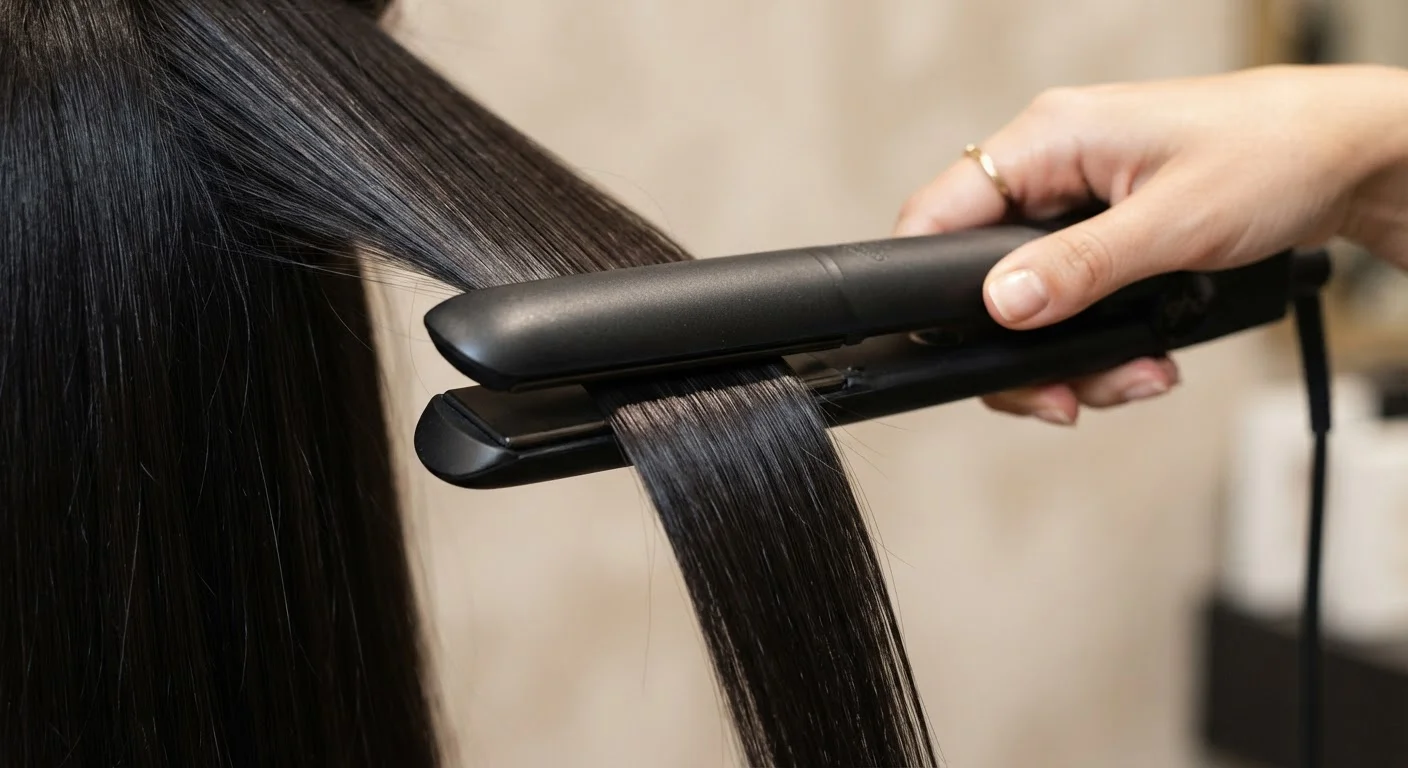
Every strand of hair is composed of a protein called keratin, arranged in overlapping layers protected by a cuticle — the outermost, scale-like surface. Heat tools work by temporarily breaking hydrogen bonds within that keratin structure, which allows hair to be reshaped into a new form. When the hair cools, new bonds set in the styled position.
The problem is that repeated high-heat exposure doesn't just rearrange bonds — it begins to degrade them. The cuticle lifts and, over time, erodes. The cortex (the inner layer responsible for strength and elasticity) loses moisture, and the hair becomes progressively more porous and brittle. Understanding this mechanism helps explain why heat damage tends to build gradually rather than appearing all at once.
Your hair's baseline vulnerability matters enormously here. Hair porosity, density, and texture all influence how quickly thermal stress accumulates — high-porosity or fine hair is typically more susceptible to damage at lower temperatures than low-porosity or coarser hair.
The Real Benefits of Heat Styling
Heat tools are popular for practical reasons — they're consistent, fast, and deliver results that many styling alternatives can't match.
Reliable, consistent style results in less time
Heat tools produce repeatable outcomes session to session, which is particularly valuable for people whose natural texture requires significant effort to manage or style.
Enables styles not achievable through air-drying
Sleek straight looks, tightly defined curls, and structured waves typically require heat to achieve a lasting, polished result that holds through humidity or activity.
Wide accessibility across hair types and textures
Modern heat tools are designed with adjustable temperature settings, making them usable across a broad range of hair types — from fine to coarse, straight to tightly coiled.
Can temporarily smooth frizz and improve shine
Heat seals the cuticle temporarily, which reduces light-scattering frizz and creates the appearance of smoothness and shine — effects that many styling products can only partially replicate.
For individuals managing styles that require straightening, defined curls, or waves, heat tools often provide a level of predictability that air-drying or diffusing simply doesn't replicate. That predictability has real value for people navigating professional environments or managing limited morning routines.
The Genuine Risks You Should Weigh
The downsides of regular heat use are well-documented and shouldn't be minimized. They're also cumulative — which means the effects of daily flat-ironing compound over months, not just single sessions.
Cumulative protein and moisture loss over time
Repeated heat exposure degrades the keratin structure and strips moisture from the cortex, leading to brittleness, increased breakage, and reduced elasticity over months of regular use.
Cuticle erosion that worsens porosity
High heat lifts and eventually damages the protective cuticle layer, making hair more porous — meaning it absorbs moisture quickly but also loses it rapidly, compounding dryness.
Risk of heat-induced breakage and split ends
Overly dry, heat-stressed hair fractures more easily along the shaft and at the ends, and split ends cannot be repaired — only removed through trimming.
May alter natural curl and wave patterns long-term
Sustained heat use has been associated with looser or altered curl patterns in some hair types, a condition sometimes called 'heat training' — though individual results vary and are not always reversible.
Risk increases significantly without protective measures
Using heat tools on damp or unprotected hair dramatically raises the damage ceiling. Many people skip heat protectant or use it incorrectly, negating much of its potential benefit.
Heat Protectants: What They Do and Don't Do
Heat protectants — typically containing ingredients like silicones, polyquaterniums, or hydrolyzed proteins — work by forming a temporary film over the hair shaft that disperses heat and slows moisture loss. They are most effective when applied to fully dry hair before styling. However, no protectant eliminates thermal damage entirely; at very high temperatures, they offer diminishing returns. For more context on the ingredient categories found in heat protectant labels, see our guide on haircare ingredient label terms.
Thermal damage also interacts with other stressors. Chemical treatments, sun exposure, and even hard water can compound the wear that heat causes, making recovery harder. For a fuller picture of where hair health originates, our guide on scalp health fundamentals covers the root-level factors often overlooked in styling-focused conversations.
How to Use Heat More Sustainably
Reducing heat damage doesn't require abandoning your tools — it requires using them more strategically.
365°F
Temperature threshold linked to significant hair damage
Hair science literature broadly identifies temperatures above approximately 365°F (185°C) as a threshold where structural protein degradation accelerates, particularly in finer hair types.
~30%
Reduction in tensile strength in heat-damaged strands
Research published in dermatology and cosmetic science journals has found that repeated high-heat exposure can reduce hair's tensile strength by roughly 30% compared to untreated hair.
Temperature selection is the most impactful variable. Most heat damage research suggests that temperatures above 365°F (185°C) begin to cause significant structural disruption, particularly for finer or chemically treated hair. Using the lowest effective temperature — not the highest available — is a practical first adjustment.
Heat protectants create a temporary barrier on the cuticle surface, reducing direct thermal contact and helping retain some moisture during styling. They don't render heat harmless, but they do meaningfully reduce surface-level damage when applied to fully dry hair before styling.
Spacing sessions gives hair time to re-establish moisture balance. Daily heat use rarely allows for adequate recovery. Incorporating air-dry days or lower-manipulation styles can substantially reduce cumulative exposure.
Understanding what your hair is made of — beyond just curl pattern — is foundational to any effective heat strategy. Hair typing systems are a common starting point, but they don't capture the full picture of how your hair will respond to thermal stress.
This article is for general informational purposes only. It does not constitute medical or dermatological advice. If you are experiencing significant hair loss or scalp concerns, consult a qualified healthcare professional.