Why Packing Method Actually Matters
Most travelers pick a packing style early in life and stick with it, never questioning whether it's actually serving them. But if you're aiming to travel lighter — whether that means skipping a checked bag entirely or simply having room to breathe in your luggage — technique matters more than the gear you buy.
Rolling, folding, and bundle wrapping each have real strengths and real trade-offs. Understanding what each method actually does to your clothes and your available space helps you make deliberate choices rather than packing by habit. And if you're working toward one-bag travel, combining these methods strategically can be the difference between a bag that closes comfortably and one that doesn't.
Rolling: Space-Efficient but Fabric-Dependent
Rolling involves tightly coiling individual garments into cylinders, which can then be stacked vertically in your bag — a technique popularized partly by military packing methods. The main advantage is that rolled clothes fill a bag's contours efficiently, leaving fewer air gaps than flat folding. You can also see each item at a glance without disturbing others.
Rolling works well for:
- T-shirts, casual shirts, and tank tops
- Jeans, chinos, and leggings
- Underwear and socks
- Synthetic fabrics like polyester and nylon
Where rolling struggles is with structured garments. Rolling a dress shirt, blazer, or linen trousers tends to produce creases that don't shake out easily. The tighter the roll, the worse the result on woven or formal fabrics. Rolling also requires some practice to achieve consistent, tight cylinders — loose rolls actually waste space.
Roll Toward the Collar, Not the Hem
When rolling shirts, start from the bottom hem and roll upward toward the collar. This keeps the collar intact and produces a tighter, more stable cylinder. Tuck the collar flap over the end of the roll to hold it in place without an elastic band.
Folding: Reliable but Space-Hungry
Standard folding is what most people default to, largely because it mirrors how clothes come off store shelves. Done well, it works perfectly for structured items — dress shirts, suit trousers, blazers — because the fabric is kept flat and the seams aligned, which reduces stress creases.
The downside is efficiency. Flat-folded items stack rather than interlock, which can leave significant dead space in irregular bag shapes. Folded stacks also tend to shift during transit, meaning you often arrive to a rumpled pile regardless.
Folding is the right call for:
- Blazers and sport coats
- Dress shirts and button-downs
- Structured trousers and slacks
- Items made from linen or fine cotton
If you're fitting a week into a carry-on, folding alone usually isn't enough — it tends to underutilize the bag's volume on casual items.
| Rolling | Folding | Bundle Wrapping | |
|---|---|---|---|
| Space efficiency | High for soft fabrics | Moderate | High when done correctly |
| Wrinkle prevention | Poor for formal items | Good for structured pieces | Best overall |
| Speed to pack | Fast | Fast | Slow |
| Access mid-trip | Easy | Easy | Difficult |
| Best fabric types | Knits, synthetics | Woven, formal fabrics | Mixed formal outfits |
| Learning curve | Low | None | Moderate |
Bundle Wrapping: The Underrated Option
Bundle wrapping is less intuitive but highly effective for travelers who care about arriving wrinkle-free. The method involves layering garments flat around a central core object — typically a toiletry bag or a stuffed pouch — with each layer wrapped over the next. When finished, the bundle is a compact package that holds all the garments in tension against each other, preventing the individual sliding and bunching that causes creases.
The technique takes longer to pack and unpack, and it's not practical for quick trips where you're living out of your bag. But for a multi-day trip where you need clothes to look presentable on arrival, it's genuinely effective.
Bundle wrapping is most useful for:
- Dress shirts, blouses, and tailored pieces
- Travel that involves formal dinners, meetings, or events
- Any situation where ironing access is uncertain
It's also worth noting that bundle wrapping doesn't scale well if you're adding items mid-trip — the whole bundle needs to be disassembled to access individual pieces.
Bundle Wrapping Isn't for Last-Minute Packers
Bundle wrapping requires you to know your full outfit list before you start — you can't easily add a garment once the bundle is assembled. If your travel style involves packing in stages or repacking frequently, the method will frustrate more than it helps. Reserve it for trips where your clothing list is finalized before you begin.
Combining Methods: How Most Experienced Travelers Actually Pack
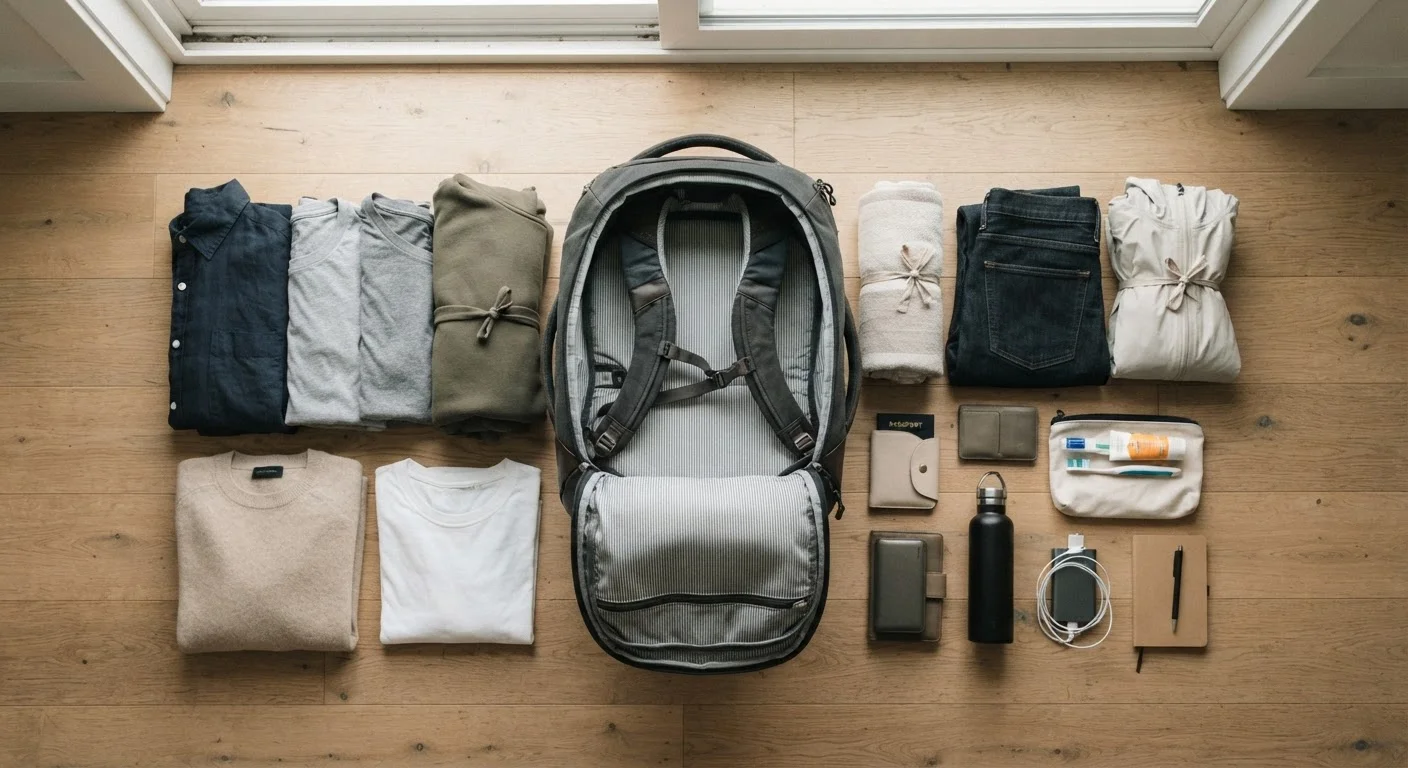
The most practical approach isn't committing to one method — it's segmenting your clothing by type and packing each segment the way that suits it best. A workable framework: roll your casual and knit items, fold your structured garments flat along one side of the bag, and bundle wrap anything you need to look sharp in on arrival.
This hybrid approach also pairs well with packing cubes, which can separate zones without adding meaningful weight. Just be aware that packing cubes don't inherently save space — as noted in our look at common packing myths, they organize space rather than create it.
Whether you're flying carry-on only or just trying to pack less than you usually do, the underlying goal is the same: use the space you have deliberately, not by default.