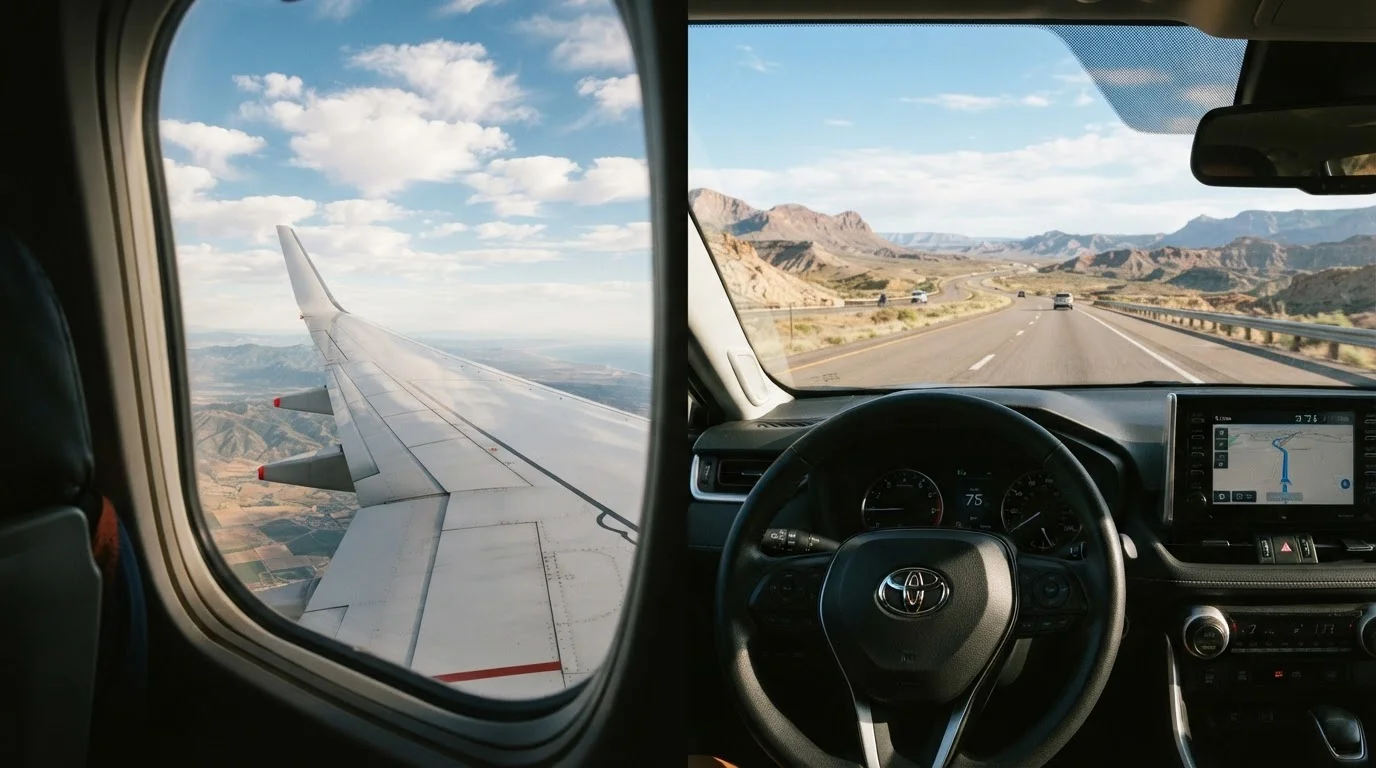
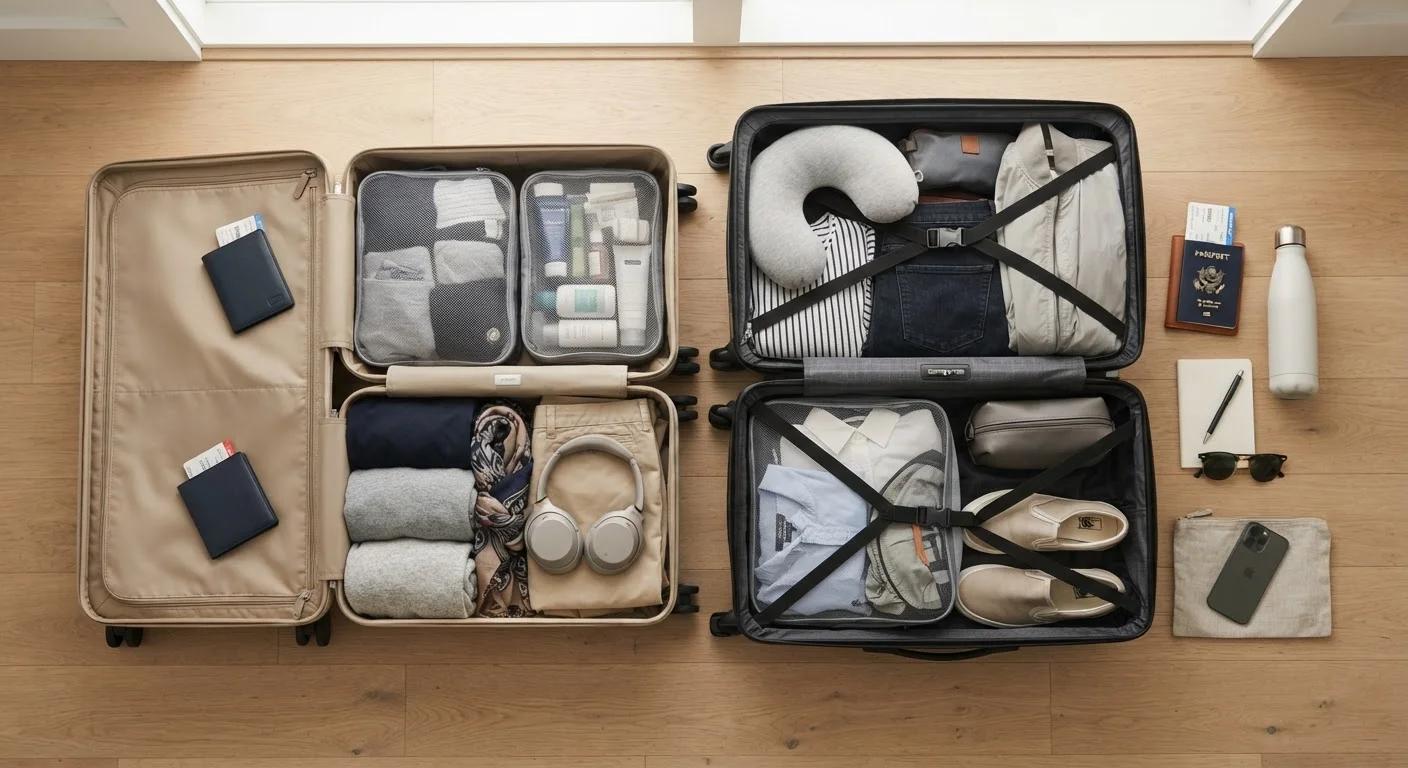
The Core Trade-Off: Control vs. Capacity
Every packing decision comes down to a single tension: how much do you need versus how much hassle are you willing to accept? Carry-on travel gives you control — your bag stays with you, fees are typically avoided, and you walk off the plane straight to the exit. A checked bag gives you capacity — more clothing, more flexibility, fewer compromises on what you bring.
Neither option is objectively superior. The right choice depends on your trip length, destination, travel style, and what you're actually willing to pack. Understanding the real trade-offs — not the romanticized version of either approach — helps you decide with clarity rather than habit.
For travelers trying to shed unnecessary gear before they leave, the pre-trip packing audit is a useful starting point regardless of which strategy you choose.
| Criterion | Carry-On Only | Checked Bag |
|---|---|---|
| Baggage fees | Typically none (verify with airline) | $30–$40+ per bag, each way |
| Baggage claim wait | None — exit immediately | 15–45 minutes typical |
| Risk of lost/delayed bag | None | Low but real, especially on connections |
| Volume / packing capacity | Limited — approx. 40L typical | High — 60–100L or more |
| Liquid and item restrictions | TSA 3-1-1 liquid rules apply | Fewer restrictions on liquids/items |
| Ideal trip length | Up to ~7–10 days with laundry access | 10+ days or gear-heavy trips |
| Mobility at destination | High — lighter, easier to navigate | Lower — bulkier to transport |
Where Carry-On Travel Has a Real Advantage
The most tangible benefit of carry-on travel is time. Skipping baggage drop and baggage claim can save 30–60 minutes on each end of a trip — time that compounds across frequent travel. There's also no checked bag fee, which on many domestic carriers runs $30–$40 per bag each way.
Carry-on travel also eliminates the possibility of delayed or lost luggage — a risk that, while relatively low, becomes far more disruptive when it happens on a tight itinerary. On trips with multiple legs or international connections, keeping your bag overhead is a genuine safeguard.
~2%
Checked bags mishandled per 100 flown
U.S. Department of Transportation data consistently shows a low but non-zero rate of delayed, damaged, or lost checked baggage on domestic flights.
$30–$40
Typical one-way domestic checked bag fee
Most major U.S. carriers charge per bag, per direction — fees that add up quickly on multi-leg or round-trip itineraries.
22 x 14 x 9 in
Standard carry-on size limit (most U.S. carriers)
Actual limits vary by airline; budget and regional carriers often apply stricter dimensions or add weight caps not found on major carriers.
The main constraint is volume. Carry-on size limits vary by airline — typically 22 x 14 x 9 inches for domestic US carriers — and some budget airlines apply stricter rules or charge for overhead bin space. It's worth verifying size and weight limits directly with your carrier before you travel. For travelers who want to see what's genuinely achievable within those limits, packing a week into a carry-on is more realistic than most people assume.
When Checking a Bag Makes More Sense
Longer trips, colder destinations, and travel that requires specialized gear are the clearest cases for checking a bag. If you're packing for two weeks in a destination without reliable self-service laundry, or bringing hiking boots, formal wear, and everyday clothes, the math on a carry-on gets difficult fast.
Family travel is another straightforward case. Between a car seat, a stroller, children's clothing in multiple sizes, and activity-specific gear, overhead bins simply aren't sufficient. Many airlines waive checked bag fees for certain equipment types — again, verify with your specific carrier.
The psychological dimension matters too. Some travelers find that carry-on constraints create low-level stress throughout a trip — worrying about fitting things back in, managing laundry logistics, or going without items they genuinely use. If that friction outweighs the fee savings, a checked bag is the more practical choice. Understanding why overpacking happens can help separate genuine need from anxiety-driven packing.
Laundry Access Changes the Equation
For travelers willing to do laundry mid-trip — whether at a hotel, laundromat, or Airbnb — the practical ceiling for carry-on travel extends significantly. Many experienced light travelers bring just 3–4 days of clothing and plan a single wash cycle for trips lasting one to two weeks. If your destination makes this realistic, it's worth factoring into your decision before defaulting to a checked bag.
Making Your Decision Based on Your Actual Trip
A few practical questions will cut through most of the uncertainty. First: how long is your trip, and will you have access to laundry? With a washer or laundromat available mid-trip, carry-on travel extends comfortably to 10 days or more. Without it, a checked bag becomes more practical around the 7-day mark for most travelers.
Second: what's your itinerary structure? Multiple short flights, tight connections, or travel through airports known for baggage handling issues all tilt toward carry-on. A single non-stop long-haul flight with a predictable schedule makes checking a bag lower risk.
Third: what are you actually bringing? If your packing list includes items prohibited from carry-on — certain liquids, tools, or sporting equipment — a checked bag isn't optional. The TSA publishes current prohibited items guidelines, and it's worth a quick check before you decide.
For travelers curious about pushing further toward minimalism, the one-bag travel philosophy offers a more committed version of carry-on packing — and an honest look at where it works and where it doesn't. And if you're weighing flying carry-on only for the first time, the adjustment is smaller than most people expect.