Why Carry-On Only Is Worth the Discipline
Checking a bag adds cost, time, and risk — fees at the counter, waiting at baggage claim, and the real possibility your luggage doesn't arrive when you do. Traveling carry-on only eliminates all three. The tradeoff is intentional packing, which most people find takes one or two trips to genuinely master.
The good news: fitting a week into a standard carry-on is realistic for most trip types, from business travel to warm-weather vacations to city trips. Cold-weather or highly formal travel adds complexity, but the core principles still apply. For a structured way to cut non-essentials before you start, the pre-trip packing audit is a useful complement to the steps below.
Airline Carry-On Rules Vary Significantly
Size and weight limits for carry-on bags differ between airlines — and sometimes between fare classes on the same airline. Budget carriers in particular may enforce stricter or unexpected restrictions. Always verify the specific policy for every leg of your trip directly with each carrier before you travel.
What You Need Before You Start
Before working through the steps, make sure you have the right bag and a clear sense of your trip's demands. Your carry-on should conform to airline limits — the most common standard is 22" x 14" x 9", but this is not universal. A bag that fits one airline's overhead bin may be gate-checked on another.
What you will need
Packing cubes
Compress and organize clothing categories so you can locate items quickly and use every inch of bag space.
Small decant containers (travel-size)
Transfer only the amount of toiletry you need rather than packing full-size bottles.
Luggage scale
Verify your bag stays within weight limits before leaving home, avoiding airline fees at check-in.
Dryer sheets or small mesh laundry bag
Keep worn clothing separated from clean items during a multi-day trip.
Step-by-Step: Packing the Bag
Follow these steps in order. The sequence matters — decisions made early (outfit planning, clothing limits) directly determine whether the physical packing succeeds later.
Plan outfits on paper before touching your bag
Write out each day's planned activities — flights, dinners, hikes, casual sightseeing — and assign a specific outfit to each. This reveals how many pieces you actually need versus how many you instinctively want to bring. Aim for a base palette of two or three neutral colors so tops and bottoms interchange freely.
Set a clothing count ceiling and stick to it
A workable ceiling for a seven-day trip: 4–5 tops, 2–3 bottoms, 1 versatile layer (lightweight jacket or cardigan), and 2 pairs of shoes. Underwear and socks can follow a one-per-day rule, but consider that most hotels and vacation rentals have laundry access for longer stays. Shoes are the heaviest and bulkiest item — limit yourself ruthlessly.
Wear your bulkiest items on travel day
Put on your heaviest shoes, thickest layer, and any bulky accessories before you leave for the airport. These items take up disproportionate bag space relative to their weight. What you wear through security doesn't count against your bag's capacity.
Roll clothing and load packing cubes by category
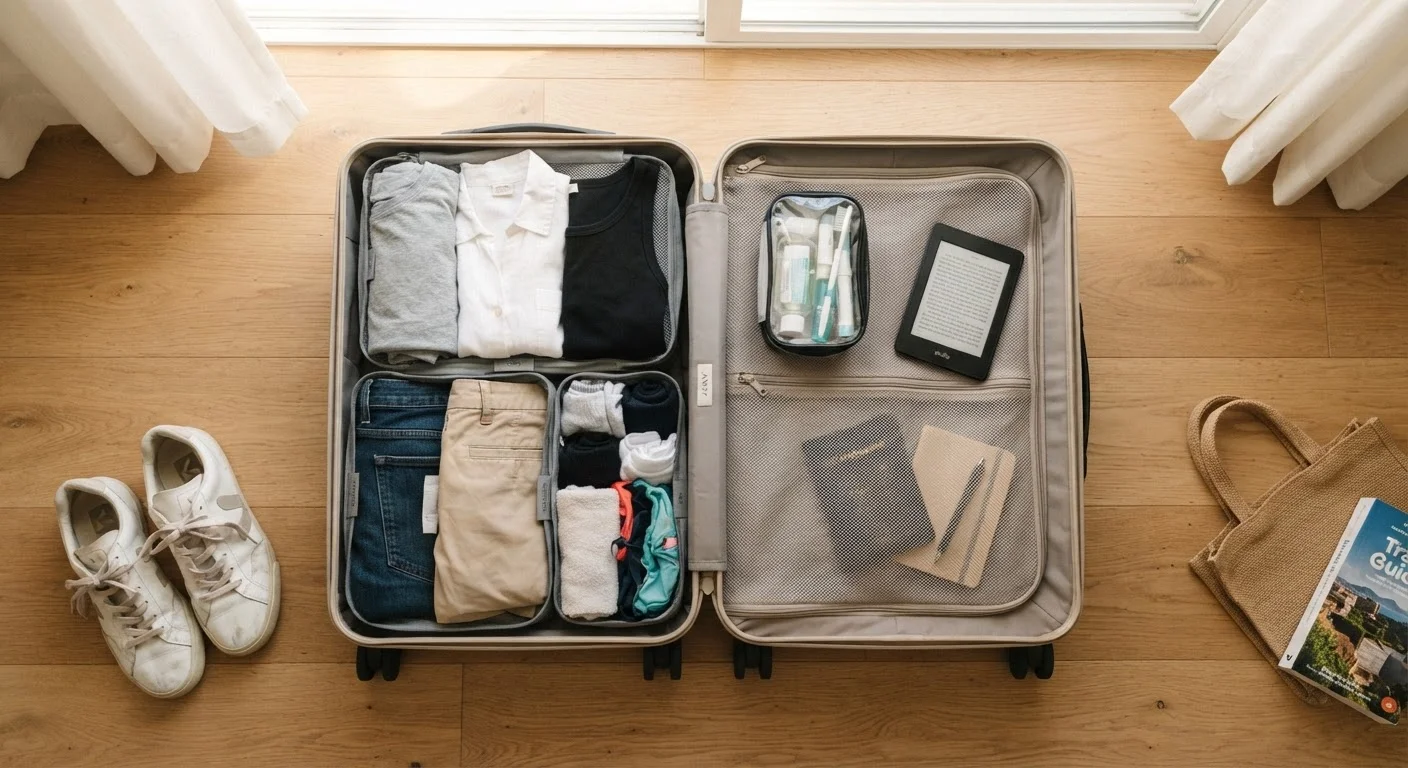
Roll soft items like t-shirts, underwear, and pants tightly — this reduces wrinkles and shrinks volume. Fold structured items like blazers using the bundle method (wrap them around softer items). Load one packing cube per category: tops, bottoms, undergarments. Place heavier cubes near the bag's wheels for balance.
Audit and decant your toiletries ruthlessly
Toiletries are where most carry-on attempts collapse. Decant shampoo, conditioner, and lotion into containers sized for your actual trip length — not the maximum container size. Use solid alternatives (shampoo bars, solid sunscreen) where possible to sidestep the TSA 3-1-1 liquids rule entirely. Limit makeup to genuine daily-use items only. For more targeted guidance on what makeup is truly essential, see makeup essentials.
Do a test pack — then remove two items
Pack everything according to your list, zip the bag, and lift it. If it's straining or noticeably heavy, something must go. As a discipline exercise, deliberately remove two items before you finalize. This forces a genuine prioritization conversation with yourself and almost always reveals at least one thing you packed by habit rather than need.
Mid-Trip Laundry Makes Everything Easier
If your trip runs longer than five days, plan one mid-trip laundry session rather than packing for every single day. A sink wash with a small amount of travel detergent works well for lightweight fabrics. This strategy lets you pack for three to four days and repeat, cutting your clothing count nearly in half.
Common Mistakes and How to Avoid Them
Even experienced travelers fall into a few predictable traps when trying to carry-on only:
- Packing for worst-case scenarios. If there's a 10% chance you'll need formal shoes, leave them. Most destinations have stores for genuine emergencies.
- Treating the personal item as overflow. Your under-seat bag should hold your in-flight essentials — laptop, snacks, headphones — not clothing that didn't fit. Stuffing it defeats the purpose of strategic packing.
- Ignoring fabric weight. Two pairs of jeans weigh significantly more than two pairs of lightweight chinos or travel trousers. Fabric choice compounds across every item in your bag.
For broader trip planning strategies, including how to match your packing approach to specific destination types, explore our full planning resources.
TSA Liquids Rule Still Applies
Passengers on US domestic and international departing flights are required to follow the TSA 3-1-1 rule: liquids in containers of 3.4 oz (100ml) or less, all fitting in one quart-sized clear bag, one bag per person. Oversized containers will be confiscated at the checkpoint. Check the TSA website for current, official guidance before you fly.