What Separates Active from Passive Safety
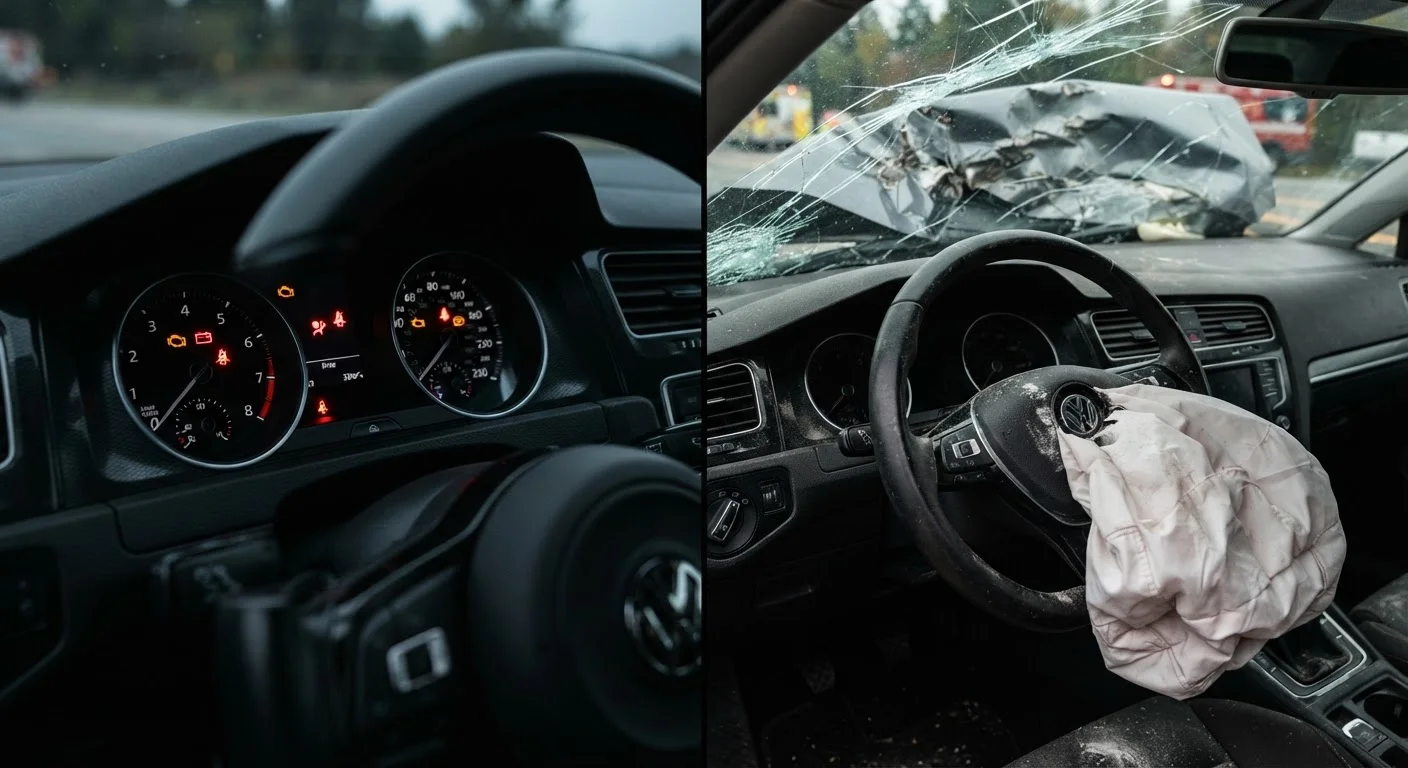
Vehicle safety engineering operates across two distinct timeframes: before a crash and during one. That distinction defines the line between active safety and passive safety — and understanding it matters whether you're evaluating a vehicle's safety credentials or simply understanding what your car is doing when it beeps at you.
Active safety refers to systems that continuously monitor driving conditions and intervene — or warn the driver — to help prevent a collision from occurring in the first place. These systems are always working in the background, reading sensor data and comparing it against what a safe driving situation looks like.
Passive safety refers to engineering built into the vehicle's physical structure that is designed to protect occupants once a crash is already happening. These systems don't prevent the collision — they manage its consequences.
Both categories appear in safety ratings from NHTSA and IIHS, though they are evaluated through different testing methodologies. Understanding what each rating measures helps clarify which layer of protection is being assessed.
| Criterion | Active Safety | Passive Safety |
|---|---|---|
| When it operates | Before a crash occurs | During and after a crash |
| Primary goal | Prevent collisions | Reduce injury severity |
| Key examples | AEB, lane assist, blind-spot monitoring | Airbags, seatbelts, crumple zones |
| Requires driver action | Partially (warnings need response) | No — fully automatic |
| Affected by weather/conditions | Yes — sensors can be impaired | No — structural features always present |
| Assessed in safety ratings | Yes (e.g., IIHS active safety tests) | Yes (e.g., NHTSA/IIHS crash tests) |
| Benefit to occupants | Avoidance of crash entirely | Survival and reduced injury in a crash |
How Active Safety Systems Work
Active safety encompasses a broad range of driver-assistance technologies that use cameras, radar, and ultrasonic sensors to assess risk in real time. Key examples include:
- Automatic Emergency Braking (AEB): Detects an imminent forward collision and applies the brakes if the driver doesn't respond in time. Studies from the Insurance Institute for Highway Safety (IIHS) have found that vehicles equipped with AEB show meaningful reductions in rear-end crash rates compared to those without it.
- Lane Departure Warning and Lane-Keeping Assist: Monitors lane markings and alerts — or actively steers — when the vehicle drifts unintentionally.
- Blind-Spot Monitoring: Alerts drivers to vehicles in adjacent lanes that may not be visible in mirrors.
- Adaptive Cruise Control: Maintains a set following distance from the vehicle ahead, reducing the risk of rear-end collisions on highways.
Active systems depend on sensors remaining clean and unobstructed, and their effectiveness can be reduced in adverse weather conditions. For context on how road conditions affect overall vehicle control, see our piece on adjusting driving habits for rain, snow, and fog.
50%
Reduction in front-to-rear crashes
IIHS research has found that vehicles equipped with forward collision warning plus automatic braking were involved in significantly fewer rear-end crashes compared to vehicles without these systems.
10+
Airbags in many modern vehicles
Contemporary vehicle platforms routinely include front, side, curtain, and knee airbags, a significant increase from the single driver airbag that was standard only a few decades ago.
45%
Of crash deaths involve non-seatbelt wearers
According to NHTSA data, unrestrained occupants account for a disproportionate share of vehicle crash fatalities, underscoring that passive systems only work when used correctly.
How Passive Safety Systems Work
Passive safety is built into a vehicle's physical architecture. These systems require no driver action — they activate automatically during a crash or are simply present by virtue of the vehicle's construction.
- Seatbelts with pretensioners: Standard seatbelts restrain occupants, while pretensioners tighten the belt at the moment of impact to reduce forward movement. Load limiters then release controlled slack to reduce chest injury risk.
- Airbags: Front, side, curtain, and knee airbags deploy within milliseconds of a crash, cushioning occupants against hard surfaces. Modern vehicles may carry ten or more airbags.
- Crumple zones: Engineered sections of the vehicle — typically front and rear — that are designed to deform progressively during a collision, absorbing kinetic energy before it reaches the passenger compartment.
- Reinforced passenger cell: The cabin structure is built to remain as intact as possible, maintaining a survival space even when surrounding bodywork collapses.
Passive systems are also the subject of rigorous crash testing. Understanding how crashworthiness scores are calculated can help consumers interpret what those test results mean in practice.
Passive Safety Only Works When Used Correctly
Seatbelts are the most foundational passive safety system in any vehicle — but they only function as designed when worn properly, with the lap belt across the hips and the shoulder belt across the chest. Airbags are designed to work in conjunction with a fastened seatbelt, not as a substitute for one. Improper seatbelt use or non-use significantly undermines the protection that passive safety systems are engineered to provide.
Why Both Layers Are Necessary
A common misconception is that advanced active safety technology reduces the importance of passive safety — that if a car can prevent crashes, its structural protection matters less. This logic has real limitations.
Active systems can be defeated by sensor obstructions, unexpected road conditions, or scenarios they weren't designed to detect. Some crashes are simply unavoidable regardless of the technology present — a vehicle crossing a center line at speed, for instance, leaves very little reaction time for any system, human or electronic. That's exactly when passive safety becomes the sole remaining protection.
Conversely, a vehicle with excellent passive safety but no active aids misses opportunities to avoid crashes that were, in fact, preventable. Research consistently shows that following distance and reaction time are critical factors in rear-end collisions — precisely the scenario where active systems like AEB have demonstrated the clearest real-world benefit.
For teen and newer drivers especially, the combination is particularly important. Inexperience compounds crash risk in specific, well-documented ways — and active systems can provide an intervention layer that partially compensates for gaps in hazard perception. But passive systems remain non-negotiable protection for all occupants regardless of experience level.
The broader takeaway: these two systems are complements, not substitutes. Evaluating a vehicle's safety profile means looking at both — and understanding that overconfidence in any single technology carries its own risk.