Why Five Years Is the Right Window to Measure
Most Americans finance a vehicle over 60 to 72 months and keep it for a similar stretch. Five years captures the period where the largest costs — depreciation and interest — overlap most heavily, making it the most instructive timeframe for comparing the true burden of ownership. For a more granular year-by-year view, see our annual car ownership costs breakdown.
Looking only at a monthly payment obscures what you are actually committing to. A vehicle priced at $35,000 might require more than $50,000 in total expenditures over five years once every cost category is counted — and that gap is what this guide unpacks.
~50%
Value lost to depreciation in 5 years
AAA and industry analysts consistently report new vehicles lose roughly half their value over a five-year ownership period, though rates vary by segment.
$10,728
Average annual cost of car ownership
AAA's annual Your Driving Costs study estimates average ownership costs for a new vehicle at approximately $10,000–$11,000 per year when all expenses are included.
15,000
Average annual miles driven by US drivers
The Federal Highway Administration reports approximately 14,000–15,000 miles as the typical annual mileage for American drivers.
Depreciation: The Largest Cost Most Drivers Ignore
Depreciation — the loss in a vehicle's market value over time — is routinely the single biggest expense of ownership. A new car typically loses roughly 15–25% of its value in the first year alone, and around 50–60% over five years, though the exact rate varies by vehicle type, brand, and market conditions.
For a $35,000 vehicle, that means roughly $17,500–$21,000 in lost value over five years, regardless of whether you ever make a repair or put a drop of fuel in the tank. This cost is invisible in the monthly statement but very real when you sell or trade in. Our guide on the real price of owning a car examines how depreciation interacts with other expenses in more detail.
Check the vehicle's projected residual value — available through sources like ALG or Edmunds — before you buy, not after. Higher residual value means lower depreciation cost over your ownership period.
Vehicle type and segment dramatically influence depreciation curves. Trucks and SUVs have historically held value better than sedans in recent US markets, making this a meaningful factor in total cost calculations.
If you plan to keep a vehicle for five or more years, a slightly higher purchase price on a historically reliable model often costs less in total than a cheaper vehicle with higher repair frequency.
Reliability data from organizations like Consumer Reports shows significant variation in average repair costs across makes and models, with differences that can easily reach thousands of dollars over a five-year period.
Financing Interest Adds Up Faster Than You Think
The majority of vehicle purchases in the US involve financing. On a $30,000 loan at 7% APR over 60 months, total interest paid approaches $5,600 — money that buys you nothing except time to pay. Extend the loan to 72 months and interest climbs further, while the vehicle's value continues falling. Many drivers misread what their loan terms actually cost them; our article on financing misconceptions that make car ownership more expensive goes deeper on this point.
Negative Equity Is a Real Risk With Long Loan Terms
When you finance a vehicle over 72 months or more, depreciation often outpaces your loan payoff schedule. This creates negative equity — you owe more than the vehicle is worth. If you need to sell or trade in early, you may have to pay the difference out of pocket or roll the balance into a new loan, compounding the problem.
Interest rate, down payment size, and loan length are the three levers that most directly control how much financing adds to your five-year total. Adjusting any one of them meaningfully shifts the outcome.
Insurance, Fuel, and Registration Year by Year
Beyond depreciation and interest, three recurring costs accumulate steadily. According to data from the National Association of Insurance Commissioners and AAA's annual Your Driving Costs study, average full-coverage auto insurance in the US runs roughly $1,500–$2,500 per year depending on location, driving record, and coverage level. Over five years, that is $7,500–$12,500 before any claims.
Fuel cost depends on vehicle efficiency and local prices. A vehicle averaging 28 mpg and driven 15,000 miles annually consumes roughly 535 gallons per year. At $3.50 per gallon, that is about $1,875 annually, or $9,375 over five years. If you are weighing an electric alternative, our comparison of gas vs. electric lifetime costs provides a structured side-by-side analysis.
State registration and licensing fees vary widely — from under $50 in some states to several hundred dollars annually in others. Budget a conservative $150–$400 per year depending on your state.
Maintenance and Repairs: Costs That Grow With Mileage
Routine maintenance — oil changes, tire rotations, brake pads, filters, fluid flushes — typically costs $500–$900 per year in the early ownership years. By years four and five, more substantial services (transmission fluid, timing belt if applicable, battery replacement) can push annual maintenance spending above $1,000. Our car maintenance hub covers service intervals and what to expect at each mileage milestone.
Unexpected repairs add further variability. Industry data suggests drivers should budget for at least one significant unplanned repair during any five-year period. Building a dedicated vehicle emergency fund — separate from routine maintenance — is a practical safeguard.
Keep Your Service Records Organized
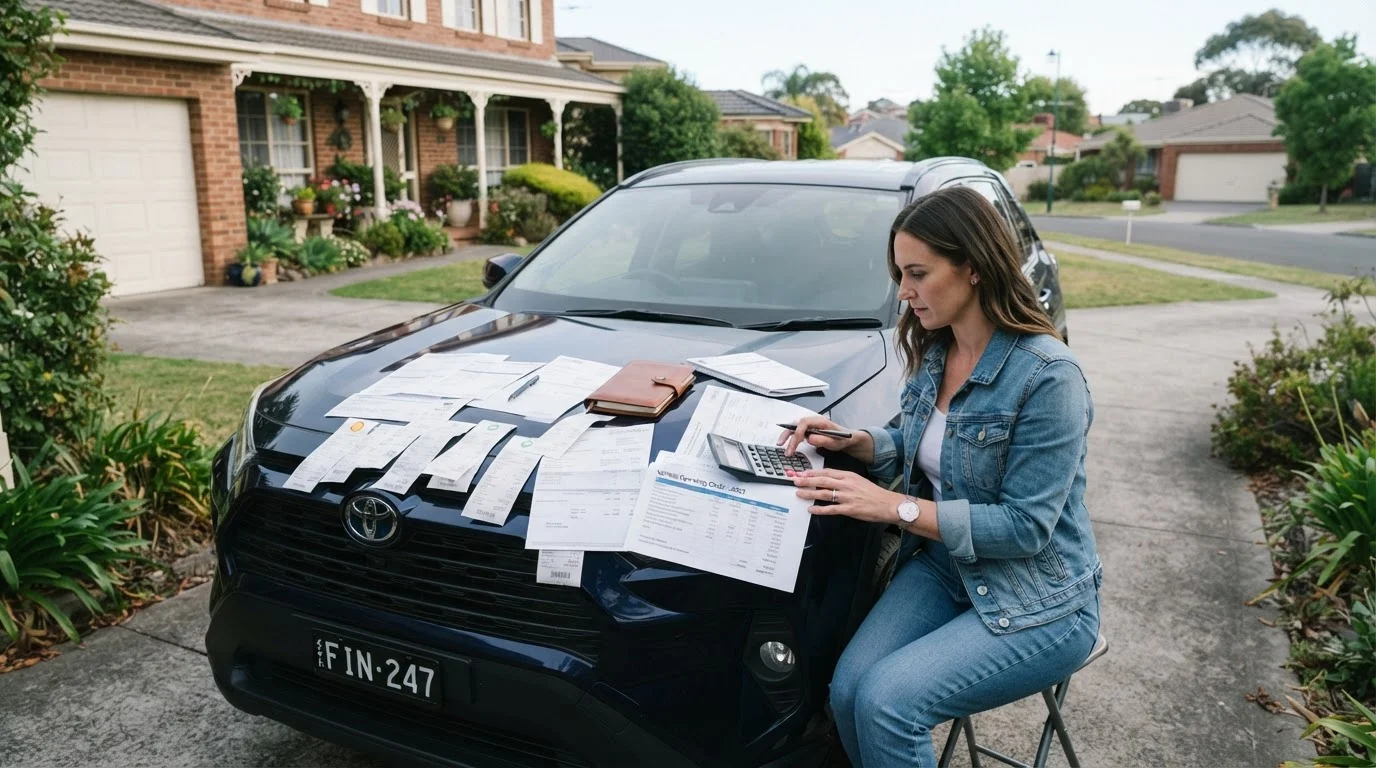
Documented maintenance history tangibly supports resale value and helps you spot cost patterns before they become expensive problems. A simple folder — physical or digital — with receipts for every service visit pays dividends when it is time to sell or negotiate a trade-in.
For strategies to manage all these costs proactively, see our guide on keeping ownership costs in check.
Putting the Total Together
Adding these categories for a hypothetical $35,000 new sedan, financed at 7% APR over 60 months, driven 15,000 miles per year:
| Cost Category | Estimated 5-Year Total |
|---|---|
| Depreciation | $17,500–$21,000 |
| Financing Interest | $5,000–$6,000 |
| Insurance | $7,500–$12,500 |
| Fuel | $8,500–$10,500 |
| Maintenance & Repairs | $4,000–$6,000 |
| Registration & Fees | $750–$2,000 |
| Total | $43,250–$58,000 |
These figures are illustrative estimates based on published industry averages and are not guarantees. Actual costs vary significantly by location, driving habits, vehicle type, and individual circumstances. The core lesson is consistent: the sticker price represents a fraction of what ownership actually costs. For a fuller pre-purchase framework, see the full picture of car ownership costs before signing anything.