Purchase Price and Incentives
The most immediate difference between gasoline and electric vehicles is the sticker price. EVs have historically carried a premium over comparable gas-powered models, largely due to battery manufacturing costs. That gap has been narrowing, but it remains meaningful for most segments of the market.
Federal tax credits — available to qualifying buyers of eligible new EVs under current U.S. law — can reduce the effective purchase price by several thousand dollars. A number of states layer additional incentives on top of that. Eligibility depends on income thresholds, vehicle price caps, and whether the vehicle is assembled in North America, so prospective buyers should verify current rules with the IRS and their state's energy office before making assumptions.
On the gasoline side, the used market offers far more inventory at varied price points, making it easier to match a tighter budget. For a detailed look at how purchase price feeds into broader ownership math, see what car ownership actually costs beyond the sticker price.
| Criterion | Gasoline Vehicle | Electric Vehicle (EV) |
|---|---|---|
| Typical Purchase Price | Lower upfront cost | Higher upfront cost |
| Federal Incentives | Generally not applicable | Up to $7,500 tax credit (if eligible) |
| Per-Mile Energy Cost | Higher (gas prices vary) | Lower (especially with home charging) |
| Routine Maintenance | More frequent, more items | Fewer items, lower frequency |
| Refueling / Charging Access | Extensive national network | Growing, but gaps remain rurally |
| Depreciation Predictability | Well-established patterns | Improving but still less certain |
| Long-Term Cost Advantage | Shorter ownership periods | Longer ownership periods |
Fuel and Energy Costs
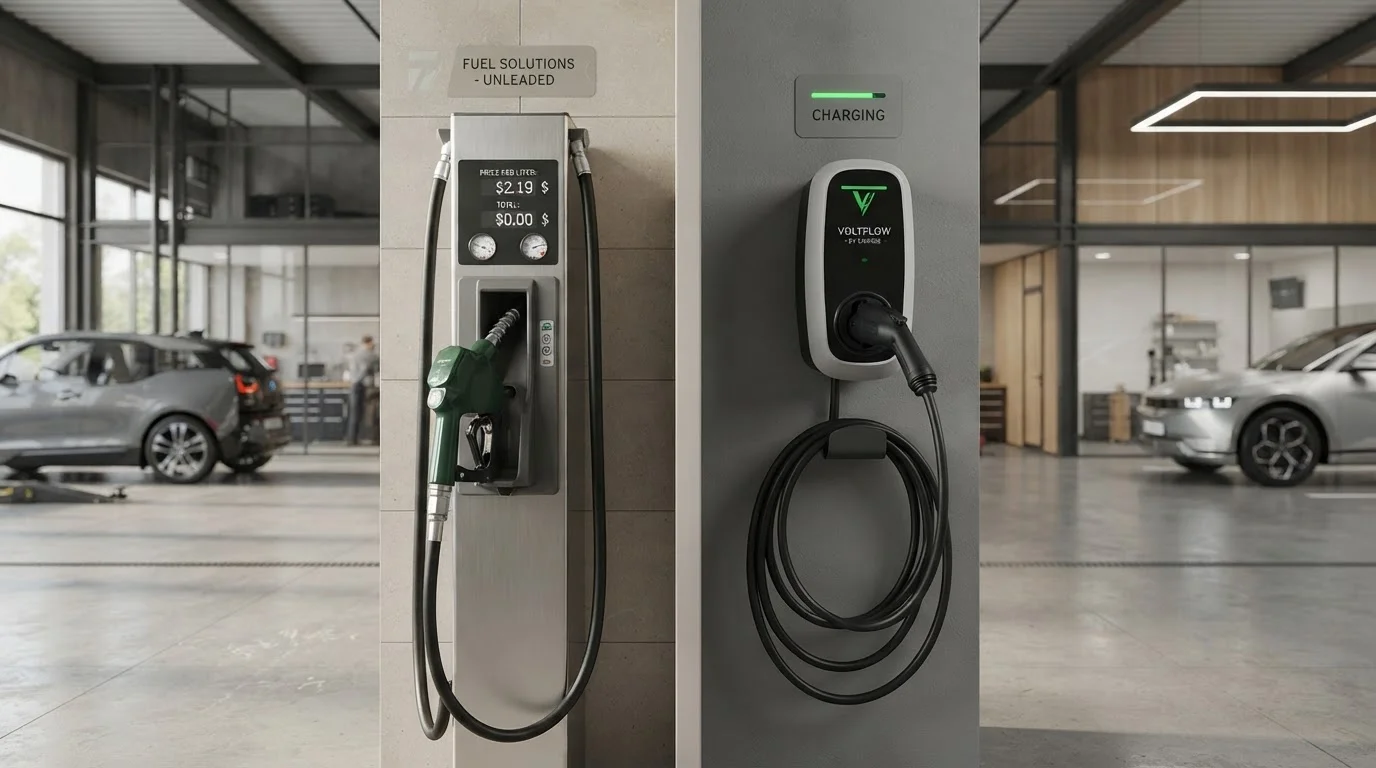
Per-mile energy costs are where EVs typically gain their clearest financial advantage. Electricity is generally cheaper than gasoline on a per-mile basis in most U.S. regions, though the margin varies significantly depending on local utility rates and gas prices at any given time. Drivers who charge primarily at home overnight — on off-peak electricity rates where available — tend to see the strongest savings.
Gasoline prices are volatile and regionally variable. A driver in a state with high fuel taxes or limited refinery capacity pays considerably more per gallon than one in a lower-cost region. That variability makes lifetime fuel cost projections for gas vehicles inherently uncertain.
~60%
Lower per-mile fuel cost for EVs vs. gas
The U.S. Department of Energy's Alternative Fuels Data Center estimates EV drivers pay roughly 40–60% less per mile for energy than gasoline vehicle drivers under average U.S. electricity and gas prices.
$1,000+
Annual maintenance savings reported by EV owners
Analysis from Consumer Reports found that EV owners spend significantly less on repairs and maintenance annually compared to owners of internal combustion engine vehicles.
3–7 yrs
Typical break-even window for EV cost premium
Industry analysts generally estimate that the higher upfront cost of an EV is offset by fuel and maintenance savings within three to seven years, depending on driving habits and local energy costs.
Public fast-charging for EVs adds a layer of cost complexity. DC fast-charging rates at commercial stations are higher per kilowatt-hour than home charging and, in some cases, approach or exceed the per-mile cost of gasoline depending on the vehicle's efficiency and the network's pricing model.
Maintenance, Repairs, and Insurance
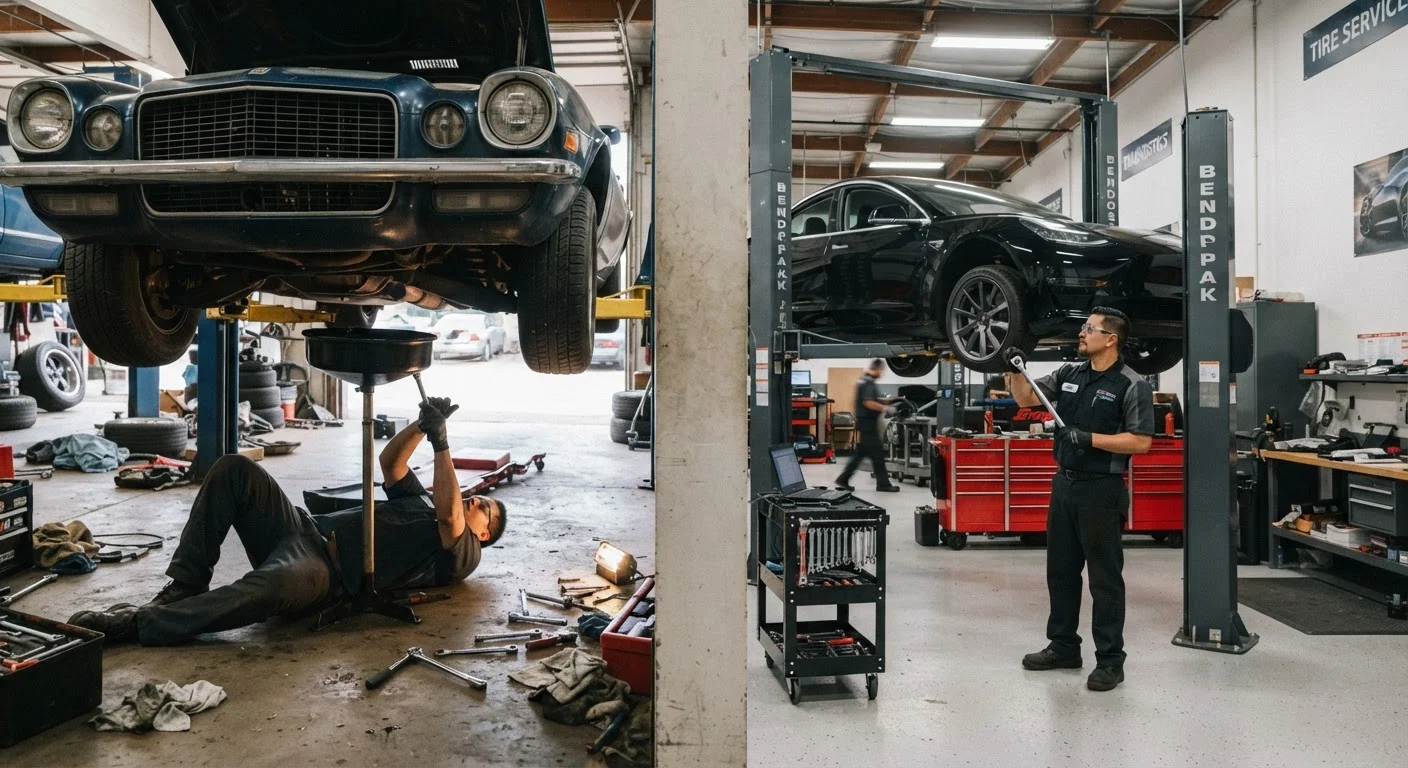
EVs have a mechanical simplicity advantage. They eliminate oil changes, spark plugs, exhaust systems, traditional transmissions, and several other components that require regular service on gasoline vehicles. Studies from organizations such as Consumer Reports and the U.S. Department of Energy have consistently found that EV owners report lower maintenance spending over time — though battery replacement, if needed outside warranty, represents a significant potential cost.
Gasoline vehicles carry more routine maintenance obligations: oil and filter changes, coolant flushes, transmission service, and timing belt replacements on certain engines. These costs are predictable and well-understood by any independent mechanic, and the labor market for gas vehicle repair is far larger and more competitive. For practical guidance on keeping those costs manageable, see car maintenance tips.
Insurance premiums are influenced by vehicle value, repair costs, claims data, and driver profile — not powertrain type alone. EVs can carry higher repair costs after collisions due to battery proximity to crumple zones and specialized parts, which some insurers factor into premiums. However, rates vary widely by model and insurer, so direct comparison shopping for a specific vehicle is the only reliable way to assess this cost. The annual car ownership costs breakdown covers insurance as part of a fuller yearly cost picture.
Battery Warranty Coverage Matters
Most new EVs sold in the U.S. come with a federally mandated battery warranty of at least eight years or 100,000 miles. This coverage significantly reduces the financial risk of battery degradation during the primary ownership window. Buyers considering a used EV should check the remaining warranty and any available battery health reports from the manufacturer before purchasing.
Depreciation and Long-Term Value
Depreciation is often the single largest ownership cost, yet it's rarely the first thing buyers consider. Historically, EVs depreciated faster than comparable gas vehicles, in part due to battery technology uncertainty and limited used-market demand. That pattern has been shifting as consumer confidence in EV batteries grows and used-EV supply becomes more established.
Gasoline vehicle depreciation is well-documented and more predictable. Certain segments — trucks, SUVs — have historically held value better than sedans, regardless of powertrain. Resale value is also affected by trim level, mileage, condition, and regional demand, factors that apply equally to both types.
For buyers planning to own a vehicle for seven years or more, depreciation is a relatively smaller share of total cost per mile compared to a three-year ownership cycle. The longer you hold the vehicle, the more fuel and maintenance costs dominate the total — which tends to favor EVs in extended ownership scenarios. See what car ownership actually costs over five years for a detailed look at how these costs compound.