
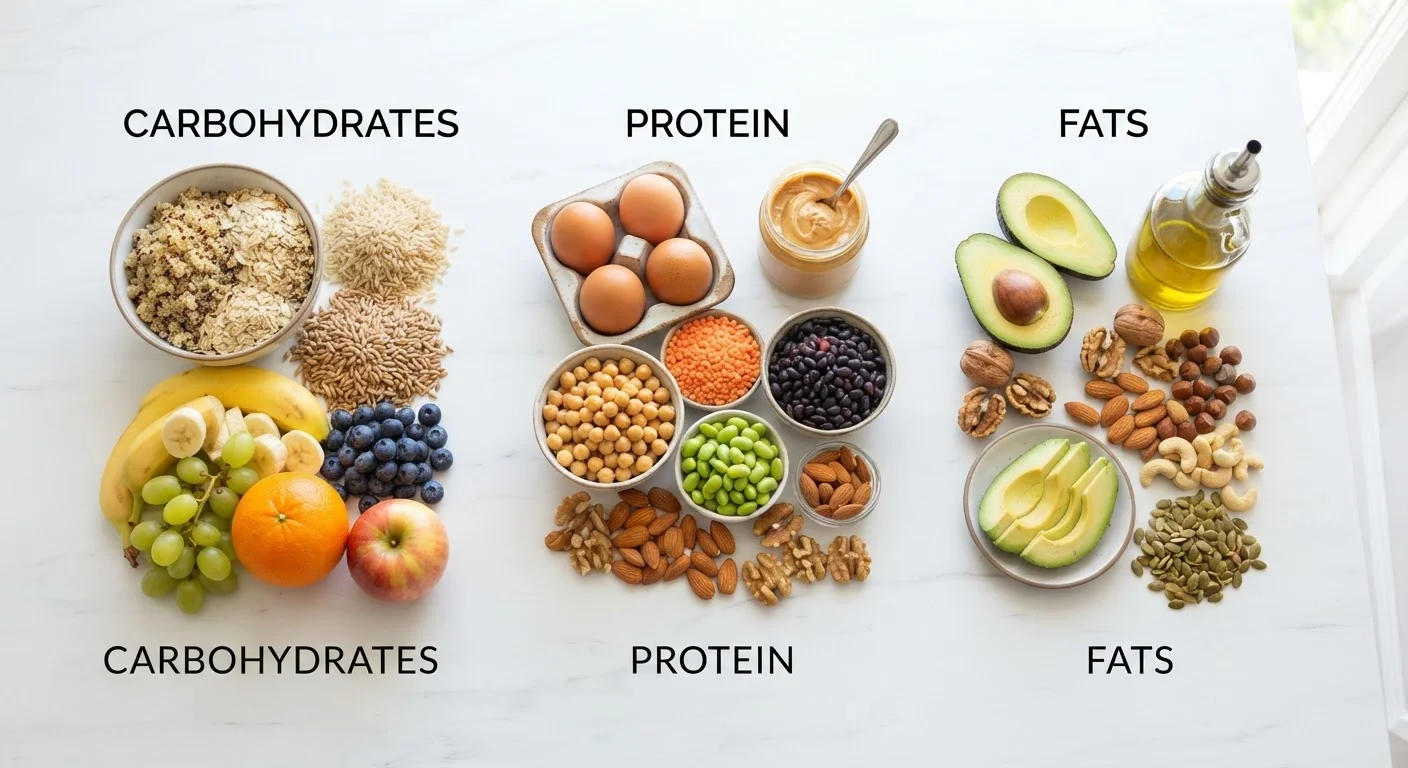
Why Macronutrients Matter
Every bite of food you eat is doing something specific inside your body. That process begins with macronutrients — the structural and energetic foundation of your diet. While nutrition headlines tend to pit carbohydrates, protein, and fat against each other, the science is clear: all three are essential, and each serves functions the others cannot fully replace.
Understanding what each macronutrient actually does — not just how many calories it contributes — helps cut through the noise of popular diet culture. For a closer look at how macronutrients appear on everyday food packaging, see Reading a Nutrition Facts Label Without Getting Lost in the Numbers.
45–65%
Recommended share of daily calories from carbohydrates
According to the U.S. Dietary Guidelines for Americans, carbohydrates should make up 45–65% of total daily caloric intake for most adults.
10–35%
Recommended daily caloric range for protein intake
The Institute of Medicine's Acceptable Macronutrient Distribution Range places protein at 10–35% of total daily calories for adults.
20–35%
Recommended daily caloric range for dietary fat
U.S. dietary guidelines recommend that fat account for 20–35% of total daily calorie intake, with an emphasis on unsaturated fat sources.
Carbohydrates: Your Body's Preferred Fuel
Carbohydrates are broken down into glucose, the form of sugar your cells use as their primary energy source. The brain, in particular, depends almost entirely on glucose for normal function. When you eat carbohydrates, your digestive system converts them to glucose, which enters the bloodstream and is either used immediately for energy or stored in the liver and muscles as glycogen for later use.
Not all carbohydrates behave the same way. Complex carbohydrates — found in whole grains, legumes, and vegetables — contain dietary fiber, which slows digestion, supports gut health, and helps regulate blood sugar levels. Simple carbohydrates found in refined foods are digested more rapidly and provide less sustained energy. Fiber itself, though technically a carbohydrate, is not digested for fuel; instead it feeds beneficial gut bacteria and supports digestive regularity.
The idea that carbohydrates are universally harmful is one of the most persistent myths in popular nutrition. Nutrition Myths That Refuse to Die examines this and other evidence-based corrections in detail.
Protein: The Body's Builder and Maintainer
Protein is made up of amino acids — organic compounds your body uses to build and repair tissues, produce enzymes, create hormones, and support immune function. Of the twenty amino acids involved in human physiology, nine are considered essential, meaning your body cannot synthesize them and must obtain them through food.
Muscle repair after exercise is one of protein's best-known roles, but its functions extend much further. Proteins form the structural basis of skin, hair, and nails; they act as carriers transporting oxygen and nutrients through the bloodstream; and they serve as the molecular machinery behind virtually every chemical reaction in your cells.
Animal-source proteins — meat, fish, eggs, dairy — typically contain all nine essential amino acids and are described as complete proteins. Plant sources such as beans, lentils, and tofu vary in their amino acid profiles, though a varied plant-based diet can readily meet all essential amino acid needs. If you're also thinking about how exercise and nutrition interact, Cardio vs. Strength Training provides helpful context on how different workout types affect the body's nutritional demands.
Dietary Fat: More Than Just Stored Energy
Fat has long been mischaracterized as something to minimize, but it performs critical roles that carbohydrates and protein cannot. Dietary fat enables your body to absorb fat-soluble vitamins — A, D, E, and K — without which deficiencies in those nutrients can develop even with adequate intake. Fat also provides the raw material for producing hormones, including sex hormones and those regulating inflammation.
The brain is roughly 60% fat by dry weight, and dietary fat contributes to the maintenance of myelin — the protective sheath around nerve fibers. Omega-3 fatty acids, found in fatty fish, walnuts, and flaxseed, are particularly associated with brain and cardiovascular health in the research literature.
“Dietary fat is not the enemy. The quality of fat in the diet — and the overall dietary pattern — matters far more than simply reducing fat as a category.”
— Walter Willett, Professor of Epidemiology and Nutrition, Harvard T.H. Chan School of Public Health
Fat type matters considerably. Unsaturated fats — found in olive oil, avocados, and most nuts — are generally associated with positive health markers. Saturated fats, concentrated in fatty animal products and some tropical oils, are associated with higher LDL cholesterol at elevated intakes, though the picture is still an active area of research. Industrially produced trans fats are widely considered harmful and have been largely removed from the U.S. food supply.
For a broader look at how food composition affects nutritional value, Whole Foods vs. Ultra-Processed Foods explores how processing level changes the nutritional landscape of what we eat.
This article is for general informational and educational purposes only and is not a substitute for professional medical or dietary advice. Consult a qualified healthcare provider or registered dietitian for guidance tailored to your individual health needs.