Why Equipment Literacy Matters
Walking into a gym — or browsing fitness equipment online — can feel like learning a new language. Terms like concentric contraction, resistance band loop, or flywheel resistance appear on labels, workout plans, and instructor instructions without much explanation. Building a basic vocabulary around fitness equipment helps you follow workout programs accurately, use gear safely, and make more confident decisions about your exercise routine.
This reference covers the most commonly encountered gym tools and fitness terms, organized for quick lookup. It is a companion to educational resources like building a weekly exercise routine and pairs well with understanding the broader science behind cardio vs. strength training.
| Resistance Band Levels | Typically 5–7 resistance levels, often color-coded by manufacturer |
| Average Adult Max Heart Rate Estimate | 220 minus age (beats per minute) (American College of Sports Medicine) |
| VO2 Max Units | Milliliters of oxygen per kilogram of body weight per minute (mL/kg/min) |
| Compound vs. Isolation | Compound movements recruit multiple muscle groups; isolation exercises target one |
| Foam Roller Use | Pre- and post-workout; 30–60 seconds per muscle group is a common guideline (National Academy of Sports Medicine) |
Common Equipment and Key Terms Defined
The glossary below covers equipment categories and performance terms you are likely to encounter whether training at home or in a commercial gym. For a deeper look at the principles that make these tools effective, see our guide on progressive overload.
Resistance Band
An elastic loop or strip used to add tension to exercises. Available in varying resistance levels (often indicated by color), they challenge muscles through both the lifting and lowering phases of movement.
Free Weights
Dumbbells, barbells, and kettlebells that are not attached to a machine. They require greater stabilization effort, engaging supporting muscle groups alongside the primary target muscles.
Cable Machine
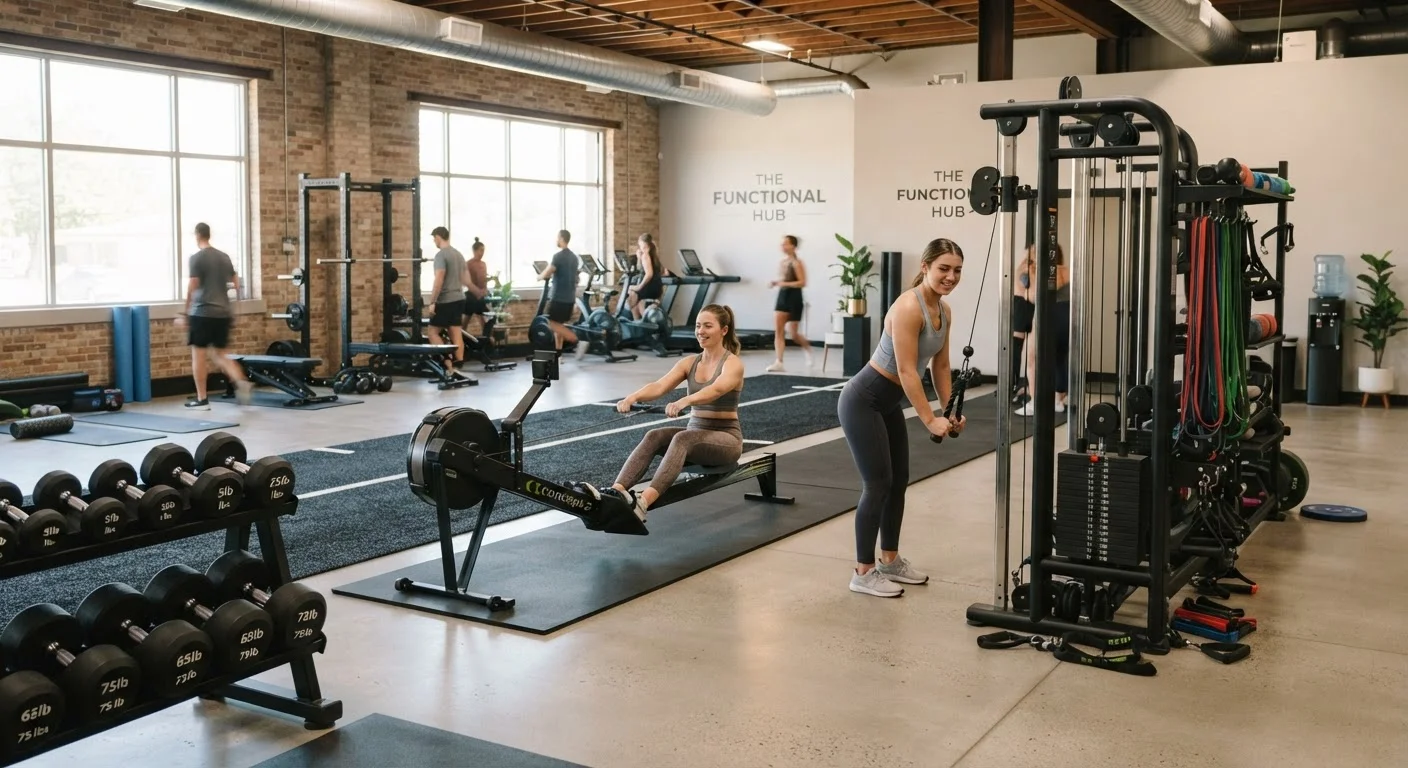
A weight-stack machine that uses a pulley and cable system to deliver adjustable, constant tension throughout an exercise's full range of motion. Useful for both isolation and compound movements.
Flywheel Resistance
A resistance mechanism used in stationary bikes and rowing machines where a weighted wheel stores and releases kinetic energy. Magnetic or friction systems control how hard the wheel spins.
Compound Movement
An exercise that involves multiple joints and muscle groups simultaneously — such as a squat or deadlift. Generally considered efficient for building overall strength and burning calories.
Isolation Exercise
An exercise targeting a single muscle group across one joint — such as a bicep curl. Often used to address muscle imbalances or to strengthen a specific area.
Rep (Repetition)
One complete execution of an exercise, from start position through full range of motion and back. Multiple reps make up a set.
VO2 Max
The maximum rate at which the body can consume oxygen during intense exercise. It is a standard marker of aerobic fitness; higher values generally indicate greater cardiovascular endurance capacity.
Eccentric Phase
The portion of a movement where the muscle lengthens under load — such as lowering a dumbbell during a curl. Eccentric loading plays a significant role in muscle development and is a common source of post-exercise soreness.
Heart Rate Zone
A percentage range of your estimated maximum heart rate used to calibrate cardio intensity. Different zones target different physiological outcomes, from fat metabolism to peak aerobic conditioning.
Foam Roller
A cylindrical tool used for self-myofascial release — applying pressure to muscles to reduce tension and improve tissue mobility. Commonly used before and after workouts as part of a warm-up or cool-down.
Smith Machine
A barbell fixed within vertical steel rails that guides the bar along a set path. It offers additional stability compared to a free barbell, which can be useful for learning movement patterns, though it limits natural bar path variation.
If you are new to structured exercise, reviewing what to check before starting a new exercise program can help you approach equipment use safely. And if you have encountered claims about certain tools or methods, fitness myths that won't go away addresses what exercise science actually supports.
Equipment Names Vary by Brand and Region
The same piece of equipment may go by different names in different gyms or product listings — for example, a 'lat pulldown machine' and a 'high cable row station' can refer to overlapping equipment configurations. When in doubt, ask a gym staff member or certified trainer to clarify what a piece of equipment does before using it. Proper form matters more than familiarity with the name.
This article provides general fitness education and is not a substitute for personalized guidance from a qualified fitness professional or healthcare provider. If you have an existing health condition, consult your physician before beginning or modifying an exercise program.