Why a Structured Routine Matters for Beginners
Walking into exercise without a plan is one of the most common reasons new exercisers burn out or get hurt. A simple structure — knowing which days you'll move, for how long, and what type of activity — removes the daily decision fatigue that derails good intentions.
Research consistently shows that habit formation is easier when behaviors are attached to specific times and contexts. For new exercisers, a written weekly plan acts as a commitment device: it turns an abstract goal into a concrete schedule. Before building that plan, it's worth reviewing our pre-exercise checklist to confirm you're starting on solid footing.
Write It Down Before the Week Starts
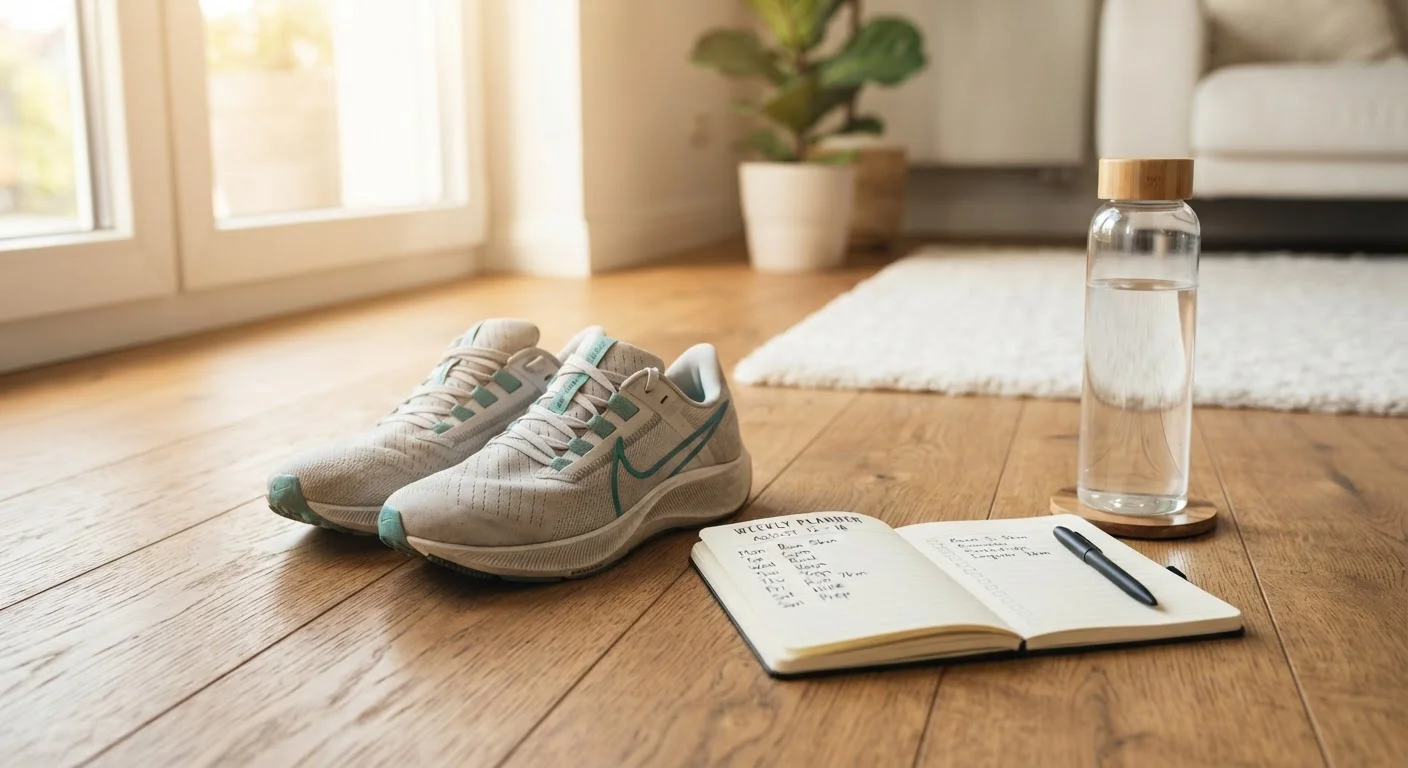
Scheduling your workouts like appointments — on a calendar or planner — significantly increases follow-through. Choose days that realistically fit your life, not an ideal version of it. Even three consistent sessions per week produce meaningful health benefits over time.
The Core Building Blocks of a Weekly Plan
A well-rounded beginner routine contains three elements, balanced across the week:
Cardiovascular exercise
Physical activity that raises your heart rate and breathing for a sustained period, such as walking, jogging, cycling, or swimming. It supports heart and lung health.
Strength training
Exercise that uses resistance — your own bodyweight, bands, or weights — to challenge and gradually strengthen muscles.
Active recovery
Light, low-effort movement on days between harder workouts, such as a casual walk or gentle stretching. It promotes circulation and helps muscles repair without adding training stress.
DOMS
Delayed onset muscle soreness — the achiness that appears 24 to 48 hours after unfamiliar exercise. It's a normal response to muscle adaptation and typically fades within a few days.
Progressive overload
The principle of gradually increasing the challenge of your workouts over time — through more reps, heavier resistance, or longer duration — so your body continues to adapt and improve.
- Cardiovascular activity — any sustained movement that raises your heart rate, such as brisk walking, cycling, or swimming. Aim for at least two sessions per week at a pace where you can still hold a conversation.
- Strength training — exercises that challenge your muscles against resistance. Bodyweight movements (squats, push-ups, lunges) are an effective and accessible starting point, requiring no equipment.
- Rest or active recovery — at least one full rest day and one lighter movement day per week allows muscles to repair and adapt.
Exercise also supports mental health. Pairing a fitness habit with other wellness practices can compound its benefits — our article on building a daily mental wellness routine explores the evidence behind this connection.
A Sample Beginner Weekly Schedule
The following is an illustrative template, not a personal prescription. Adjust based on your schedule, physical condition, and any guidance from a healthcare provider.
| Day | Activity Type | Suggested Duration |
|---|---|---|
| Monday | Brisk walk or low-impact cardio | 20–25 min |
| Tuesday | Bodyweight strength (full body) | 20–30 min |
| Wednesday | Active recovery — gentle stretching or casual walk | 15–20 min |
| Thursday | Cardio (cycling, swimming, or walking) | 20–25 min |
| Friday | Bodyweight strength (full body) | 20–30 min |
| Saturday | Free movement — hiking, recreational sport, yoga | 30+ min |
| Sunday | Full rest day | — |
Three structured workout days with variety in between is a sustainable starting point. Once this feels manageable for four to six weeks, you can gradually increase duration or add a fourth training day.
Choosing the Right Equipment (Without Overcomplicating It)
You need very little to begin. A supportive pair of athletic shoes appropriate for your chosen activity is the single most important investment. Beyond that, beginners can build a meaningful routine using nothing but their bodyweight.
If you want to expand options, a set of resistance bands and a pair of adjustable dumbbells cover the vast majority of beginner strength exercises at low cost. For a plain-language breakdown of common fitness tools, our fitness equipment reference is a useful companion resource.
Gym Membership Isn't Required
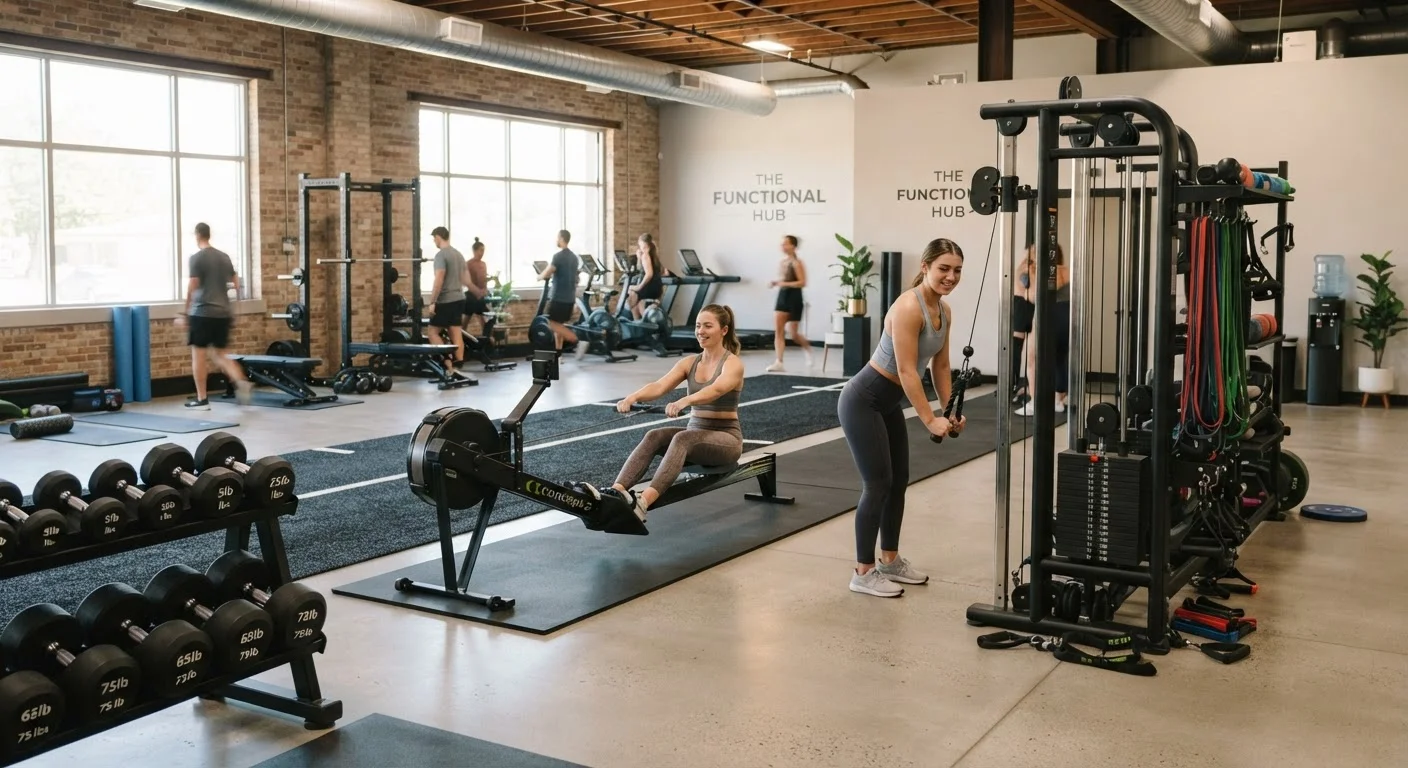
Many people delay starting a fitness routine while waiting to join a gym or buy equipment. The most effective approach is to begin with what you have — your own bodyweight and a pair of supportive shoes. Equipment can add variety later, but it doesn't create the habit; consistency does.
How to Know You're Progressing Safely
Progress for beginners isn't measured by weight lifted or miles logged — it's measured by consistency and how well your body recovers. Some useful self-checks:
- Energy after workouts: You should feel pleasantly tired, not completely depleted, after a beginner session.
- Soreness pattern: Mild soreness 24–48 hours after a new exercise (DOMS) is expected. It should fade, not intensify, with each repeated session as your body adapts.
- Sleep and mood: Regular moderate exercise is associated with improved sleep quality and reduced stress. If exercise is consistently disrupting sleep or elevating anxiety, consider reducing intensity and consulting a healthcare provider.
- Gradual load increases: A widely used guideline suggests increasing weekly training volume by no more than 10% at a time to reduce injury risk.
Building consistency matters more than building intensity early on. For evidence-based strategies to make exercise stick long-term, explore our article on why workout consistency falls apart.
This article is for general informational and educational purposes only and is not a substitute for professional medical advice. Always consult a qualified healthcare provider before beginning a new exercise program, particularly if you have any existing health conditions, injuries, or concerns.