
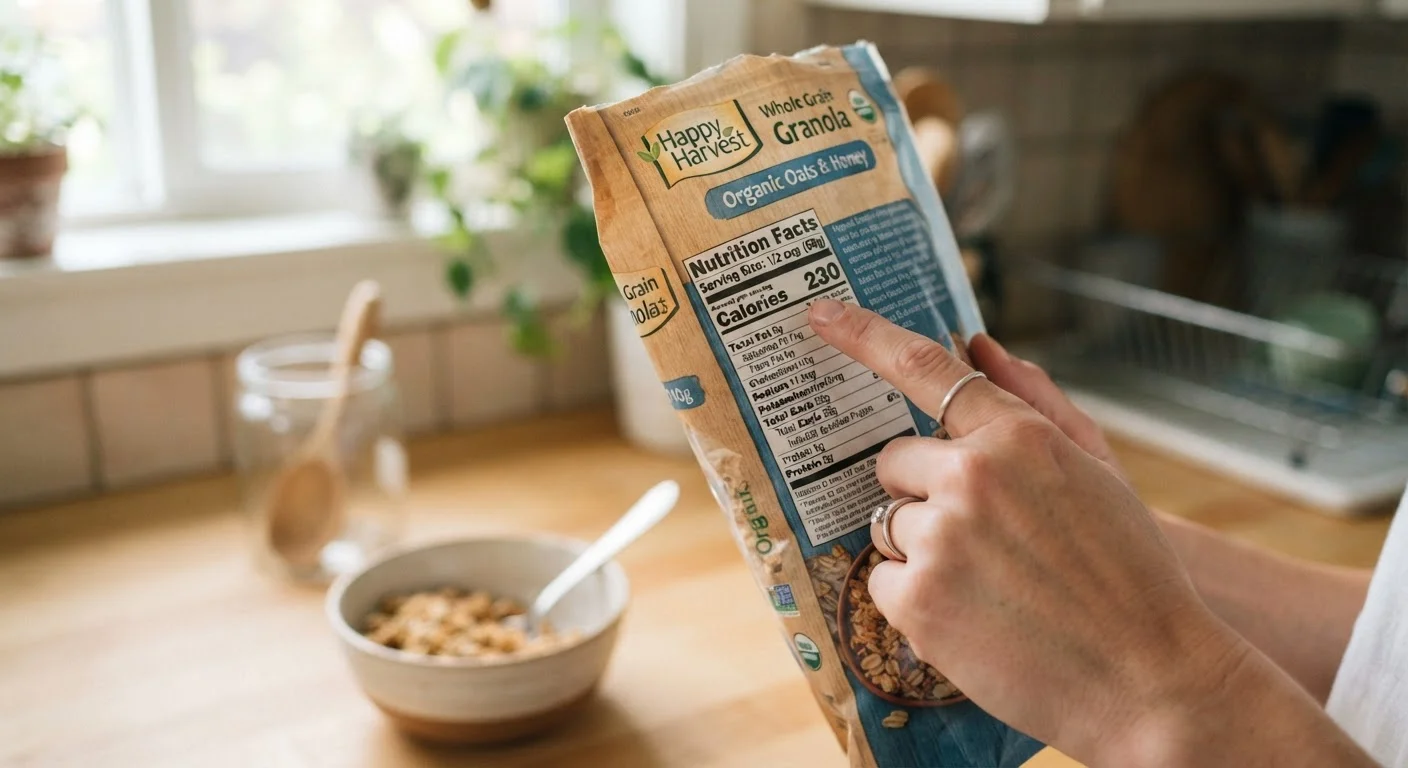
Why the Label Exists — and What It Actually Tells You
The Nutrition Facts label is a federally standardized panel required on most packaged foods sold in the United States, governed by the Food and Drug Administration (FDA). Its purpose is straightforward: give consumers consistent, comparable nutrient information so they can make informed decisions at a glance. The current label format, updated in 2020, reflects changes in nutritional science and eating patterns that had accumulated since the original 1994 design.
It is worth stating clearly from the start: the label describes the nutrient content of a food. It does not tell you whether a food is "good" or "bad," and no single number on it determines the quality of your overall diet. Context is everything. For a broader view of how individual foods fit into a healthy eating pattern, see our guide to building a balanced plate.
What you will need
Walking Through the Label Section by Section
Follow the steps below with any packaged food in front of you. The label reads top to bottom in a deliberate order, and each section builds on the one before it.
Start with Serving Size and Servings Per Container
The very first bolded line on the label is the serving size — expressed in a common household measure (such as cups or pieces) followed by the metric weight in grams. Directly below it is the number of servings per container. Every single number on the label below this point refers to one serving, not the entire package. If you eat twice the listed serving, every nutrient value doubles.
Read the Calorie Count in Context
Calories appear in large, bold type immediately after serving size. This number reflects the total energy provided by one serving from all three macronutrients: fat (9 calories per gram), carbohydrates (4 cal/g), and protein (4 cal/g). Use it as one data point, not as the primary verdict on a food's nutritional value.
Review Nutrients to Limit
The next section lists nutrients that, according to broad dietary guidance from organizations such as the FDA and the Dietary Guidelines for Americans, many people consume in excess: total fat, saturated fat, trans fat, cholesterol, and sodium. Beneath the fat subcategories you will also find total carbohydrates, dietary fiber, total sugars, and added sugars. Each line shows the amount per serving in grams (or milligrams for sodium and cholesterol).
Check Protein
Protein is listed in grams per serving. Unlike other macronutrients, protein does not have a %DV on most labels because needs vary substantially based on age, body weight, and activity level. Use the gram amount as a reference point within your broader daily intake.
Look at the % Daily Value Column
The right-hand column expresses each nutrient as a percentage of the Daily Value (%DV) — a reference amount set by the FDA based on a 2,000-calorie daily diet. The FDA's useful rule of thumb: 5% DV or less is considered low for a nutrient; 20% DV or more is considered high. Use this column to quickly compare products or gauge whether a serving meaningfully contributes to or detracts from daily nutrient goals.
Note Vitamins and Minerals at the Bottom
The lower portion of the label lists select vitamins and minerals — currently vitamin D, calcium, iron, and potassium — by amount and %DV. These four were chosen because they are commonly under-consumed in the U.S. population. Additional nutrients may be listed voluntarily by the manufacturer or if a nutrient content claim is made on the packaging.
Use %DV to Compare Products Quickly
When choosing between two similar products, align their serving sizes as closely as possible, then scan the %DV column. A higher %DV for fiber and a lower %DV for sodium and saturated fat is generally a favorable sign. This comparison takes under a minute once you are comfortable with the label layout.
Label reading is a transferable skill. The same analytical approach applies to other product categories — our overview of whole foods vs. ultra-processed foods can help you put what you learn here into broader dietary context.
Common Misconceptions and Practical Pitfalls
Even practiced label readers run into a few recurring traps worth naming explicitly.
- Assuming the package equals one serving. A bottle of juice, a small bag of chips, or a single-serve cup may contain two or more servings by the label's definition. Always check before assuming the numbers apply to the entire container.
- Treating %DV as absolute. The Daily Values are calculated for a reference 2,000-calorie diet. If your actual energy needs are significantly higher or lower, the percentages shift accordingly.
- Focusing only on calories. Calorie count matters, but so does nutrient density — two foods with identical calorie counts can differ dramatically in fiber, protein, vitamins, and minerals. For example, Americans consistently under-consume dietary fiber; our article on the fiber gap explains why and which foods can help.
- Ignoring added sugars vs. total sugars. The updated label separates these two figures. Total sugars include naturally occurring sugars (in fruit or dairy, for instance), while added sugars are introduced during processing — a meaningful distinction.
One Food Never Defines Your Diet
Nutrition Facts labels describe individual products in isolation. A food high in sodium or saturated fat is not automatically harmful when consumed occasionally and in reasonable amounts within an otherwise balanced eating pattern. Conversely, a food with impressive %DVs for vitamins does not make a diet healthy on its own. Dietary quality is a long-term, whole-pattern phenomenon.
This article is for general informational purposes only and does not constitute medical or dietary advice. If you have specific health conditions, dietary restrictions, or concerns about your nutritional intake, consult a qualified healthcare professional or registered dietitian.