
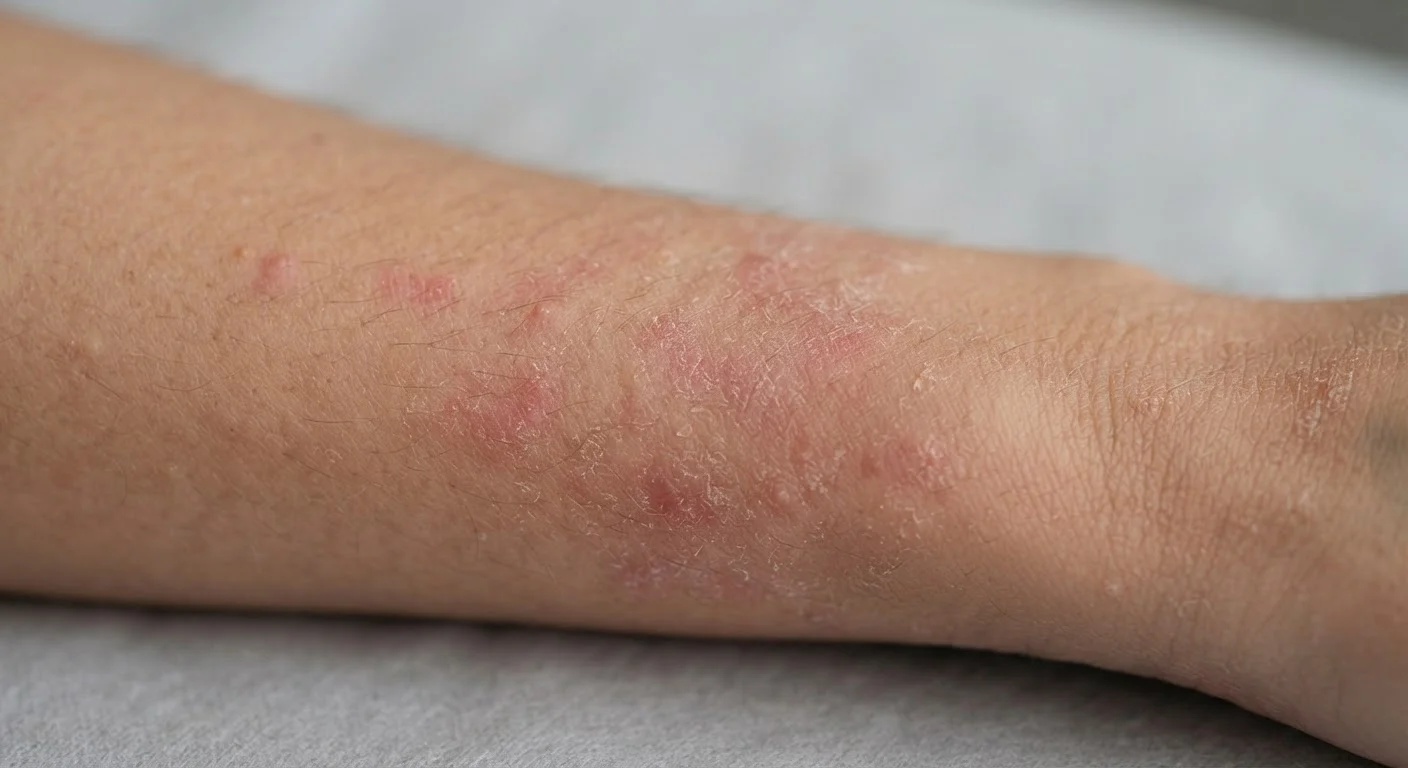
Why Skin Conditions Are So Easy to Mix Up
Most Americans encounter a puzzling skin change — a rash, a red patch, persistent flaking — and reach for whatever worked last time, or search online until something looks close enough. The problem is that several common skin conditions share striking visual similarities, especially in early stages. Misidentification leads to treatments that don't work and, more critically, delays care that actually would.
Understanding what distinguishes these conditions isn't about self-diagnosing. It's about knowing when something requires more than a drugstore fix. As our overview of OTC treatment limitations explains, many common remedies address surface symptoms rather than root causes — a particular risk when the underlying condition is misidentified from the start.
| Most misidentified pairing | Eczema and psoriasis (American Academy of Dermatology) |
| Rosacea prevalence (U.S.) | Estimated 14 million Americans affected (National Rosacea Society) |
| Ringworm contagious? | Yes — fungal, spreads via skin contact (CDC) |
| Eczema onset | Often begins in childhood; can persist into adulthood (National Eczema Association) |
| Psoriasis classification | Autoimmune — not contagious (National Psoriasis Foundation) |
| Key diagnostic tool | Dermatologist clinical evaluation, sometimes biopsy |
Four Conditions Frequently Confused for One Another
Eczema (Atopic Dermatitis)
Eczema produces intensely itchy, inflamed patches that often appear in skin creases — behind the knees, inside elbows, around the neck. The skin may weep or crust during flares. It's a chronic condition with an immune component, meaning it is not contagious and cannot be passed to others. Triggers vary widely: allergens, stress, dry air, and certain fabrics are common culprits.
Psoriasis
Psoriasis creates thick, silvery-scaled plaques most often on the elbows, knees, scalp, and lower back. The skin underneath the scale is typically red and inflamed. It is an autoimmune condition in which skin cells cycle too rapidly. Unlike eczema, psoriasis is often less intensely itchy but can be painful. It may also affect the nails and joints in some individuals.
Ringworm (Tinea Corporis)
Despite the name, ringworm has nothing to do with a worm — it is a fungal infection. It typically appears as a ring-shaped, scaly, red border with a clearer center, which is the defining visual feature that sets it apart. Ringworm is contagious and can spread through direct skin contact or shared surfaces. This distinction matters enormously: antifungal treatment is required, and steroid creams used for eczema can actually worsen a fungal infection.
Rosacea
Rosacea primarily affects the face — cheeks, nose, forehead, and chin — with persistent redness, visible blood vessels, and sometimes acne-like bumps. It is frequently mistaken for adult acne or a sunburn that won't fade. Rosacea is a chronic condition with no known cure but is manageable. Alcohol, spicy foods, heat, and sun exposure are well-documented triggers for flares.
Atopic Dermatitis
The most common form of eczema, characterized by chronic skin inflammation linked to immune system overactivity. It often runs in families alongside allergies and asthma.
Autoimmune Condition
A disease in which the immune system mistakenly attacks the body's own healthy cells or tissues. Both psoriasis and some forms of eczema involve immune dysregulation.
Tinea Corporis
The clinical term for ringworm affecting the body (excluding the scalp, feet, or groin). It is caused by a dermatophyte fungus, not a parasite.
Plaque
A raised, thickened patch of skin commonly associated with psoriasis. Plaques are typically covered with silvery-white scales and may be itchy or painful.
Trigger
A substance, environmental factor, or activity that provokes or worsens a skin condition flare. Common triggers vary by condition and individual.
Dermatophyte
A type of fungus that infects the outer layers of skin, hair, and nails. Dermatophytes are responsible for ringworm, athlete's foot, and jock itch.
When to See a Dermatologist
No article — including this one — can substitute for a clinical evaluation. Dermatologists use visual inspection, patient history, and sometimes skin scrapings or biopsies to arrive at accurate diagnoses. Seek professional evaluation when:
- A rash spreads rapidly, affects a large body surface area, or is accompanied by fever
- Over-the-counter treatments show no improvement after two weeks
- The affected area is near the eyes, mouth, or genitals
- You suspect infection — signs include warmth, swelling, pus, or red streaking
- The condition recurs frequently or disrupts sleep or daily function
It's also worth considering that skin conditions don't always stay within neat diagnostic boxes. Some people carry overlapping conditions simultaneously, and stress or systemic illness can trigger flares across multiple conditions at once. Understanding the difference between a persistent condition and a temporary reaction is a useful framework — one covered in more depth in our article on chronic versus acute disease.
Skin Type vs. Skin Condition: An Important Distinction
It's easy to confuse a persistent skin condition with your baseline skin type. Oily or dry skin may be a normal trait; recurring redness or scaling may signal a diagnosable condition. Our explainer on skin type versus skin condition walks through why this distinction changes how you approach daily care and product selection.
If you're seeing skin reactions after changing your skincare routine, that's a different category of concern. Our guide to skin reactions from new routines addresses that specifically. And for a broader look at symptoms Americans tend to underestimate, see our piece on warning signs people wait too long to address.
This article is for general informational purposes only and is not a substitute for professional medical advice, diagnosis, or treatment. Always consult a qualified healthcare provider with questions about a skin condition or any other medical concern.