
Why the Distinction Matters More Than You Might Think
When a doctor delivers a diagnosis, one of the first questions worth asking is: Is this something that will resolve, or something I'll manage long-term? That single question divides the medical landscape into two broad categories — acute and chronic — and the answer shapes your entire care strategy.
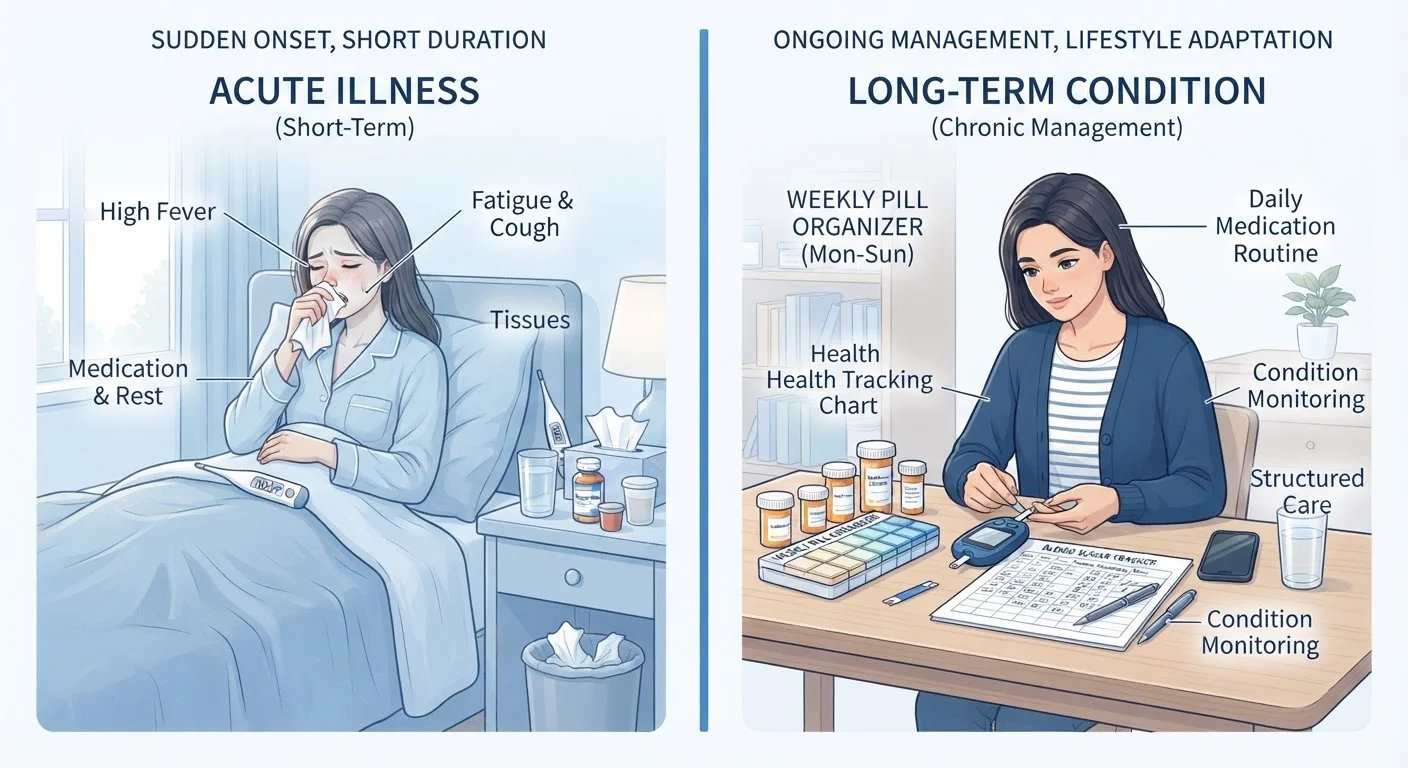
Acute conditions are defined by a rapid onset and a defined endpoint. Your immune system fights off a respiratory virus; a fracture heals; an allergic reaction subsides after treatment. The care goal is resolution. Chronic conditions operate on an entirely different logic: the goal shifts from cure to control, minimizing symptoms, preventing complications, and preserving quality of life over years or decades.
This isn't just clinical terminology. Understanding which category your diagnosis falls into helps you set realistic expectations, communicate more clearly with your healthcare team, and make smarter everyday decisions — from when to call your doctor to how to structure your daily routine.
A Note on Gray Areas and Evolving Diagnoses
Not every condition fits cleanly into the acute or chronic category. Some illnesses — such as Lyme disease or certain viral infections — can transition between categories depending on how the individual responds to treatment. Others, like episodic migraines, are technically chronic but present as discrete acute episodes. If your diagnosis feels ambiguous, that's a sign to ask your provider for a clearer picture of the expected disease course.
Defining Acute Disease: Short-Term, Targeted, Resolvable
Acute diseases typically share three features: sudden or rapid onset, a recognizable and limited duration, and a clear treatment pathway aimed at resolution. Common examples include influenza, urinary tract infections, appendicitis, and mild traumatic injuries.
Treatment for acute illness is usually intensive but time-limited — a course of antibiotics, a surgical procedure, or a few days of rest and supportive care. Once the underlying cause is addressed, the body returns to its baseline state. That said, severity varies enormously. An acute condition can be trivially mild or life-threatening, which is why a new or worsening symptom always warrants professional evaluation rather than self-diagnosis.
For a practical look at how overlapping acute symptoms can confuse diagnosis, see our guide on distinguishing cold, flu, and COVID-19 symptoms.
6 in 10
U.S. adults with at least one chronic condition
According to the Centers for Disease Control and Prevention (CDC), chronic diseases are the leading drivers of death and disability in the United States.
90%
Share of U.S. healthcare spending driven by chronic disease
The CDC estimates that chronic and mental health conditions account for approximately 90 cents of every dollar spent on healthcare annually in the U.S.
4 in 10
U.S. adults living with two or more chronic conditions
The co-occurrence of multiple chronic conditions, known as multimorbidity, significantly increases the complexity of care and the burden on patients.
Defining Chronic Disease: Long-Term, Managed, Not Necessarily Cured
Chronic diseases are those that persist for three months or longer — and many last a lifetime. Heart disease, type 2 diabetes, asthma, chronic kidney disease, and arthritis are among the most prevalent in the United States. According to the CDC, six in ten American adults have at least one chronic condition, and four in ten have two or more.
The management model for chronic disease is fundamentally different from acute care. Rather than a single intervention, it typically involves a combination of medication, lifestyle modification, routine monitoring, and coordination across multiple healthcare providers. Flare-ups may resemble acute episodes — but they occur within the larger context of an ongoing condition.
Mental health conditions can also be chronic in nature. If you encounter unfamiliar terminology during a mental health diagnosis, our plain-language mental health glossary offers a useful reference.
Navigating Your Diagnosis: Practical Takeaways
Knowing your diagnosis category is a starting point, not a ceiling. Here's how to use that framework constructively:
- Ask clarifying questions. When receiving a new diagnosis, ask your provider whether it is expected to resolve, become chronic, or remains uncertain. Understanding the trajectory changes how you prioritize follow-up care.
- Build the right care team. Acute conditions may only require your primary care provider. Chronic conditions often benefit from specialist involvement — an endocrinologist for diabetes, a pulmonologist for asthma — plus coordination among providers. If behavioral health is part of your picture, understanding the roles of therapists, counselors, and psychiatrists can help you access the right support.
- Recognize the gray zones. Some conditions blur categories. Episodic conditions like migraines or certain mental health diagnoses don't fit neatly into either box. Discuss with your provider how your specific condition behaves over time.
Make the Most of Every Provider Visit
Before any appointment, write down three questions: What is the expected course of this condition? What symptoms should prompt me to seek care sooner? What lifestyle factors will have the most impact? Arriving prepared ensures you leave with actionable guidance rather than general reassurances.
This article is for general informational and educational purposes only and is not a substitute for professional medical advice, diagnosis, or treatment. Always consult a qualified healthcare provider with questions about your health or a specific medical condition.