
The Gap Between Expectation and Evidence
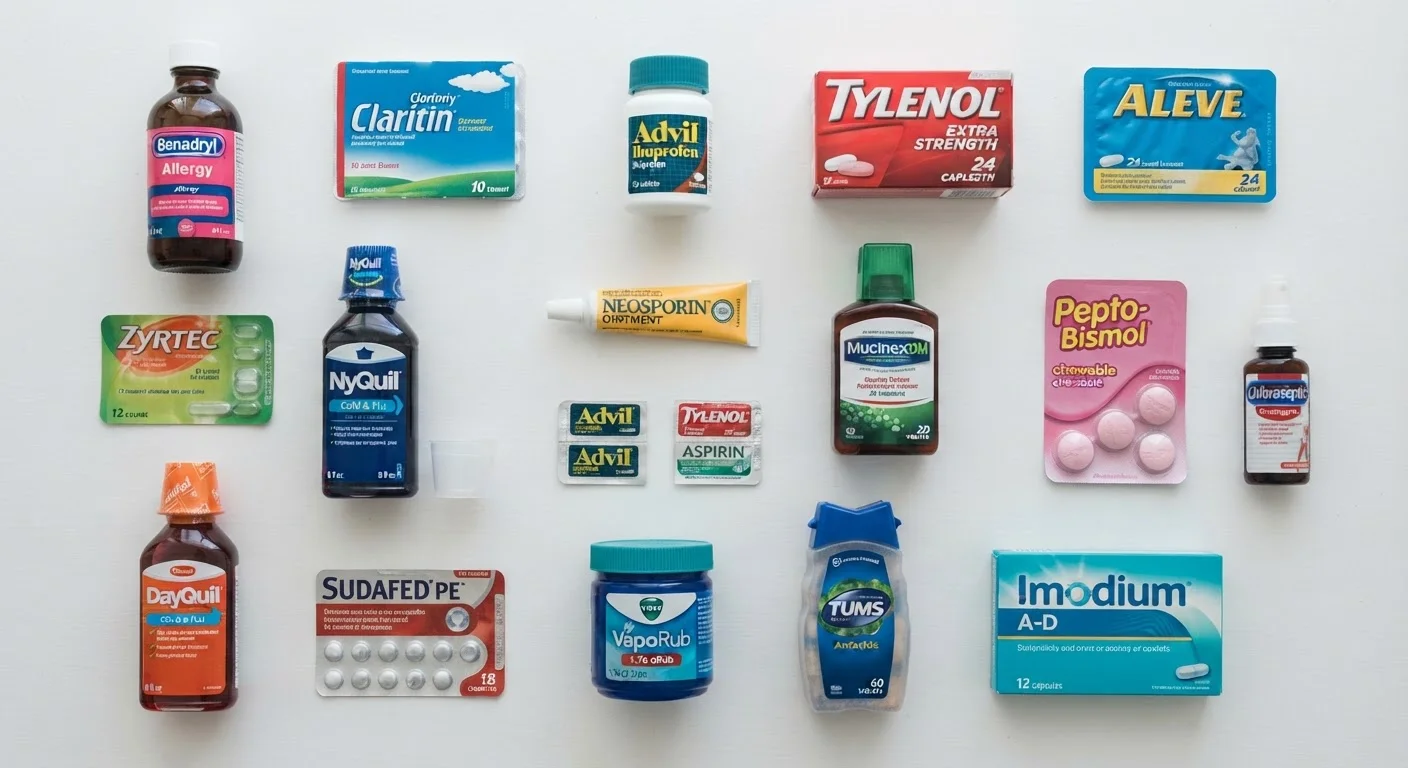
Most Americans have a medicine cabinet stocked with familiar go-to products — decongestants, antacids, pain relievers, and cough syrups that feel like trusted allies. But research consistently shows a meaningful gap between what consumers believe these products do and what clinical evidence confirms they actually accomplish.
Understanding that gap is not about abandoning helpful tools. It's about using them accurately so you don't inadvertently delay care, combine products unsafely, or simply waste money. As you'll see below, even well-intentioned self-treatment can misfire when it's built on misconceptions. For a broader look at warning signs that often get dismissed, see our article on symptoms Americans tend to wait too long to address.
Myth
Taking an antibiotic will help me recover from a cold or flu faster.
Fact
Antibiotics are effective only against bacterial infections. Colds and flu are caused by viruses, which antibiotics cannot treat.
This is one of the most consequential OTC-adjacent misconceptions in American healthcare. The U.S. Centers for Disease Control and Prevention (CDC) has repeatedly emphasized that using antibiotics for viral illnesses not only fails to help — it contributes to antibiotic resistance, a serious and growing public health problem. Taking antibiotics unnecessarily also exposes you to side effects without any therapeutic benefit. If you suspect a bacterial infection (such as strep throat), a clinician's evaluation and a proper diagnosis are needed before antibiotics are appropriate.
Myth
Cough syrup will clear up my cough and help me heal faster.
Fact
Most cough syrups manage symptom severity but do not shorten illness duration or treat the cause of the cough.
There are two distinct categories of cough medications: expectorants (which thin mucus to make coughs more productive) and suppressants (which reduce the urge to cough). Using the wrong type for your situation can backfire. Suppressing a productive cough when the body is actively clearing infection may not be beneficial. Additionally, a 2014 Cochrane review and subsequent analyses found limited evidence that many common OTC cough preparations outperform placebo in adults. A persistent cough lasting more than three weeks deserves professional evaluation — it could signal something beyond a simple cold. See our related article on conditions Americans frequently misidentify for a broader picture of self-diagnosis pitfalls.
Myth
If the standard dose doesn't work, taking a little extra will help more.
Fact
Exceeding recommended doses of OTC pain relievers and other medications significantly raises the risk of serious harm without proportional benefit.
Acetaminophen (the active ingredient in many pain and fever products) is one of the leading causes of acute liver failure in the United States when taken in excess — often unintentionally, because it's also an ingredient in combination cold and flu products. Ibuprofen and naproxen carry dose-dependent risks for gastrointestinal bleeding and kidney stress. The labeled dosage reflects the threshold at which benefit is established and risk is managed. Exceeding it shifts that balance. Always read the full label, check for ingredient overlap across products, and never exceed the stated maximum daily dose.
Myth
Antacids fix acid reflux and make it safe to ignore recurring heartburn.
Fact
Antacids neutralize stomach acid temporarily but do not address structural or chronic causes of acid reflux, and frequent symptoms need medical attention.
Occasional heartburn is common and antacids can offer fast, appropriate relief in that context. However, chronic gastroesophageal reflux disease (GERD) — defined roughly as symptoms occurring more than twice a week — involves changes to the lower esophageal sphincter and, over time, can cause esophageal damage that antacids alone won't prevent. Repeated self-treatment can also mask symptoms of more serious conditions. If you're reaching for antacids several times per week, a healthcare provider can evaluate whether a different treatment approach or diagnostic workup is warranted.
Myth
Vitamin C supplements taken at the onset of a cold will prevent it or cure it quickly.
Fact
Evidence shows vitamin C supplementation has little to no effect on cold prevention for most people, and only modest effects on duration.
The popular belief in vitamin C as a cold cure traces back decades, but systematic reviews — including a widely cited Cochrane analysis covering thousands of participants — found that routine vitamin C supplementation did not significantly reduce the incidence of colds in the general population. Taken regularly before illness, it may modestly reduce cold duration by roughly half a day on average. Taking a large dose after symptoms begin has not been shown to produce meaningful benefit. Adequate dietary vitamin C intake supports immune function, but supplementation beyond that threshold does not appear to provide added protection for most healthy adults.
What the Evidence Actually Supports
None of this means OTC remedies are ineffective — many provide genuine, well-documented relief. The distinction that matters is between symptomatic relief and disease modification. A decongestant that reduces nasal swelling is doing its job. Where confusion causes harm is when symptomatic relief is mistaken for a cure, leading people to skip follow-up care for conditions that need it.
~50%
Antibiotic prescriptions that are inappropriate
The CDC estimates that roughly half of antibiotic prescriptions in outpatient settings are unnecessary or inappropriate, often prescribed for viral illnesses.
~56,000
ER visits per year from acetaminophen overdose
According to CDC data, unintentional acetaminophen overdoses — many from combining multiple OTC products — account for tens of thousands of emergency visits annually in the U.S.
~½ day
Average cold duration reduction from vitamin C
A Cochrane systematic review found that regular vitamin C supplementation reduced cold duration by approximately 8% in adults — roughly half a day on average.
The same critical thinking that helps you evaluate health misinformation in other areas applies here. Just as nutrition myths refuse to die despite clear scientific consensus, OTC misconceptions persist partly because they feel intuitive — and partly because short-term symptom relief reinforces the belief that something curative is happening.
If you're regularly relying on OTC products for the same symptom — heartburn several times a week, frequent headaches, recurring congestion — that pattern warrants a conversation with a qualified healthcare provider rather than a larger stockpile of remedies. Recurring symptoms can signal an underlying condition that self-treatment won't resolve.
Watch for Ingredient Overlap in Combination Products
Many OTC cold, flu, and pain products contain the same active ingredients — most commonly acetaminophen — under different brand names and formulations. Taking two or more of these products simultaneously can push your daily intake well above safe limits without you realizing it. Always read the "Active Ingredients" section of every label before combining any OTC medications, and ask a pharmacist if you're unsure about interactions or overlaps.
This article is for general informational and educational purposes only and does not constitute medical advice. Always consult a qualified healthcare professional for guidance about your specific health situation, symptoms, or medications.