Why UV Exposure Is a Year-Round Concern
Most people associate sunscreen with summer vacations and beach days — a seasonal item pulled from the back of the cabinet in June. But ultraviolet radiation does not operate on a seasonal schedule. UVA rays, the ones primarily responsible for premature skin aging and DNA damage in skin cells, maintain relatively consistent intensity throughout the year and penetrate standard window glass. That means your daily commute, an afternoon near a sunny office window, or a quick errand run in January all represent real UV exposure.
UVB rays — the main cause of sunburn — do fluctuate with season and altitude, but they remain present even on overcast days. The American Academy of Dermatology notes that up to 80% of UV rays can pass through cloud cover. Building daily SPF use into your morning routine is therefore less about reacting to visible sunshine and more about a consistent, evidence-based habit. See how sunscreen fits naturally into a complete AM routine in our guide to building a morning skincare routine from the ground up.
Myth
I only need sunscreen when it's sunny or I'm at the beach.
Fact
UV rays are present year-round, penetrate clouds, and reach skin through windows.
UVA rays — the longer-wavelength radiation linked to skin aging and DNA changes in skin cells — maintain relatively stable levels across seasons and weather conditions. They also pass through standard window glass, meaning indoor exposure during a long workday is not negligible. UVB rays, which cause sunburn, are lower in winter and on cloudy days but are never fully absent. Daily sunscreen use is recommended by dermatological organizations regardless of weather or planned outdoor activity.
Myth
My foundation has SPF 15, so I don't need a separate sunscreen.
Fact
Makeup with SPF is not a reliable substitute for a dedicated sunscreen product.
There are two practical problems with relying on SPF in makeup. First, the amount of foundation most people apply is far thinner than the quantity tested in SPF ratings — meaning the achieved protection is a fraction of the labeled value. Second, most makeup SPFs are in the 15–20 range, below the SPF 30 threshold that dermatologists generally recommend. Makeup with SPF can add a minor supplementary layer, but it should not replace a properly applied, broad-spectrum sunscreen beneath it. For more on how makeup and skincare claims compare to evidence, see makeup myths that are still surprisingly widespread.
Myth
People with darker skin tones don't need sunscreen.
Fact
All skin tones are affected by UV radiation; melanin provides limited and inconsistent natural protection.
Higher concentrations of melanin do confer some natural UV protection — estimates generally place this at roughly SPF 13 or lower for very deep skin tones — but this is not sufficient to prevent UV-induced damage, hyperpigmentation, or photoaging. Conditions like post-inflammatory hyperpigmentation, which are more common in darker skin tones, can actually be worsened by unprotected UV exposure. Dermatologists recommend broad-spectrum SPF 30+ for all skin tones as a consistent standard.
Myth
Once a day is enough — sunscreen lasts all day after morning application.
Fact
Sunscreen degrades with sun exposure, sweating, and physical contact, requiring reapplication throughout the day.
Chemical sunscreen filters work by absorbing UV energy and undergoing a photochemical reaction — which means they are gradually used up with continued exposure. Physical (mineral) filters are more photostable but can still be rubbed or sweated off. The general guidance from dermatology organizations is to reapply every two hours during outdoor exposure, and immediately after swimming or heavy sweating. A single morning application is appropriate for a largely indoor day with minimal direct sun exposure, but not for extended time outdoors.
Myth
Higher SPF means I can stay in the sun proportionally longer without burning.
Fact
SPF ratings measure filtration percentage, not safe exposure time in a simple multiplier.
The SPF number is derived from a ratio comparing how much UV energy is needed to cause minimal redness on protected versus unprotected skin under controlled lab conditions. It does not translate cleanly into a real-world time multiplier, because factors like application thickness, sweating, and UV index all vary. Treating SPF as a simple time calculator — e.g., assuming SPF 50 allows 50 times longer outdoor exposure — can lead to significant underprotection. Reapplication intervals matter more than choosing an extremely high SPF value.
What 'Broad-Spectrum' and SPF Numbers Actually Mean
SPF — Sun Protection Factor — is a measure of how well a product filters UVB rays under controlled laboratory conditions. An SPF 30 sunscreen, applied correctly, filters approximately 97% of UVB rays; SPF 50 filters about 98%. The difference sounds small in percentage terms, but it becomes meaningful for people with photosensitive skin conditions or those spending extended time outdoors.
The term broad-spectrum is the more critical qualifier. It indicates that a product has passed FDA testing to confirm meaningful UVA protection alongside its UVB rating. UVA protection is not captured in the SPF number at all — which is why that label matters. Without it, a high-SPF product may still leave skin exposed to the radiation most associated with photoaging and, in higher cumulative doses, deeper cellular damage.
97%
UVB rays filtered by SPF 30
SPF 30, applied at the recommended quantity, filters approximately 97% of UVB rays under standardized laboratory testing conditions.
80%
UV rays that penetrate cloud cover
The American Academy of Dermatology states that up to 80% of ultraviolet rays can reach the skin even on overcast or cloudy days.
25–50%
Typical real-world sunscreen application vs. test amount
Research suggests most people apply significantly less sunscreen than the quantity used in SPF efficacy testing, meaningfully reducing achieved protection.
Application quantity also shapes real-world effectiveness. Studies suggest most people apply roughly 25–50% of the amount used in SPF testing, which meaningfully reduces achieved protection. A generous, even application to all exposed areas — including often-missed spots like the ears, neck, and the backs of hands — is as important as the number on the label. For context on where sunscreen fits within your full product sequence, see the logic behind layering skincare products.
Don't Skip Reapplication During Outdoor Activities
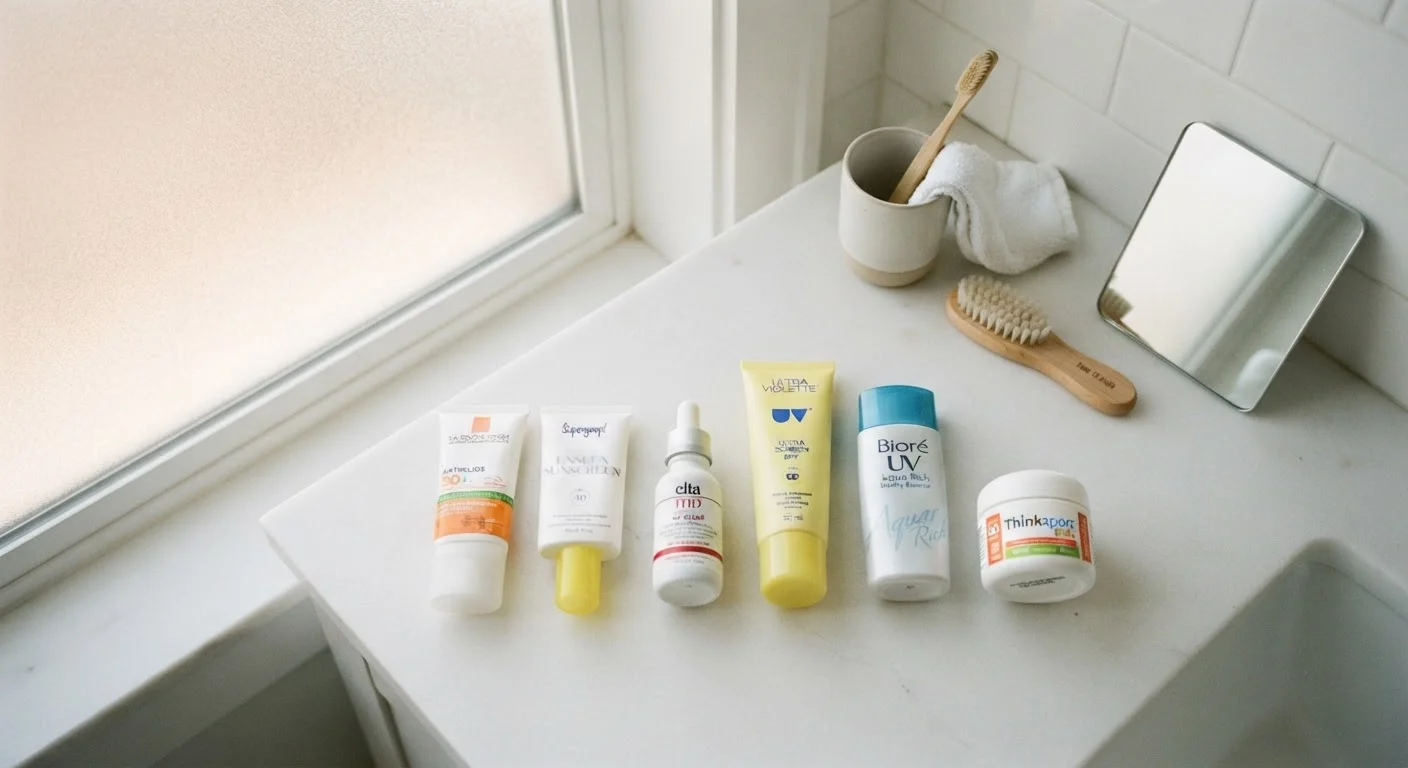
Even a well-chosen broad-spectrum SPF 50 sunscreen provides limited protection if applied only once before an afternoon outdoors. UV exposure, perspiration, and physical contact all degrade sunscreen performance over time. Carry a travel-size sunscreen or SPF setting spray to make reapplication practical throughout the day.
Separating Sunscreen Facts From Persistent Myths
Despite decades of public health messaging, a surprising number of misconceptions about SPF persist — and they matter, because acting on them can quietly erode the protection people think they have. Below, we address the most commonly held misunderstandings with what the evidence actually shows.
This article is for general informational and educational purposes only and does not constitute medical advice. For personalized skincare guidance, consult a board-certified dermatologist.