Why Wash Day Is Its Own Ritual
For curly and coily hair, washing isn't simply about cleanliness — it's the foundation of your entire moisture strategy for the week. The structure of a curl or coil means natural scalp oils have a harder time traveling down the hair shaft, making intentional hydration during every wash session essential rather than optional.
A well-structured wash day also reduces mechanical damage. Detangling in the wrong order, skipping conditioning steps, or using the wrong drying method are the primary reasons wash day leaves hair feeling worse rather than better. Before you begin, it helps to understand your hair's individual properties. Hair porosity, density, and texture directly influence which products and techniques will be most effective for your specific strands.
What you will need
What You Need Before You Start
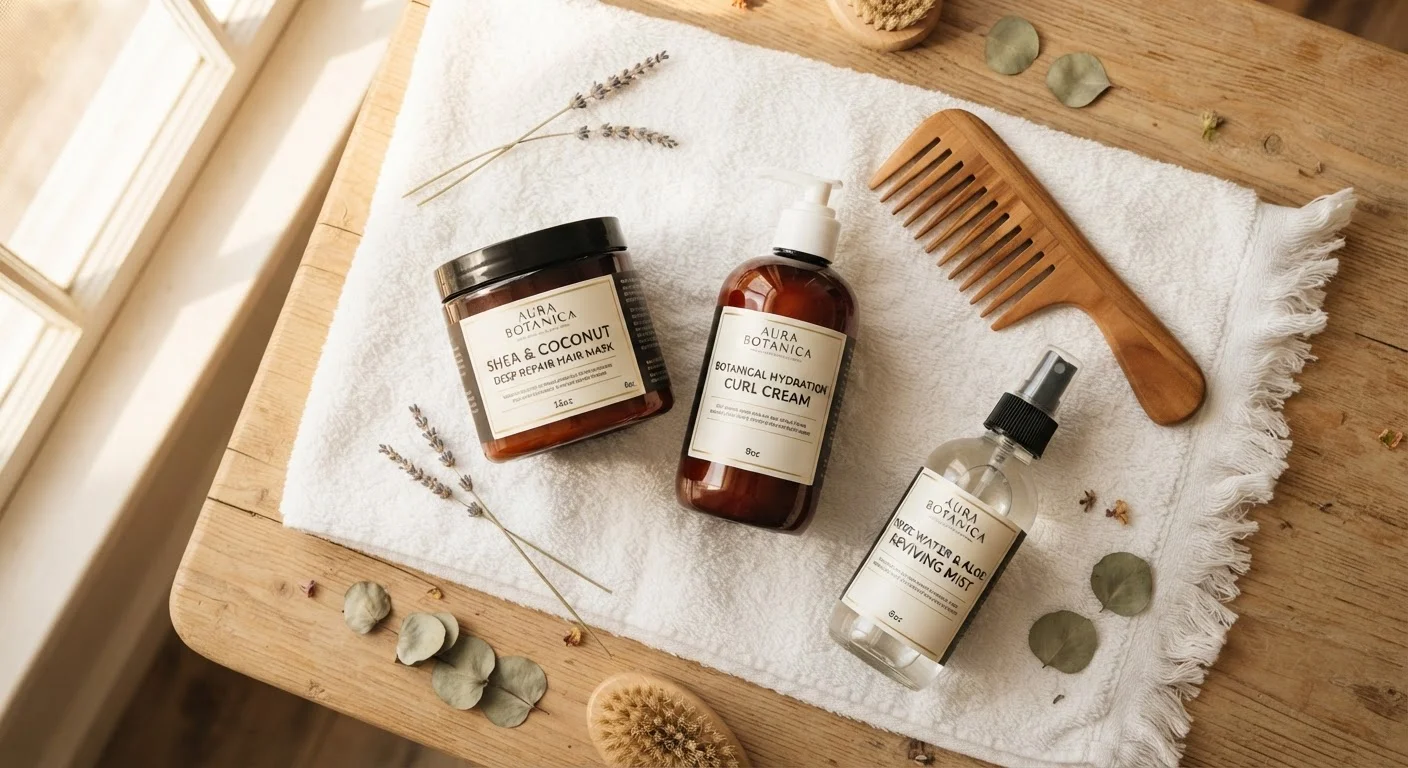
Having the right tools assembled before you begin will keep the process moving and prevent frustration mid-routine. Reaching for the wrong towel or running out of conditioner midway through a detangle can lead to unnecessary breakage. Gather everything listed below before wetting your hair.
Wide-Tooth Comb
Detangles curly and coily hair without disrupting the curl pattern or causing breakage.
Microfiber Towel or Cotton T-Shirt
Absorbs excess water gently without roughing up the hair cuticle the way terry cloth towels can.
Deep Conditioner
Restores moisture and protein balance to the hair shaft — essential for curly and coily textures.
Shower Cap or Plastic Processing Cap
Traps heat during deep conditioning to help the product penetrate the hair shaft more effectively.
Spray Bottle with Water
Re-wets hair between steps to keep it pliable and help products spread evenly.
The Step-by-Step Wash Day Process
Follow these steps in order for a complete, repeatable wash-day routine. Each step builds on the last — skipping one typically makes the next harder. Plan for 60 to 120 minutes on your first attempt; with practice, the routine becomes faster and more intuitive.
Pre-Poo to Protect Before You Cleanse
Apply a pre-poo treatment — typically a lightweight oil, conditioner, or oil-conditioner blend — to dry hair before shampooing. Work it through each section from root to tip. This step coats the cuticle and reduces the amount of moisture the hair loses during cleansing, which matters especially for tightly coiled textures that are prone to dryness.
Leave the treatment on for at least 15–30 minutes. You can cover with a shower cap to add gentle warmth if you have low-porosity hair that resists product absorption.
Section and Cleanse Thoroughly
Divide your hair into four or more sections using clips. Working section by section prevents tangling and ensures the shampoo reaches your scalp evenly. Use a sulfate-free or low-lather cleanser if your hair is color-treated or particularly dry; a clarifying shampoo is useful periodically to remove product buildup but should not be used every wash day.
Focus the shampoo on your scalp, massaging with your fingertips — not your nails. Allow the lather to rinse down the length of the hair rather than scrubbing the ends, which are the most fragile part of the strand.
Deep Condition With Heat
Apply a generous amount of deep conditioner to each section while hair is still wet. Use your fingers or a wide-tooth comb to distribute it evenly. Cover with a shower cap and sit under a hooded dryer or use body heat for 20–45 minutes. The added warmth helps the conditioner penetrate the cuticle rather than just sitting on top.
For high-porosity hair, look for a protein-rich deep conditioner. For low-porosity hair, a moisture-focused formula with humectants like honey or aloe vera tends to work better.
Rinse and Detangle
Rinse the deep conditioner out thoroughly with cool or lukewarm water. Cool water helps close the cuticle, which supports shine and reduces frizz. While the conditioner is still coating the hair — or immediately after rinsing — detangle each section with a wide-tooth comb, starting from the ends and working upward toward the root.
Never detangle dry coily hair. Wet or damp hair, loaded with slip from conditioner, is far more manageable and less prone to breakage during this step.
Apply the LOC or LCO Method
Once hair is damp (not dripping), apply your styling products in a layered sequence to lock in moisture. The two most widely used approaches are:
- LOC (Liquid → Oil → Cream): Recommended for low-porosity hair. The oil goes before the cream to slow moisture release.
- LCO (Liquid → Cream → Oil): Recommended for high-porosity hair. The cream delivers moisture first; the oil seals it at the end.
Work product into each section while scrunching upward to encourage the natural curl pattern. Apply a gel on top if you want stronger hold and definition.
Dry Without Disturbing the Curl
Blot excess water gently with a microfiber towel or a cotton T-shirt. Avoid rubbing — this disrupts the curl clump and creates frizz. Allow hair to air dry, or use a diffuser attachment on a low heat setting if you prefer to speed up the process.
Do not touch your hair while it dries. This is called the hands-off rule — disturbing wet or damp curls before they have fully dried is one of the most common causes of unwanted frizz. Once completely dry, you can scrunch out any cast left by gel.
If your curls or coils still feel dry within a couple of days of wash day, the issue may be technique rather than product selection. Our companion article on why hair feels dry again three days after washing breaks down the most common causes and practical fixes.
Build a Routine That Repeats Cleanly
Write down the exact products and amounts you use each wash day. Consistent documentation lets you identify what changed when results shift. Treat wash day as a controlled process, not a free-form experiment.
Adjusting the Routine Over Time
No wash-day routine stays static. Seasonal shifts in humidity, changes in diet, hormonal cycles, and heat styling habits all affect how your hair responds to products over time. If your hair suddenly feels weighed down, it may be time to clarify. If it feels brittle, a protein-moisture balance check is a good starting point.
Build in a monthly check-in to assess how your hair is responding. Swap one product at a time when troubleshooting — changing multiple variables at once makes it impossible to identify what's working. A consistent, well-executed routine is ultimately more effective than constantly chasing new products.
This article provides general haircare education and is not a substitute for personalized advice from a licensed cosmetologist or trichologist. Individual hair needs vary significantly.