Choosing Your Route
The first decision — and the one that shapes everything else — is which route to take. The US offers dozens of genuinely compelling long-distance drives, from coastal highways to desert corridors to mountain passes. But not every iconic road suits a first-timer.
Start with a realistic assessment of your timeline, comfort driving in unfamiliar terrain, and what you actually want to see. A route like the Pacific Coast Highway demands focus on winding cliffs; a straight interstate through the plains is a different kind of challenge entirely. For a detailed look at what separates one route from another, see iconic American road trip routes and what makes each one distinct.
Anchor point
A fixed destination or stop you've committed to including on your route, around which the rest of the itinerary is built.
Buffer day
An unscheduled day built into your itinerary to absorb delays, rest, or spontaneous detours without disrupting the overall plan.
Compact spare
A smaller, lighter spare tire included in some vehicles designed only for temporary low-speed driving until a full tire can be replaced.
Offline map
A map downloaded to your phone or GPS device so it's accessible without a cell signal — critical in rural or remote areas.
Drive time ceiling
A self-imposed maximum number of miles or hours you plan to drive in a single day to manage fatigue and keep the trip enjoyable.
Once you've settled on a general corridor, map your anchor points — the destinations you absolutely want to include — and let everything else fill in around them. Flexibility between anchors is where road trips actually breathe.
Planning Drive Times and Overnight Stops
Mapping a route on paper and living it are two different things. New road trippers almost universally underestimate how much time non-driving activities consume: filling the tank, finding lunch, walking a trailhead, navigating an unfamiliar town.
A practical rule: plan no more than 350–400 miles on a given day, and treat that as a ceiling, not a target. For help structuring a realistic day-by-day plan, building a US road trip itinerary that actually works walks through drive-time math and buffer-day strategy in detail.
Use Driving Time, Not Miles, to Plan
Traffic, road type, and terrain affect actual driving time far more than raw mileage. A 300-mile stretch of interstate in Kansas drives very differently from 300 miles on a two-lane mountain highway in Colorado. Use a navigation app to estimate realistic drive times for each leg before locking in your overnight stops.
For overnight stops, book your first night and last night in advance, then leave the middle of the trip semi-flexible. Major holiday weekends are the exception — budget lodging fills fast in tourist-adjacent towns. Camping along the route is a genuine option if you're equipped for it, but confirm reservation requirements at national and state parks well ahead of your departure date.
Getting Your Vehicle Ready
Mechanical problems don't wait for convenient moments. A tire blowout on a remote Nevada highway or an overheating engine in desert heat is both stressful and potentially dangerous. Most issues are preventable with a thorough pre-departure inspection.
At minimum, check tire pressure and tread depth, engine oil and coolant levels, brake function, all exterior lights, and windshield wipers. If your vehicle is due for routine maintenance — an oil change, air filter, or belt inspection — handle it before the trip, not after. For a structured walkthrough of what to look for, pre-trip vehicle check covers the full list of items worth verifying.
Don't Rely Solely on Your Phone for Navigation
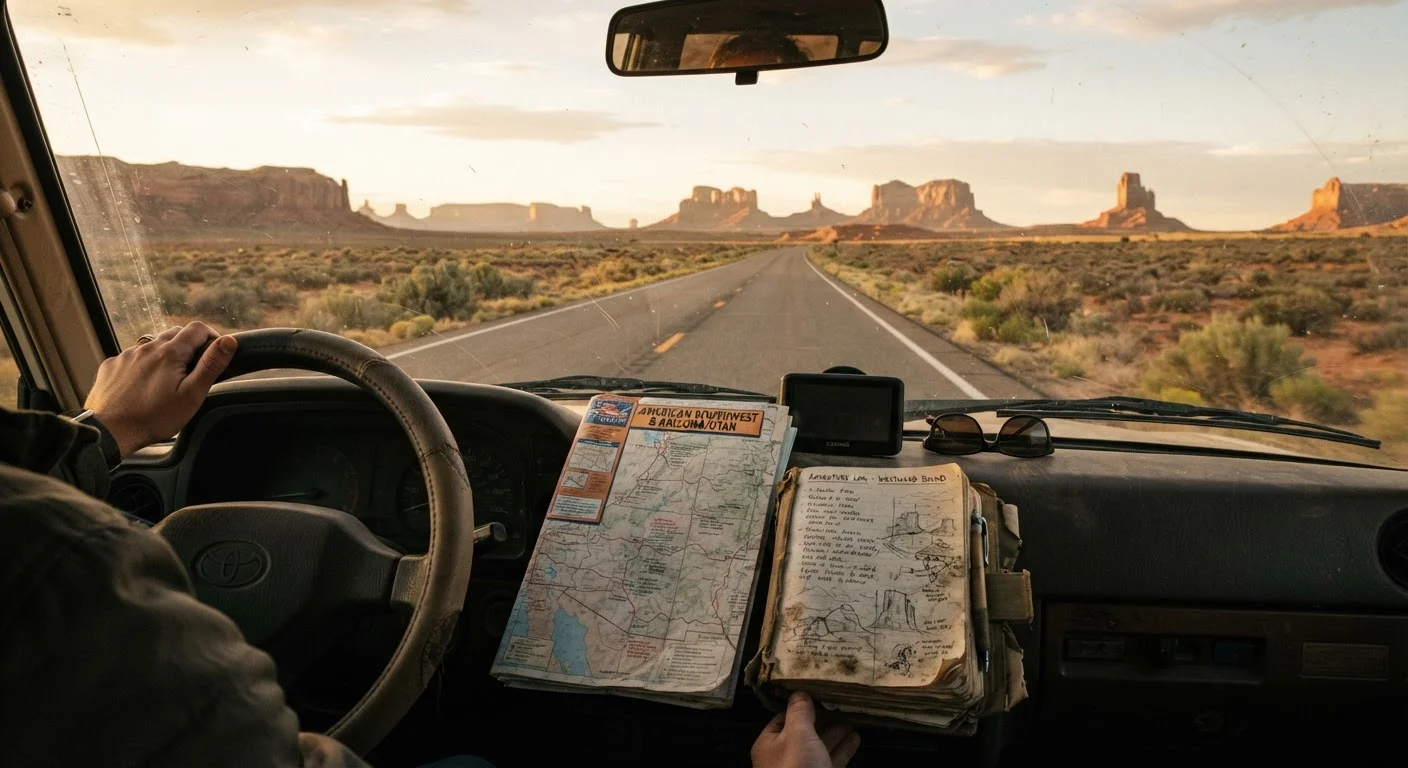
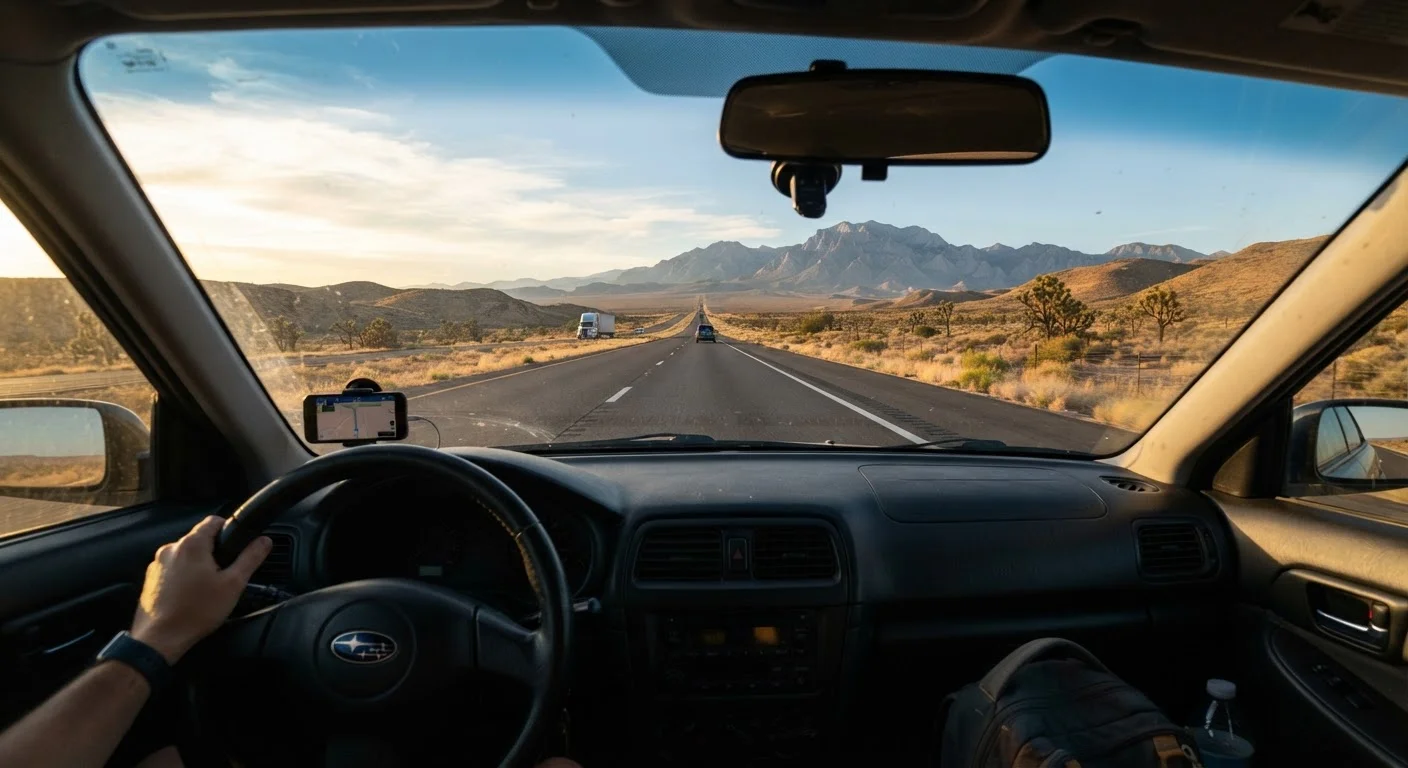
Cell coverage drops significantly in rural stretches of the American West and other remote corridors. Relying entirely on a data-dependent navigation app without a backup plan is a common mistake. Download offline maps for your entire route before departure, and consider a dedicated GPS unit if you're crossing large areas of limited coverage.
Also confirm you have a functional spare tire and the tools to change it. Many newer vehicles come with a compact spare or a tire inflation kit rather than a full spare — know what you have before you need it.
What to Bring and How to Pack
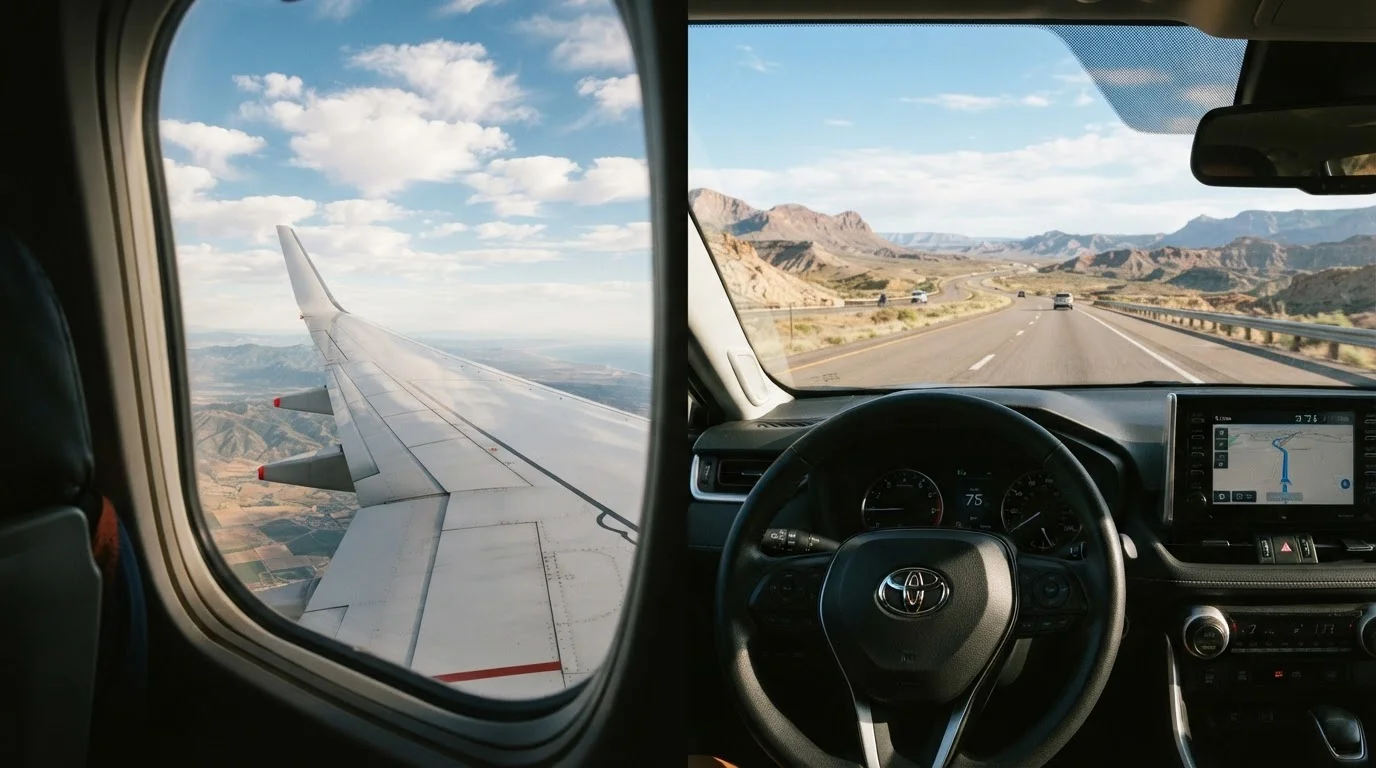
Packing for a road trip has one major advantage over flying: you're not subject to luggage limits. That freedom also makes overpacking easy. Focus on what's genuinely useful rather than what might come in handy.
Safety items are non-negotiable: a first aid kit, jumper cables or a jump starter, a flashlight, and an emergency contact list stored somewhere other than your phone. Paper maps or a downloaded offline map for your route are underrated backups when cell coverage drops in rural stretches. For a comprehensive pre-departure packing list, what to pack before you leave the driveway covers documents, comfort items, and car essentials. If you're traveling with children or pets, keeping kids and pets comfortable on long drives offers targeted guidance on managing long stretches with young passengers and animals.
Comfort, Safety, and Staying on Track
Driver fatigue is the underappreciated hazard of long-distance driving. Plan a break every 90 to 120 minutes, even for five minutes to walk around and reset. If you're driving solo, be honest about your limits — fatigue affects judgment before it feels obvious.
Keep an eye on weather forecasts along your route, not just at your destination. Mountain passes can close unexpectedly in late spring; desert roads can flood during monsoon season. Build enough schedule flexibility that a day of weather doesn't collapse your entire itinerary.
For a broader pre-departure checklist covering booking timelines, travel documents, and logistics, pre-trip planning checklist is a practical complement to the route-specific prep covered here. More general trip planning frameworks live in the Trip Planning hub.
Road trips reward preparation — not obsessive planning, but the kind that prevents small problems from becoming trip-ending ones. Get those fundamentals right, and the open road takes care of the rest.
Entry and Road Rules Vary by State
Speed limits, hands-free phone laws, and even camping regulations differ from state to state. If your route crosses several states — as most long-distance trips do — it's worth spending a few minutes reviewing the basic traffic laws for each one. Official state DOT and DMV websites are reliable sources for current rules.