Why Pack Methodically Before You Pull Out?
Most road trip mistakes happen before the car leaves the driveway. A forgotten insurance card, no phone charger, or no first-aid kit can turn a minor inconvenience into a genuine problem when you're 300 miles from home. This checklist is organized by category so you can move through it systematically — spending 30 to 60 minutes now routinely saves hours of frustration later.
Before running through the packing list, make sure your vehicle itself is road-ready. See our pre-trip vehicle inspection guide for a structured walkthrough covering tires, fluids, and lights. Packing the right gear is only useful if the car carrying it is sound.
Critical Documents
Safety and Emergency Gear
Navigation and Communication
Comfort and Sustenance
Tools and Gear Worth Having in the Car
Not every item below requires a purchase — check what you already own before buying anything. Many households already have jumper cables, a flashlight, and basic first-aid supplies. The goal is to consolidate them into the car rather than assume they're there.
Portable jump starter
Allows you to restart a dead battery without needing another vehicle present.
First-aid kit
Covers minor injuries, headaches, and basic wound care during multi-day travel.
Offline navigation app
Provides turn-by-turn directions when cellular service is unavailable in rural areas.
Portable power bank
Keeps phones, GPS devices, and other electronics charged when the car is off.
Reflective warning triangle
Signals to oncoming traffic that your vehicle is stationary on or near the roadway.
Compact cooler
Keeps water and perishable snacks cold, reducing reliance on convenience store stops.
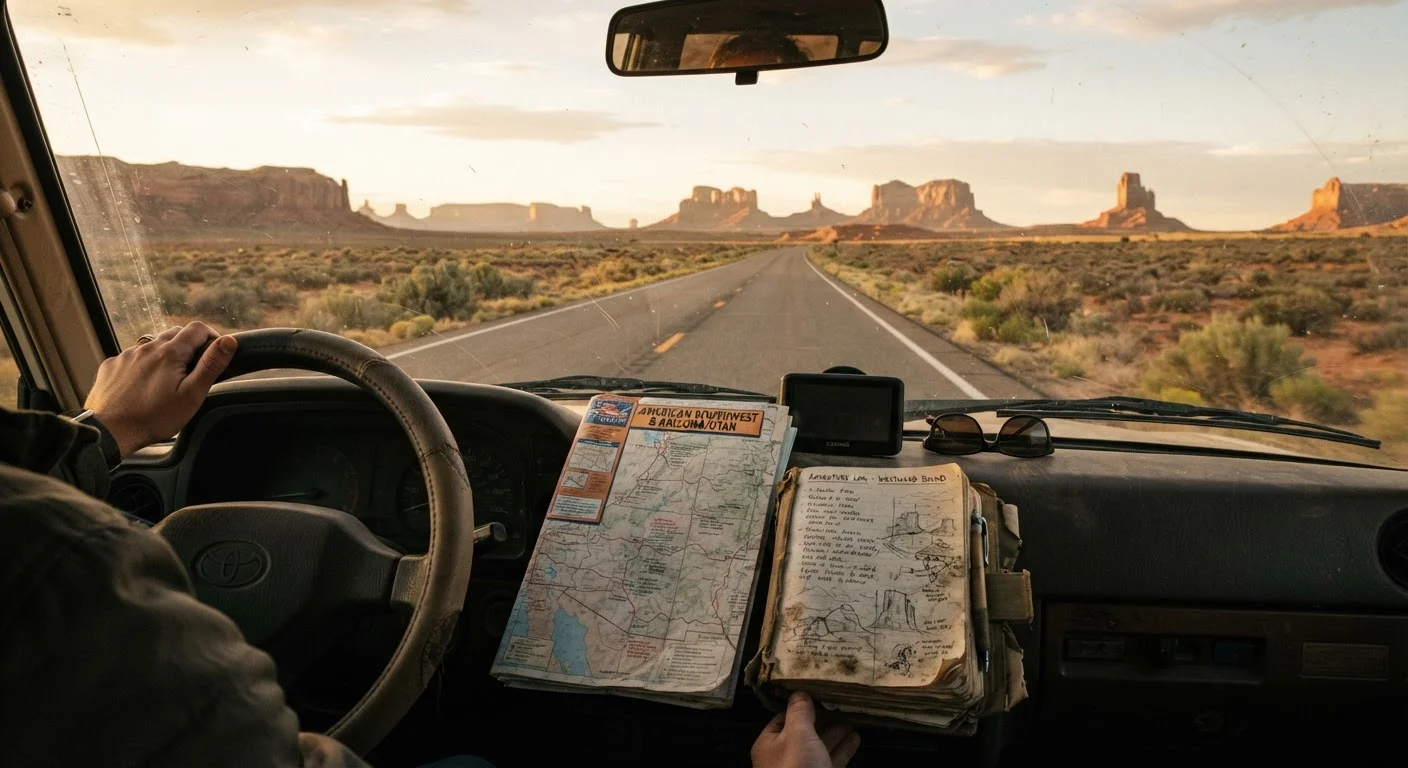
Paper road atlas
Serves as a reliable backup when phone batteries are dead or signal is lost.
If you want to go deeper on what a roadside emergency kit should actually contain — beyond the bare minimum — our breakdown of what a roadside emergency kit actually means explains each item and why it earns its place.
Before You Zip Up the Last Bag
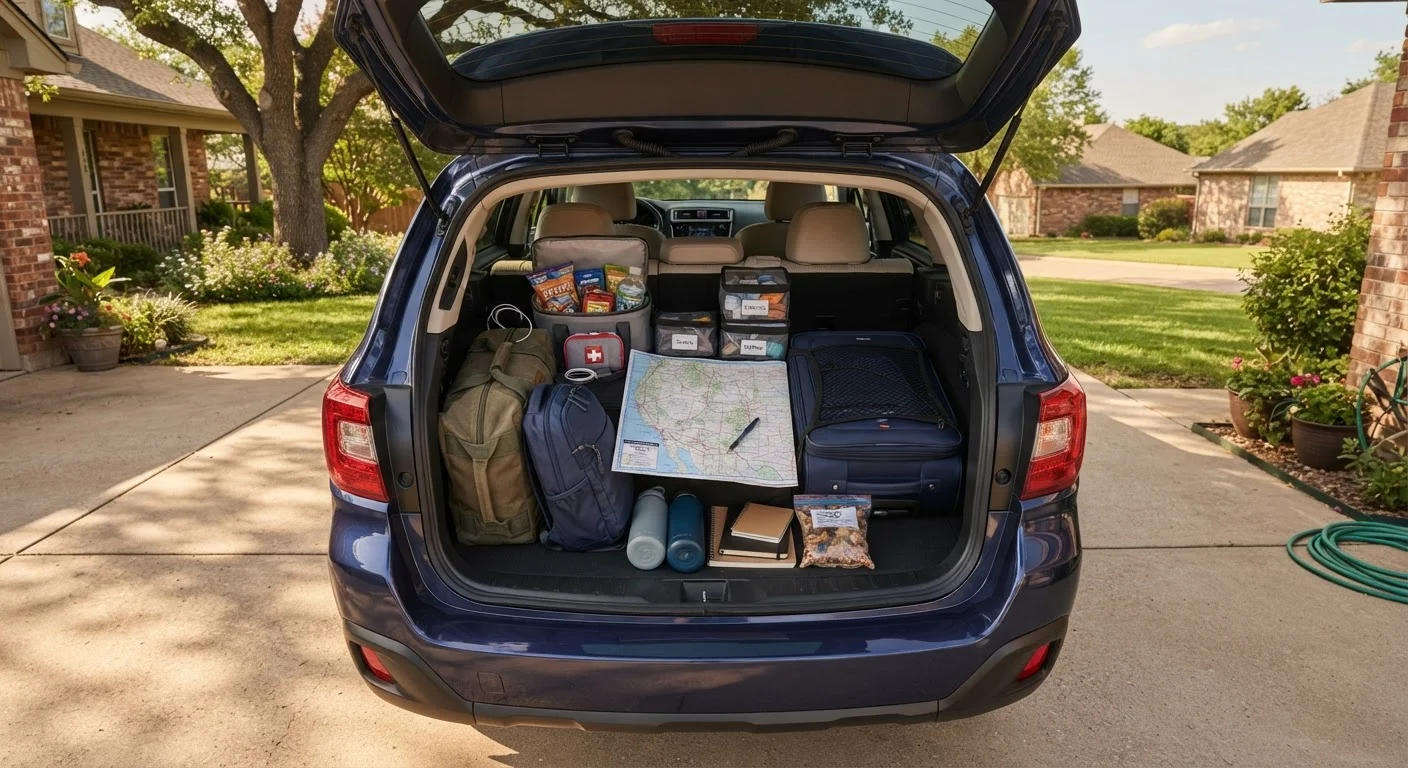
Once everything is loaded, do one final walk-through before starting the engine. Check that all bags are secured and not blocking rear visibility. Confirm your phone is charged and your navigation app — or physical map — is accessible without requiring a driver to dig through a bag.
Don't Block Rear Visibility
Overpacked trunks and rear seats that obstruct the driver's sightline through the rear window are a common and preventable safety risk. Load the heaviest items low and toward the front of the cargo area, and confirm the driver has a clear view before pulling out of the driveway.
If you're still working through the broader planning side of your trip, the pre-trip planning checklist covers booking timelines, reservations, and travel documents in detail. And if your bags feel too heavy heading out, run them through the packing audit checklist to cut what you don't need before you leave.