Why the Term Gets Misused
Search any online retailer and you'll find products marketed as "emergency roadside kits" that contain little more than a jumper cable and a branded tote bag. The phrase has no regulated definition, which means the gap between a token kit and a genuinely protective one is entirely on the buyer to understand.
The real purpose of a roadside kit is threefold: make yourself visible to other drivers, stabilize any immediate safety threat, and sustain yourself until help arrives. Every item should serve at least one of those purposes. If something in your kit doesn't, it's probably taking up space that a more useful item should occupy.
Before your next departure, it's worth pairing your kit review with a pre-trip vehicle check — addressing mechanical issues before they become roadside emergencies is always the better outcome.
The Non-Negotiable Core Items
Regardless of where or how far you drive, these items belong in every vehicle:
~69%
Drivers without a complete emergency kit
AAA surveys have consistently found that a large majority of drivers lack the basic supplies needed to handle a roadside breakdown safely.
30+ min
Average roadside assistance wait time
Wait times vary widely by location and provider, but rural breakdowns can extend well beyond 30 minutes — reinforcing the need for self-sufficient supplies.
#1
Most common breakdown cause
Dead or discharged batteries consistently rank as the leading cause of roadside service calls, according to roadside assistance providers.
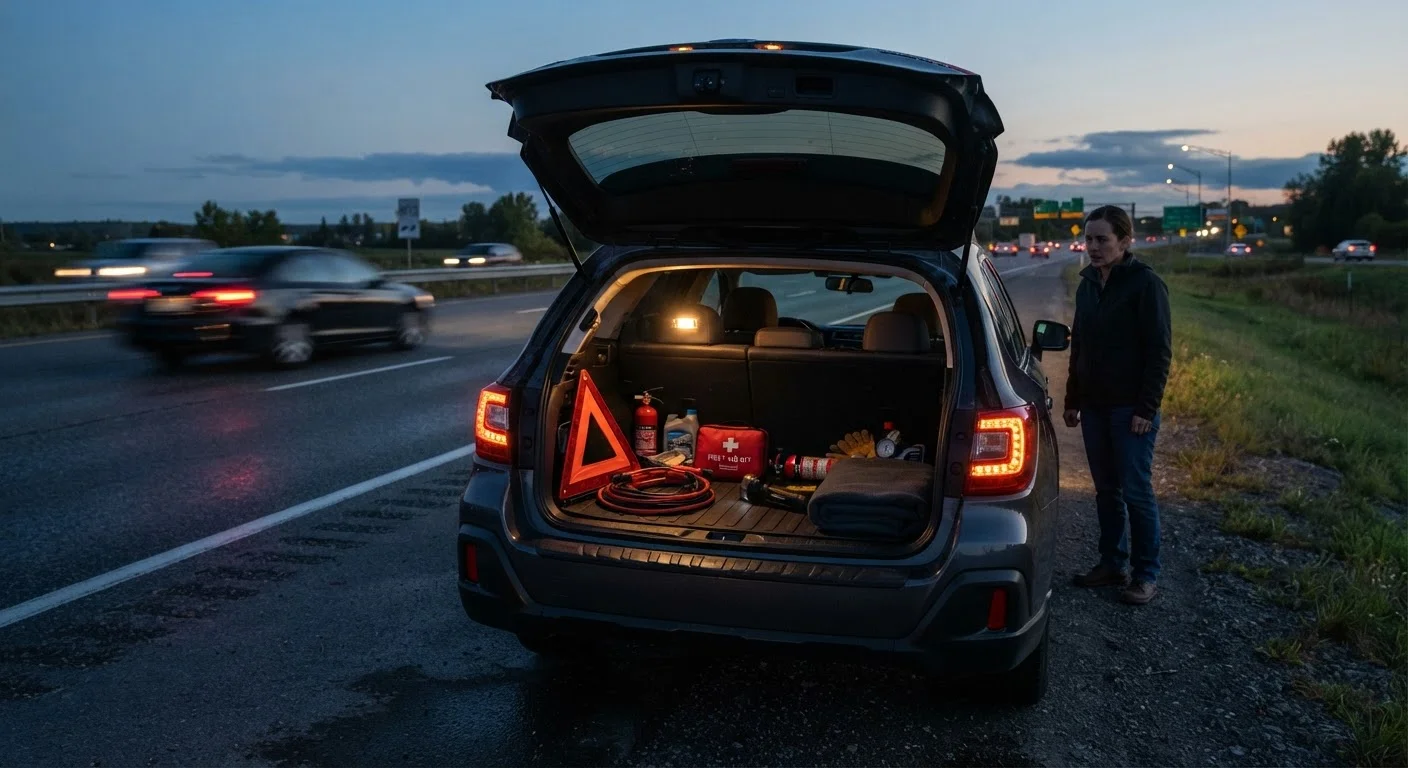
- Jumper cables or a portable jump starter: Dead batteries are the most common breakdown cause. A lithium-ion jump starter lets you self-rescue without waiting for another driver to stop.
- Reflective warning triangles or LED road flares: Visibility is the first line of defense on any roadside. Place them behind your vehicle to alert approaching traffic, especially at night or in fog.
- Flashlight with spare batteries or a rechargeable model: Built-in phone flashlights drain your battery fast. A dedicated flashlight lets you inspect your vehicle and signal without sacrificing your communication device.
- Basic first aid kit: Should include bandages, antiseptic wipes, adhesive tape, and pain reliever. Minor injuries from fender-benders or tire changes are more common than most drivers expect.
- Tire pressure gauge and a can of tire inflator sealant: Not a replacement for a spare, but useful for slow leaks that can get you to a service station.
Choose a Dedicated, Labeled Container
Loose items rolling around a trunk are almost impossible to find quickly under stress. Store your kit in a clearly labeled bag or hard case that stays in one fixed location. Bright red or orange containers are easier to spot in low light. A quick-release buckle or handle makes it easier to pull out without unpacking everything else.
The Overlooked Supplies That Actually Matter
The items most drivers forget are the ones that affect personal safety and communication — the things that matter most when you're stranded for an extended period.
- Water: At least one liter per person. Sealed pouches designed for emergency storage are more practical than open bottles that spill and degrade.
- Phone charger and portable power bank: Without a working phone, you can't call for help, navigate, or communicate your location. Keep a charging cable that fits your current phone — not one from a previous device.
- Emergency blanket (mylar): Compact, lightweight, and effective at retaining body heat if you're stranded in cold weather waiting for assistance.
- Work gloves: Tire changes and jump starts involve grease, grime, and sharp edges. Gloves protect your hands and improve grip.
- Physical map or printed directions for common routes: GPS fails in dead zones. A paper backup isn't retro — it's practical redundancy.
For a broader look at what to bring on any road trip, the pre-departure packing checklist covers safety gear alongside comfort and document essentials.
Medications and Special Medical Needs
If you or a passenger requires prescription medication, consult your healthcare provider about keeping a small emergency supply in your vehicle kit. Extreme heat and cold can affect medication storage — check with your pharmacist about appropriate storage conditions before leaving any medications in a car long-term.
Tailoring Your Kit to Your Driving Context
A daily urban commuter and a driver taking a solo trip through the Nevada desert face very different risk profiles. Context should shape your kit.
Cold-weather and winter drivers should add an ice scraper, sand or kitty litter for traction, a small folding shovel, and hand warmers. Remote and rural drivers benefit from extra water, non-perishable food, a whistle, and a physical compass in areas where cell coverage is unreliable. Families with children should include additional first aid supplies, spare medications if applicable, and entertainment items that reduce stress during long waits.
“A roadside emergency kit isn't about expecting the worst — it's about not being completely unprepared when something ordinary goes wrong. Most roadside situations are mundane. It's the wait and the exposure that make them dangerous.”
— National Safety Council, Nonprofit organization focused on eliminating preventable deaths and injuries
The common thread is proportionality: match the kit to the realistic worst-case scenario for your route, not just the average trip. A kit that covers your daily commute may fall well short for a cross-country drive.
This article provides general preparedness information. For vehicle-specific safety requirements or guidance on emergency procedures, consult your vehicle owner's manual and relevant local authorities.