Why Long Drives Are Harder With Young Passengers
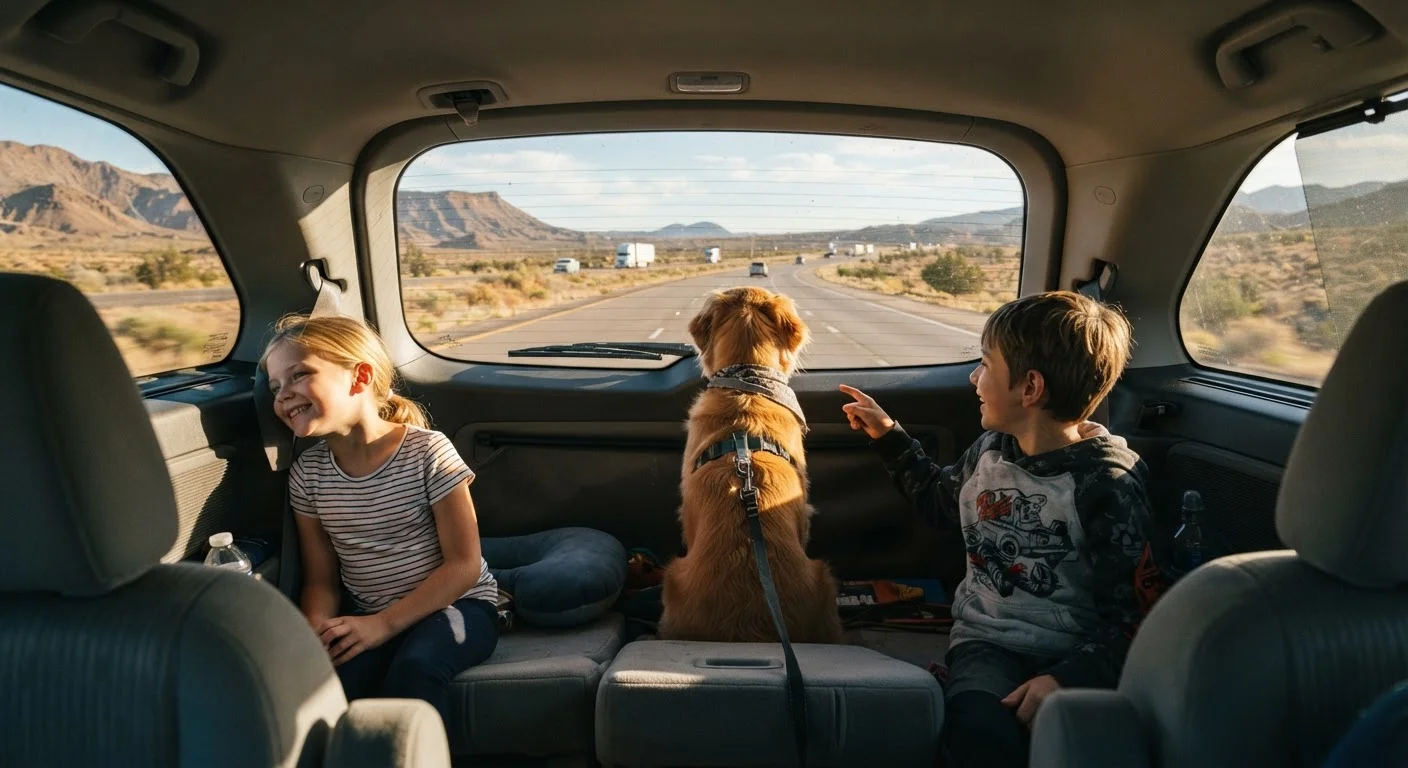
A road trip that feels straightforward for adults becomes a different experience the moment you add children or pets. Kids have limited ability to self-regulate boredom or discomfort, and animals can't communicate distress until it becomes a visible problem. Both groups are highly sensitive to heat, irregular feeding, and confinement — and when one becomes distressed, it quickly affects the entire vehicle, including the driver.
Before you focus on entertainment gadgets or snack packing, the single most impactful thing you can do is complete a thorough pre-trip vehicle check. A breakdown with kids or animals aboard is a compounding emergency. Confirming tire pressure, fluid levels, and AC function before departure removes the most serious risks before they develop.
For route planning that accounts for realistic drive times and necessary pauses, see our guide on building a US road trip itinerary that actually works.
What you will need
Step-by-Step: Managing Comfort Throughout the Drive
The strategies below are ordered by when they apply — from departure prep to mid-drive management. Follow them in sequence for the smoothest experience.
Set a Rest Stop Schedule Before You Leave
Plan stops every 90 to 120 minutes regardless of whether anyone asks. For children under five and most dogs, that interval is the practical limit for comfortable confinement. Mark stops on your route that include grass areas for pets, restrooms, and ideally some space for kids to run briefly. Mapping these in advance prevents the frustration of searching mid-drive.
Manage Vehicle Temperature Proactively
Set the cabin temperature before passengers board — don't wait for complaints. For pets, the threshold is lower than most people assume: a car interior can reach dangerous temperatures even on mild days. Keep the AC running whenever the engine is on and pets are inside. Never leave animals unattended in a parked vehicle, regardless of outside temperature or the duration of your stop.
For children, layer clothing so they can adjust. Direct AC vents away from infants and young toddlers — sustained cold airflow causes discomfort that they cannot communicate clearly.
Stick to Established Feeding Schedules
Irregular eating contributes to both car sickness and behavioral disruption. Feed children at their normal mealtimes where possible, using easy-to-eat foods that don't require utensils. Avoid heavy, greasy, or unfamiliar meals immediately before or during driving. For pets, most veterinarians recommend feeding a light meal two to three hours before departure rather than immediately before, to reduce nausea risk — verify this with your vet based on your animal's specific needs.
Keep water accessible for both children and pets throughout the drive. Dehydration accelerates fatigue and irritability in all passengers.
Layer Entertainment Strategically
Screen-based entertainment is effective but has diminishing returns over a long drive. Structure entertainment in tiers: start with audiobooks or podcasts for older children during the first leg, introduce screen time mid-drive when engagement naturally drops, and save interactive games or new small toys for the final stretch when restlessness peaks. Avoid handing over screens at the very start — once offered, they're difficult to take back without conflict.
For pets, enrichment during stops is more effective than in-vehicle entertainment. A few minutes of sniffing and movement at a rest stop reduces anxiety better than any in-car solution.
Secure Comfort Items and Organize the Vehicle
Reaching for dropped items while driving is a distraction risk. Before departure, organize the vehicle so that the items needed most frequently — snacks, wipes, entertainment devices, pet water — are reachable by a passenger or accessible during stops without digging. Use a seatback organizer for children's items. Keep the pet area clear of loose objects that could become projectiles during hard braking.
Familiar comfort items — a favorite stuffed animal, a specific blanket, a pet's usual bedding — meaningfully reduce anxiety for both children and animals in an unfamiliar moving environment.
Build Buffer Time Into Every Leg
Scheduled stops almost always run longer than expected when kids or pets are involved. Build at least 15–20 minutes of buffer into each leg rather than planning for the minimum stop time. This reduces the pressure to rush, which in turn reduces driver stress — one of the more underappreciated factors in long-drive safety. See our first-time road trip planning guide for more on structuring realistic drive legs.
Troubleshooting Common Mid-Drive Problems
Even well-prepared trips hit rough patches. Here's how to handle the most frequent issues without stopping unnecessarily or escalating stress:
- Motion sickness: Pull over safely, provide fresh air, and keep the child or pet still and upright. Avoid offering food immediately. For children prone to car sickness, consult a pediatrician about appropriate interventions before the trip — don't attempt to manage it with adult medications.
- Pet anxiety: Cover the crate partially with a breathable blanket to reduce visual stimulation. Familiar-smelling items like a blanket from home can help calm anxious dogs. If a pet shows sustained distress — excessive panting, drooling, or vomiting — find a safe stopping point and allow rest time outside the vehicle.
- Overtired or frustrated children: Swap entertainment formats rather than increasing screen time. Switching to an audiobook or a simple car game often resets attention more effectively than offering more video content.
Driver fatigue compounds all of these issues significantly. If you're managing a difficult passenger situation while also pushing through tiredness, it's a genuine safety concern. Our article on why road trippers underestimate driver fatigue explains why this risk is so easy to miss — and how to plan around it.
Weather Conditions Change Everything
If your route passes through rain, snow, or fog, the time between stops may need to shorten and your overall pace will slow considerably. Children and pets sense driver tension, which can escalate their own restlessness. Review our guide on driving in rain, snow, and fog before any trip where mixed conditions are possible.