Why Tire Rotation Actually Matters
Tire rotation — moving each tire to a different wheel position on a set schedule — is one of the simplest services your vehicle needs, yet it's routinely skipped. The consequences aren't always visible immediately, which is exactly why so many drivers discount it. Over thousands of miles, though, the math is unforgiving.
Your tires don't experience equal stress. Depending on whether your vehicle is front-wheel drive, rear-wheel drive, or all-wheel drive, the tires on the powered axle absorb dramatically more load — handling acceleration, braking, and in the case of front-wheel drive, steering simultaneously. Without rotation, those tires wear down faster than the others, creating a mismatch that affects handling and forces early replacement. For a fuller picture of how this fits into overall vehicle upkeep, see Your Car's Maintenance Schedule, Decoded.
2×
Faster front tire wear on FWD vehicles
Automotive engineers note that front tires on front-wheel-drive vehicles commonly wear at roughly twice the rate of rear tires due to combined steering and drive loads.
$150–$200+
Typical cost of a single replacement tire
Premature replacement of even one tire due to neglected rotation can cost several times more than the rotation service itself, which often runs $20–$50.
5,000–7,500 mi
Standard tire rotation interval
Most vehicle manufacturers and tire industry guidelines recommend rotation every 5,000 to 7,500 miles, often coinciding with oil change intervals.
Common Mistakes Drivers Make With Tire Rotations
Most rotation-related problems don't stem from ignorance — they stem from easy-to-make assumptions and overlooked details. Here are the specific errors that consistently lead to premature tire wear, unnecessary expenses, and reduced safety.
Treating tire rotation as optional maintenance rather than a scheduled necessity.
Why it happens: Drivers often prioritize oil changes because warning lights and service reminders make them hard to ignore, while tire rotation lacks a similar dashboard cue.
Assuming all four tires wear at the same rate.
Why it happens: It feels logical that tires would wear evenly if you drive carefully, but drivetrain layout and steering forces mean front tires almost always wear faster — especially on front-wheel-drive vehicles.
Skipping rotation because the tires still "look fine" to the naked eye.
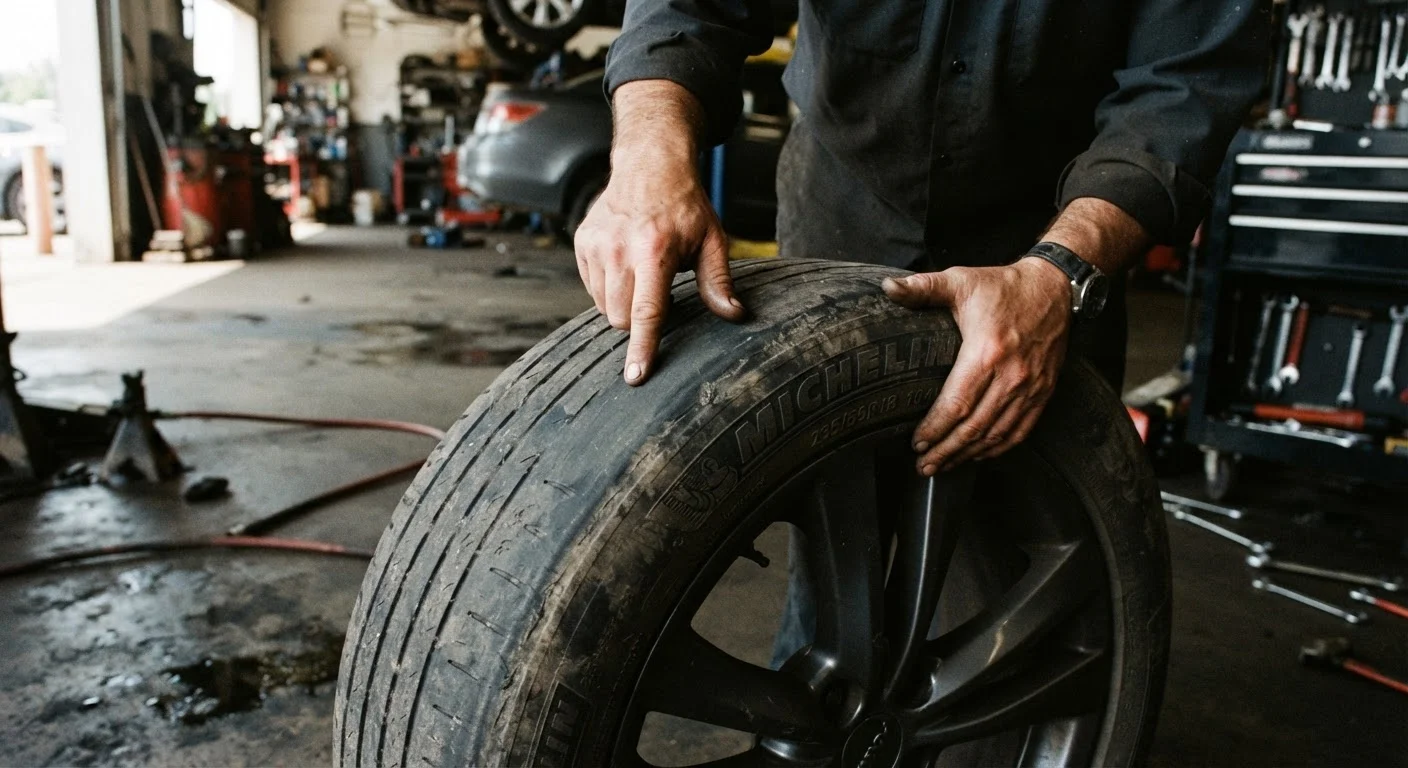
Why it happens: Uneven wear often develops in areas that are hard to see from a casual glance — inner edges, cupped spots on the tread face, or subtle feathering across tread blocks.
Rotating tires without checking or correcting tire pressure at the same time.
Why it happens: Many drivers — and even some quick-lube shops — treat rotation as a standalone task, missing the opportunity to address inflation issues that drive the very wear patterns they're trying to correct.
Neglecting wheel alignment checks when uneven wear is already present.
Why it happens: Drivers see rotation as the fix and stop there, unaware that misalignment is often the root cause — and rotating misaligned tires just spreads the damage to previously good tires.
Safety Is the Real Stake Here
Uneven tire wear doesn't just hurt your wallet — it reduces traction when braking, especially on wet or slippery roads. Severely worn edges or center channels can increase stopping distances and reduce vehicle stability. If your tires show cupping, feathering, or one-sided wear, have them inspected by a qualified mechanic before your next long drive.
The Real Cost of Skipping Rotations
A single tire rotation typically runs between $20 and $50 at a shop — often included free with an oil change or as part of a maintenance package. A single replacement tire for a standard passenger vehicle frequently costs $150 or more, and most drivers replace tires in pairs or sets of four to maintain balanced handling. The arithmetic is straightforward: one missed rotation can ultimately cost five to ten times what the service would have run.
The financial hit goes beyond tire replacement. Uneven tread wear affects how evenly weight is distributed across your suspension components. Over time, that imbalance can accelerate wear on struts, wheel bearings, and steering linkage — parts that cost significantly more to replace than tires. These are exactly the kinds of ownership costs that catch drivers off guard. The article Keeping Ownership Costs in Check Over the Life of a Vehicle covers how routine maintenance decisions ripple through your long-term budget.
Voiding Your Tire Warranty
Many tire manufacturers require documented rotation records to honor tread-life warranties. If you can't show service records when a premature wear claim arises, the warranty may be denied — leaving you to absorb the full replacement cost. Keep receipts or use a maintenance log every time a rotation is performed.
It's also worth noting that poorly maintained tires affect resale value. Buyers and dealers inspect tires carefully — a set with cupping or severe edge wear signals neglected maintenance, which works against you at trade-in time. Staying current on rotations is one of the easiest ways to demonstrate a documented care history and help preserve what your vehicle is worth.