Why Routine Car Care Matters
A car is likely one of the largest ongoing expenses in your life — and like most complex systems, it rewards attention and penalizes neglect. Routine maintenance isn't about becoming a mechanic; it's about staying informed enough to catch small problems before they become expensive ones.
Neglecting basic upkeep doesn't just risk a breakdown — it can compromise your safety and the safety of others on the road. Understanding the fundamentals helps you make smarter decisions, communicate more confidently with mechanics, and keep your vehicle roadworthy and safe for longer. Consider this guide your starting point.
Key Terms Every New Driver Should Know
Car maintenance comes with its own vocabulary. Getting comfortable with a handful of key terms makes every owner's manual, mechanic conversation, and dashboard warning far less intimidating.
Dipstick
A long, thin metal rod that slides into the engine to measure oil level. You pull it out, wipe it clean, reinsert it, and read where the oil coats the stick.
Tread depth
The measurement of the grooves in your tire that channel water away and provide grip. Worn tread significantly reduces your ability to stop safely on wet roads.
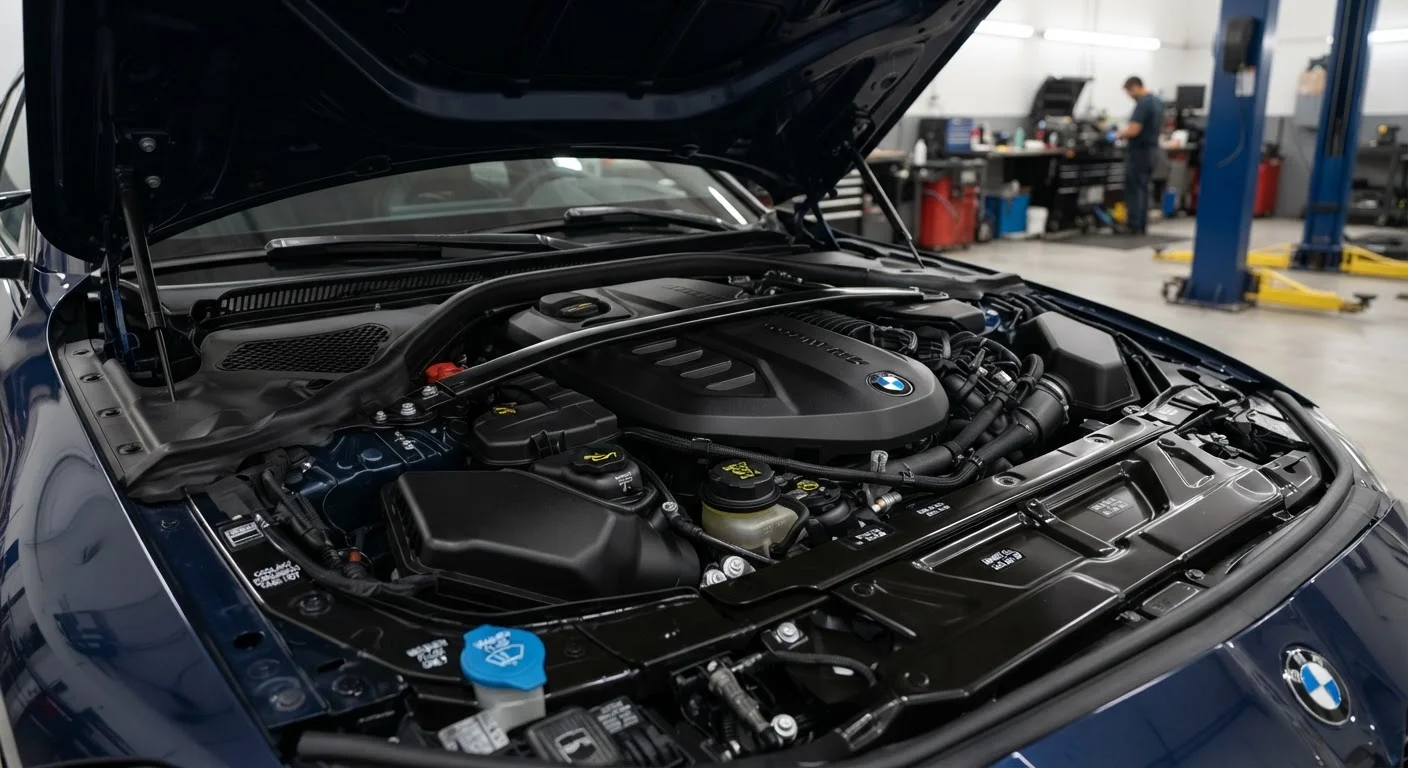
Coolant reservoir
A translucent plastic tank in the engine bay that holds the coolant (antifreeze) mixture. It has min and max markings so you can check the level without opening anything when the engine is cold.
Maintenance interval
The mileage or time period recommended by the vehicle manufacturer between specific services, such as oil changes or filter replacements. Found in your owner's manual.
Tire pressure (PSI)
A measure of how much air is inside your tire. PSI stands for pounds per square inch. Under-inflated tires wear unevenly and affect handling; over-inflated tires can reduce traction.
Owner's manual
The booklet provided by the vehicle manufacturer that contains all specifications, maintenance schedules, and operating instructions specific to your car model and year.
Once these concepts click, the rest of routine maintenance becomes much more approachable. Your owner's manual — the booklet in your glove compartment — is your most reliable reference for intervals and specifications specific to your vehicle.
The Fluids You Need to Monitor
Modern engines depend on several fluids working together. Letting any of them run low or go unchanged too long is one of the most common causes of avoidable vehicle damage.
- Engine oil lubricates moving parts and reduces heat from friction. Check it monthly with the dipstick and follow your owner's manual for change intervals.
- Coolant (antifreeze) keeps the engine from overheating in summer and freezing in winter. Check the reservoir level when the engine is cold.
- Brake fluid transmits the force from your foot to the brake components. A low or discolored level should be assessed by a mechanic.
- Windshield washer fluid is the one fluid you can always top off yourself — and it matters more than most drivers realize during winter or road-grime seasons.
For a deeper look at what each fluid does and where to find it under the hood, see our guide to car fluids every driver should know.
Top Off, Don't Overfill
When adding any fluid, add small amounts and recheck the level before adding more. Overfilling engine oil, for example, can cause foaming and engine damage — more is not better. Always use the fluid type specified in your owner's manual, as using the wrong formulation can cause problems.
Tires, Brakes, and Lights: Your Safety Trio
Three systems have the most direct impact on whether your car keeps you safe in a critical moment: tires, brakes, and lights. None of them should be overlooked.
Tires
Check tire pressure at least once a month using an inexpensive gauge. The correct pressure is on the sticker inside your driver's door jamb. Also inspect tread depth — insert a penny into a tread groove with Lincoln's head pointing down. If you can see the top of his head, the tread is dangerously worn and the tire needs replacing.
Brakes
Squealing, grinding, or a soft pedal are warning signs that warrant immediate professional inspection. Don't delay brake concerns — stopping distance is directly affected by brake condition.
Lights
Walk around your car periodically to confirm headlights, taillights, brake lights, and turn signals are all functioning. A burned-out bulb is inexpensive to replace and is a safety — and legal — requirement.
Don't Open a Hot Radiator Cap
The cooling system operates under pressure, and opening the radiator cap or coolant reservoir cap on a hot engine can cause scalding fluid to spray out. Always let the engine cool completely before checking or adding coolant. If your temperature gauge is in the red, pull over safely and wait — do not open the hood until the engine has cooled.
Reading Warning Lights Without Panic
Dashboard warning lights are your car's way of communicating. They aren't all emergencies, but none should be ignored indefinitely. Your owner's manual contains a legend of every light specific to your vehicle — keep it in the glove compartment for quick reference.
A few general principles: red lights typically indicate urgent issues (low oil pressure, overheating, brake system faults) that may require you to stop driving soon. Yellow or amber lights usually signal something that needs attention but may not be immediately dangerous, such as a check engine light or low tire pressure. Blue and green lights are generally informational, indicating active systems like high beams or a turn signal.
When in doubt, have the vehicle scanned at a mechanic or auto parts store — many offer free diagnostic code reads. Don't rely on guesswork when a warning light appears.
Building Your Maintenance Habit
The most effective maintenance strategy is a consistent one. Rather than reacting to problems, build a rhythm of proactive checks. A few practices that help:
- Do a quick walkaround before long trips — check tires visually, ensure lights are working, note anything unusual.
- Check fluid levels on the first of every month. It takes under five minutes.
- Keep a simple log of services performed — date, mileage, and what was done. This helps you track intervals and is valuable if you sell the vehicle.
- Follow your manufacturer's maintenance schedule, not generic timelines. Intervals vary by vehicle, driving conditions, and climate.
For a structured, season-by-season approach, our seasonal car maintenance checklist covers what to inspect and when throughout the year. And if you've heard that you must change your oil every 3,000 miles or that you need to warm up your engine in winter, it's worth reading up on common car maintenance myths — some of the most persistent advice out there is outdated.
Staying on top of routine care also has a direct financial benefit. Drivers who maintain their vehicles consistently tend to face fewer large, unplanned repair bills. Our overview of keeping ownership costs in check explores that connection in more detail.
When to See a Professional
Visual checks and fluid top-offs are well within reach for most drivers. But any task involving your brake system, suspension components, electrical wiring, or emissions systems should be performed by a qualified mechanic. When something doesn't look or sound right and you're unsure, an inspection is always the right call — catching a problem early is almost always less costly than waiting.