Why Sleep Has Its Own Language
Whether you're reading a clinical brochure, talking to a specialist, or exploring a wellness app, sleep science has a vocabulary that can feel opaque. Terms like hypnopompia or sleep architecture aren't just jargon — they represent distinct, measurable phenomena that researchers and clinicians use to understand how rest actually works.
This reference guide decodes the most commonly encountered sleep terms in plain English. It's designed to help you follow conversations with healthcare providers, interpret sleep-tracker data, and make sense of the research. It is not a diagnostic tool — if you have concerns about your sleep, a qualified healthcare professional is the right resource.
For a deeper dive into common misunderstandings that affect real sleep quality, see our breakdown of widespread sleep myths.
Circadian Rhythm
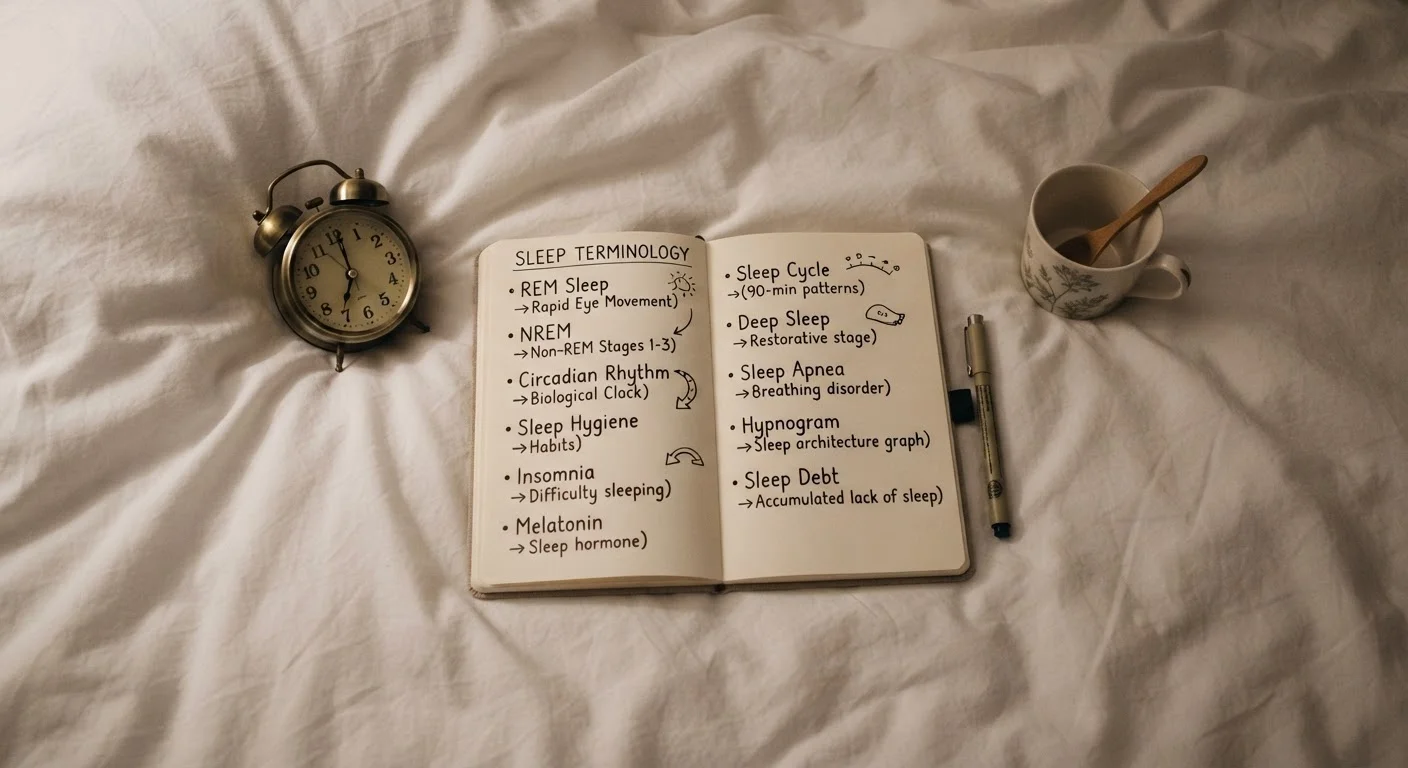
The body's internal 24-hour biological clock that regulates sleep-wake cycles, hormone release, metabolism, and other physiological processes. It is primarily synchronized by light exposure, particularly sunlight.
Sleep Latency
The amount of time it takes to fall asleep after getting into bed and turning out the lights. Clinicians often consider consistently falling asleep in under 20 minutes a healthy benchmark, though individual variation is normal.
Sleep Architecture
The structural pattern of sleep stages across a full night, including how long a person spends in light sleep, deep sleep, and REM sleep. Disruptions to this pattern can affect how rested someone feels upon waking.
REM Sleep
Rapid Eye Movement sleep is a distinct stage characterized by vivid dreaming, temporary muscle paralysis, and high brain activity. It plays an important role in memory consolidation and emotional processing.
Slow-Wave Sleep (SWS)
Also called deep sleep or N3, this is the most physically restorative sleep stage. The brain produces slow delta waves, and the body carries out tissue repair, immune function, and growth hormone release during this stage.
Hypnagogic State
The transitional period between wakefulness and sleep. It can include vivid imagery, sounds, or brief muscle twitches (called hypnic jerks). It is a normal part of falling asleep.
Hypnopompia
The transitional state between sleep and full wakefulness. Some people experience hallucinations or temporary paralysis during this phase, which is generally benign but can be startling.
Sleep Debt
The cumulative deficit that builds up when a person consistently sleeps less than their body needs. Research suggests sleep debt cannot be fully reversed simply by sleeping longer on weekends.
Adenosine
A chemical compound that accumulates in the brain the longer you are awake, increasing sleep pressure. Caffeine works primarily by blocking adenosine receptors, temporarily masking the sensation of sleepiness.
Sleep Efficiency
A ratio expressing the percentage of time spent asleep versus total time spent in bed. A sleep efficiency of 85% or above is generally considered healthy by sleep clinicians.
Chronotype
An individual's natural tendency toward earlier or later sleep and wake times, often described informally as being a 'morning person' or 'night owl.' Chronotype has a significant genetic component.
Polysomnography
A comprehensive overnight sleep study conducted in a clinical or lab setting. It records brain waves, oxygen levels, heart rate, breathing, and limb movements to diagnose sleep disorders.
Key Metrics and Concepts at a Glance
The terms below frequently appear in sleep studies, wearable device reports, and clinical assessments. Knowing what they measure gives you a more accurate picture of your sleep profile.
| Typical Sleep Cycles Per Night | 4–6 cycles (National Sleep Foundation) |
| Duration of One Sleep Cycle | Approximately 90 minutes (American Academy of Sleep Medicine) |
| Recommended Adult Sleep Duration | 7–9 hours per night (American Academy of Sleep Medicine & Sleep Research Society) |
| REM Sleep Share in Healthy Adults | 20–25% of total sleep (National Institutes of Health) |
| Deep Sleep (SWS) Share in Healthy Adults | 13–23% of total sleep (National Institutes of Health) |
| Body Temperature Drop at Sleep Onset | 1–2°F (0.5–1°C) (Sleep Research Society) |
Sleep science also intersects with mental health terminology. If you encounter crossover terms around mood, anxiety, or cognition, our mental health vocabulary reference offers parallel plain-language explanations.
Once you understand the vocabulary, putting it into practice becomes more intuitive. Building a consistent pre-sleep routine is one of the most evidence-supported ways to improve sleep latency and overall sleep quality. And if you're wondering whether the number of hours you sleep matters more than when you sleep, the research on sleep regularity offers a useful perspective.
This Guide Is for Education, Not Diagnosis
The terms defined here are meant to help you understand sleep health conversations — not to self-diagnose or replace clinical evaluation. Sleep disorders such as insomnia, sleep apnea, and restless leg syndrome require assessment by a qualified healthcare provider. If you're experiencing persistent sleep difficulties, please consult a physician or sleep specialist.