
Why Accommodation Type Matters Beyond the Nightly Rate
When planning an affordable trip, most people compare accommodation options by price per night. That's a reasonable starting point — but it's rarely the whole story. As explored in our breakdown of the real cost of budget travel, what looks cheapest upfront often carries hidden costs that shift the final tally.
The three most common affordable options — hostels, vacation rentals, and budget hotels — each suit a different type of traveler and trip structure. Understanding those differences before you book can save you from making a choice that technically fits your budget but makes your trip harder than it needs to be.
| Hostels | Vacation Rentals | Budget Hotels | |
|---|---|---|---|
| Typical nightly cost (solo traveler) | Lowest — dorm bed rates | Highest solo; lower per-person in groups | Moderate — fixed room rate |
| Privacy | Minimal in dorms | Full — private space | Full — private room |
| Kitchen access | Shared communal kitchen | Full private kitchen | Rarely available |
| Best stay length | 1–5 nights | 5+ nights | 1–3 nights |
| Hidden fee risk | Low | High (cleaning fees) | Moderate (resort fees) |
| Ideal group size | Solo or solo-friendly | Groups of 2–6+ | 1–2 travelers |
| Booking predictability | Moderate | Variable by listing | High |
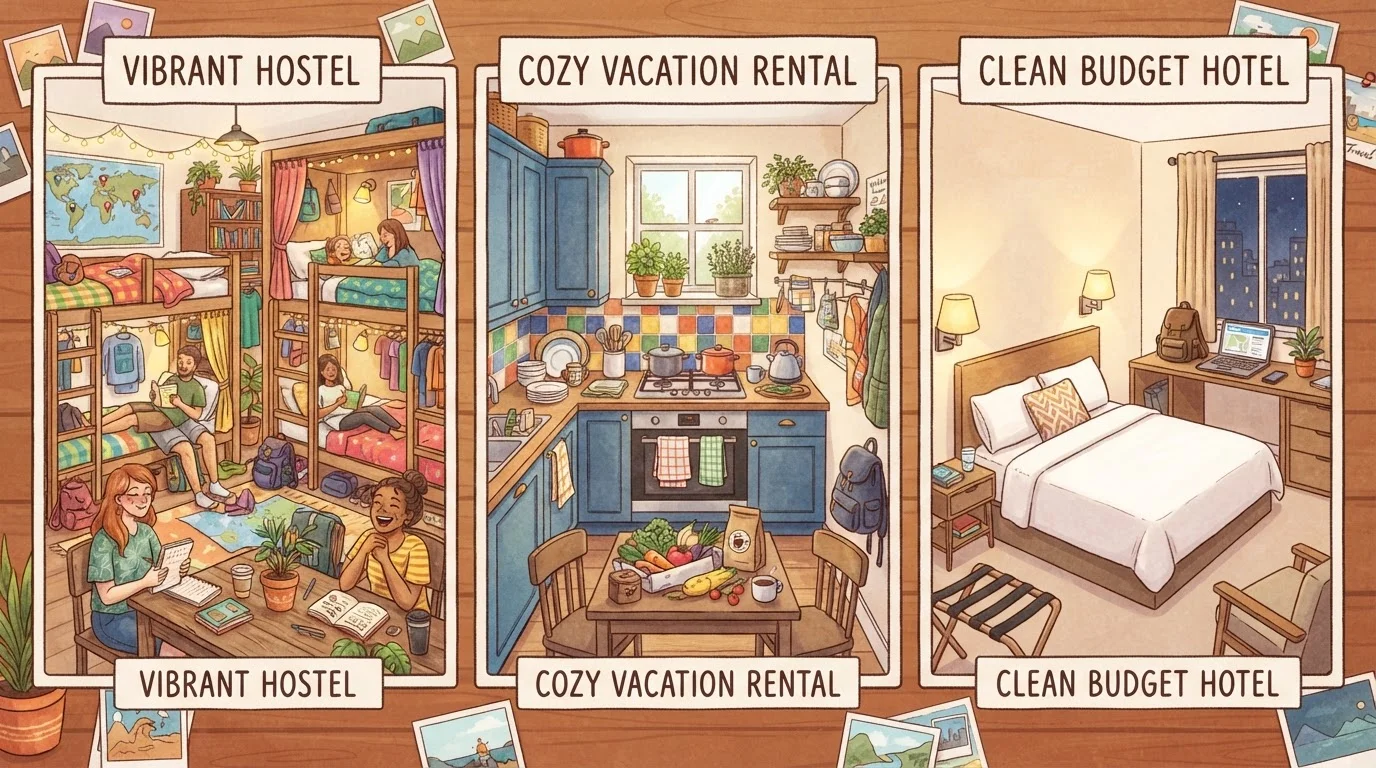
Hostels: Low Cost, High Social Density
Hostels charge per bed in a shared dormitory rather than per room, which is why nightly rates can run significantly lower than other options — particularly in major US cities and popular international destinations. Private rooms in hostels do exist, but the real savings come from dorm-style sleeping arrangements.
The trade-off is privacy. You'll share bathrooms, common areas, and often lockers with people you've never met. Noise is a consistent complaint, especially in larger dorms. That said, hostels often include amenities that stretch your budget further: communal kitchens, free breakfast at some properties, and built-in social connections that can reduce what you spend on tours or activities.
Look Beyond the Dorm Rate
Before booking a hostel dorm, check whether lockers are included or cost extra, and read recent reviews specifically about noise and security. A hostel with free breakfast and a communal kitchen can offset a higher base rate compared to a cheaper property with none of those amenities. Also confirm the cancellation policy — some budget bookings are non-refundable.
Hostels make the most sense for solo travelers comfortable with communal living, particularly on shorter city-based trips. They're less practical for anyone who needs reliable sleep, travels with a partner wanting privacy, or is visiting a destination with limited hostel infrastructure.
Vacation Rentals: Space and Savings That Scale With Group Size
Vacation rentals — booked through various platforms — offer entire apartments, cottages, or homes rather than a single room. For solo travelers, the base rate is almost always higher than a hostel or budget hotel. But split across a group of three or four people, the per-person cost can become genuinely competitive, while also delivering significantly more space and a full kitchen.
Kitchen access is the detail most worth weighing carefully. On a week-long trip, even modest grocery savings — cooking a few breakfasts and dinners rather than eating out every meal — can materially lower total trip cost. This is particularly relevant for families traveling with children, where restaurant meals add up fast.
Cleaning fees and service charges remain a notable downside. A rental with a $90 nightly rate can carry a $150 cleaning fee, which dramatically changes the math on short stays. Vacation rentals typically reward longer trips; the fee burden dilutes across more nights. For US trips on a tight budget, a rental of five or more nights often delivers better overall value than the same per-night comparison would suggest.
Budget Hotels: Predictable, Private, and Straightforward
Budget hotel chains and independent economy properties occupy a middle position: more expensive per night than a hostel dorm, often cheaper or comparable to a solo-booked vacation rental, and reliably private. You get a locked room, a dedicated bathroom, and a front desk — none of which require much research or trust in a stranger's listing photos.
What budget hotels rarely offer: cooking facilities, generous space, or memorable character. They're functional, not experiential. For transit stops, business travel, or short one- to two-night stays where value-per-hour of use is the primary concern, they frequently represent the most sensible default.
Watch for resort fees and mandatory charges that aren't included in the advertised rate, particularly at hotels in Las Vegas, Miami, and other tourist-heavy markets. A room listed at $79 per night can carry a $35 daily resort fee that only appears at checkout. Reading the full rate breakdown before booking is non-negotiable. This connects directly to common travel budget myths that trip up even experienced travelers.
Before committing to any option, use the pre-trip booking checklist to verify total costs and confirm your choice fits the actual shape of your trip.